Is your TikTok bio helping a brand hire you, or making them move on?
A TikTok bio has one job. It needs to tell the right visitor what you do, who you help, and what action to take next, all inside a tight character limit. Pastel Creative's TikTok bio guide gives a useful practical reminder of that 80-character constraint. In practice, that means every vague word takes the place of a useful qualifier, keyword, or call to action.
For UK creators and brands, that trade-off is not theoretical. TikTok has broad reach in the UK, so profiles are often acting as discovery pages, vetting pages, and conversion pages at the same time. A weak bio creates friction fast. A local business cannot tell whether you cover its area. An agency cannot see whether you make UGC or influencer content. A brand manager cannot spot whether you understand performance, audience fit, or collaboration terms.
That is why generic tiktok bio ideas tend to underperform. “Funny”, “cute”, or “aesthetic” can work if personal branding is the goal, but those formats often waste space if the objective is getting inbound enquiries, qualifying leads, or increasing link clicks. I have seen creators lose good-fit opportunities because their bio described a vibe instead of a service.
The stronger approach is to build your bio around business intent.
The examples below sort TikTok bios by the outcome they are meant to drive, such as attracting local brand work, signalling niche authority, promoting UGC services, showing proof of results, or pushing viewers to a link. That structure helps creators choose a bio that matches their revenue model, and it helps brands assess fit faster.
1. Micro-Influencer Creator Bio with Location Tag
Want more relevant enquiries from brands near you. Put your location in the bio.
For local-facing creators, a city tag does more than add personality. It qualifies the right opportunities fast. If you post about restaurants, cafés, salons, gyms, events, or independent retail, brands usually care about geography before they care about tone. “Manchester food creator” tells a buyer you can cover their area. “Living for good vibes and good meals” tells them almost nothing.
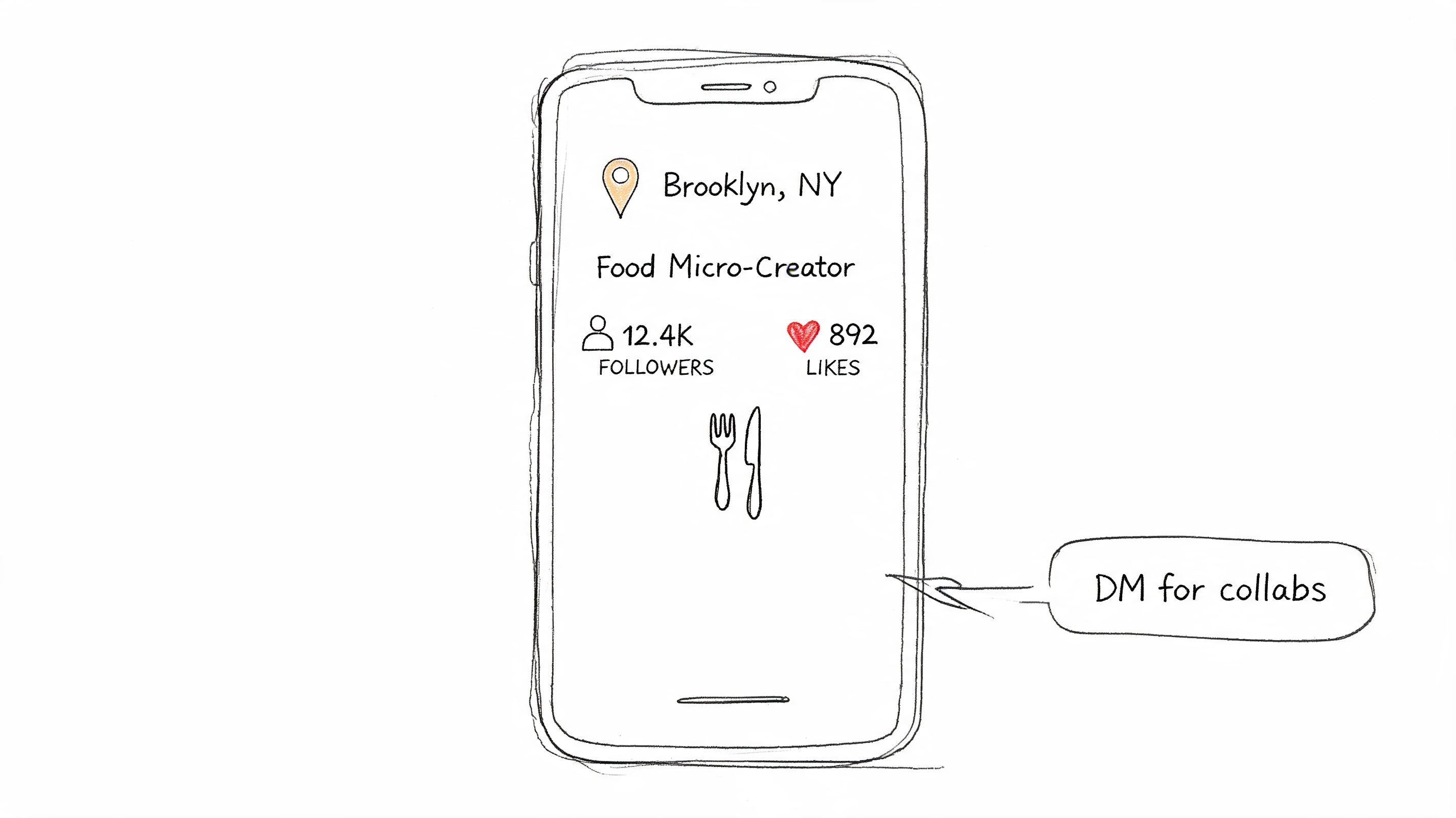
A bio like this does the job: London food creator | Reviews + UGC | Collabs open
It works because it answers the three questions a local brand asks first. Where are you. What kind of content do you make. Are you available for paid work.
What works best
The strongest version pairs location with a clear niche. That combination helps both discovery and decision-making. Viewers understand what they will get from your content. Brands can tell whether you fit a campaign brief without opening five recent posts to figure it out.
Use terms people search for or recognise from briefs. “UK skincare,” “London food spots,” and “small business advice” are more useful than broad labels like “creator” or “blogger.” The trade-off is specificity. A sharper bio will attract fewer random follows, but it usually improves the quality of inbound messages.
Here are stronger examples:
Restaurant creator: Manchester food reviews | UGC for hospitality brands | Collabs open
Beauty creator: UK skincare creator | Sensitive skin finds | Email below
Lifestyle creator: Bristol mum creator | Family days out | Brand partnerships
Coffee niche: Leeds coffee spots | Café reviews + UGC | DM for collabs
Practical rule: If a local business cannot tell you cover its area within a quick profile scan, your bio is filtering out the wrong people.
Trade-offs to watch
Location-led bios work best when your revenue depends on local relevance. They are especially useful for hospitality, retail, events, fitness, and service businesses that need nearby footfall or in-person coverage. For those creators, narrowing the field is a benefit. You lose some broad interest, but you gain better-fit enquiries.
There is a limit. “UK creator” is often too wide if your real value is city-level influence. “Clapham only” can be too narrow if you regularly work across London. Choose the smallest area that still matches the jobs you want.
Keep it current. If you move, update the bio immediately. An outdated location wastes outreach, confuses brands, and creates friction before the conversation even starts.
2. Brand Partnership & Collaboration-Focused Bio
What should a brand understand about you within three seconds of opening your profile?
A collaboration-focused bio should answer that fast. It should tell a marketer whether you take paid work, what kind of work you sell, and how to start the conversation. If those points are vague, the bio creates friction and the enquiry often goes elsewhere.
This is less about sounding polished and more about reducing buyer uncertainty. Agencies, founder-led brands, and in-house social teams scan for signals like partnerships, UGC, paid placements, usage rights, and contact details. Clear wording saves them time. It also attracts better-fit enquiries because people can see your offer before they message you.
Strong examples
Use bio structures that match the type of deal you want:
General creator: Food + lifestyle creator | Paid partnerships open | hello@email.com
Vertical-specific creator: Beauty creator + UGC | Creator partnerships for UK brands
Professional creator: Home organisation creator | Paid collabs, usage rights, rates in link
Hospitality creator: Restaurant reviews | Invites + paid partnerships | London
Each version signals something slightly different. "Paid partnerships open" filters for brands with budget. "UGC" attracts teams that need content production more than audience reach. "Usage rights" tells experienced buyers you understand commercial terms, which can raise trust before a call.
That specificity comes with a trade-off. A broad bio may feel more approachable to casual followers, but it usually generates weaker inbound leads. A tighter partnership bio narrows who contacts you. For creators trying to build revenue, that is often the right trade.
What makes this structure work
Strong collaboration bios do three jobs at once. They position you as commercially available. They frame the type of work you want. They make next steps obvious.
That matters for brands too. A good bio helps a marketer assess fit quickly. If they can tell you cover the right category, accept the right deal type, and have a clear contact path, they are more likely to shortlist you.
Clear commercial language gets more qualified enquiries than casual phrasing.
What not to do
Avoid bios that try to sound open to everything. "Fashion | food | fitness | travel | beauty | tech" reads like weak positioning, not versatility. Brands hiring for a specific campaign usually want a clear fit, not a long list of categories.
Be careful with namedropping as well. Brand names can help if they support your current offer and you have permission to mention them. If they point to old work or the wrong niche, they create doubt about what you want to be hired for now.
Professional does not mean stiff. It means a buyer can understand your value, see the commercial angle, and know how to contact you without guessing.
3. Niche Expertise & Authority Bio
Expertise converts better than personality when a brand is hiring for a specific outcome.
If you want product seeding, affiliate work, paid placements, or retained creator work, your bio should show category fit. A skincare founder looking for a creator doesn't just want someone “fun on camera”. They want someone whose audience already trusts them on skincare.
That's why “restaurant reviewer”, “speciality coffee creator”, “UK skincare educator”, or “supplement UGC creator” often outperforms broader identity labels. A focused title shortens the decision process for agencies and in-house marketers.
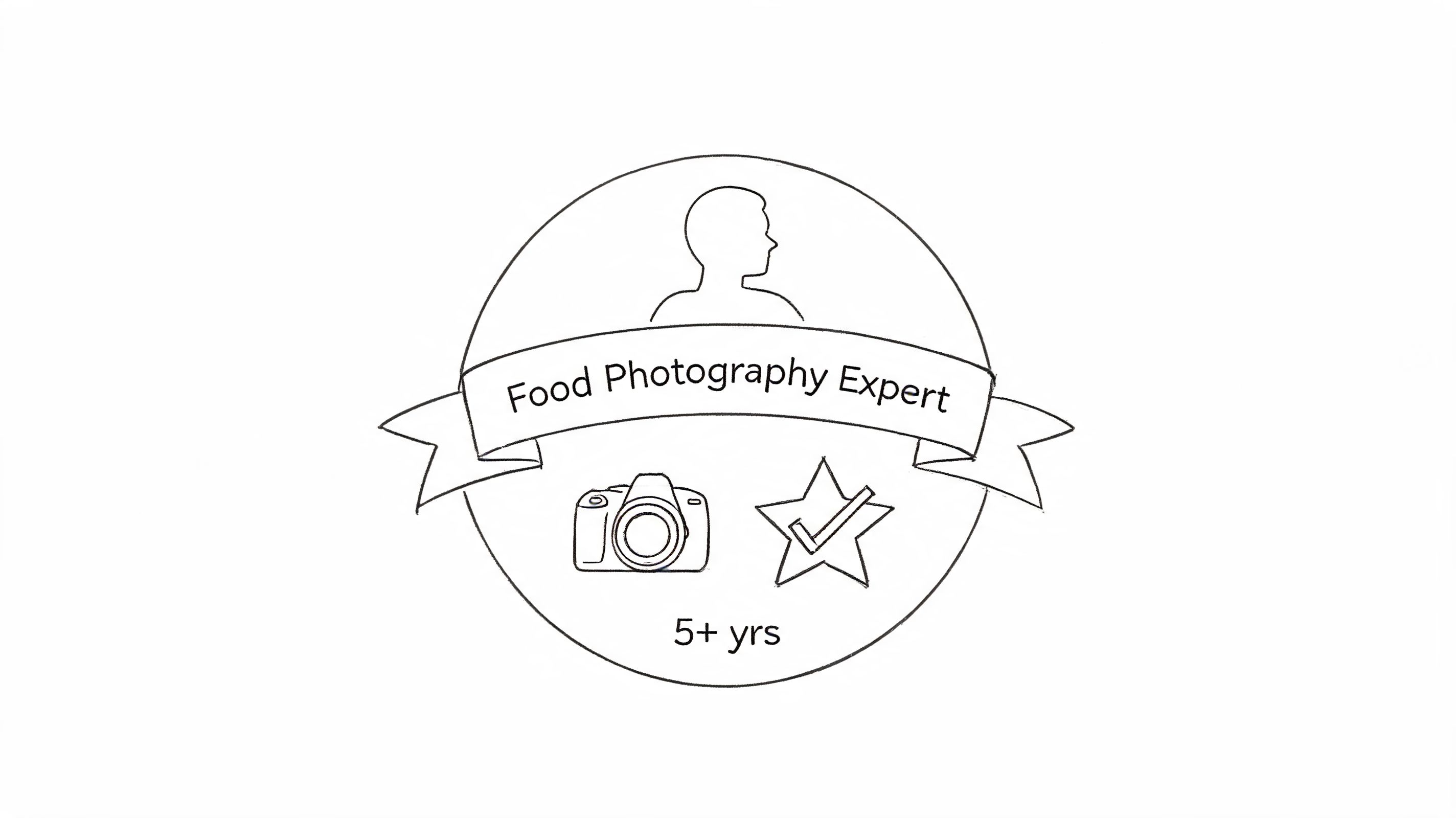
Better authority-led bio structures
Try formulas like these:
Reviewer format: London restaurant reviewer | Honest spots, not hype
Educator format: UK skincare creator | Acne-friendly routines + product demos
Category specialist: Specialty coffee creator | Café reviews | UGC for brands
Buyer-aware bio: DTC beauty creator | Tutorials, demos, creator partnerships
A niche bio works best when your content library supports it. If your bio says “food photographer” but your feed is mostly comedy clips and travel edits, the bio creates friction instead of trust.
The real trade-off
Authority bios are less playful. That's the point.
Existing advice often overvalues cleverness, but UK brands in trust-sensitive categories often need bios that signal legitimacy, clarity, and credibility over humour. That's especially relevant in beauty, supplements, and hospitality, where discoverability, transparency, and trust matter more than punchlines, as discussed in Postiz's analysis of TikTok bio ideas for discoverability and credibility.
A funny bio can earn a smile. An authority bio can earn a brief.
If you want both, put the expertise first and let personality show up in your videos, pinned posts, and comments.
4. Call-to-Action Focused Bio with Link
What should a profile visitor do after they trust your content?
Your bio should answer that in one line. If a creator wants enquiries, the bio should send people to a portfolio or rate card. If a brand wants sales, the bio should send people to a product page or featured collection. Clarity matters because TikTok gives you very little space, and weak wording wastes high-intent traffic.
The strongest CTA bios combine three things. Who you are, what the visitor gets, and where to go next.
CTA formats that drive action
These structures work because they match the business goal:
Creator services: UGC creator | Portfolio + rates below
Local creator: Manchester food creator | Book reviews in link
Product brand: UK skincare brand | Shop bestsellers below
Campaign creator: Beauty creator for brands | Briefs + contact in link
Each version pre-qualifies the click. A brand sees whether you take paid work. A customer sees whether the link leads to products. That reduces drop-off and saves time on both sides.
Vague CTAs do the opposite. “Check the link” creates friction because the visitor has to guess what sits behind it. “View media kit,” “Book collabs,” or “Shop the routine” sets a clear expectation before the click happens.
The link destination matters as much as the bio copy. If the bio promises rates and the link opens a cluttered link hub with no pricing, trust drops fast. If the bio says “book reviews” and the form is outdated, the CTA stops working. Good bios make a promise. Good landing pages keep it.
Why this structure works
This format is useful when the account has a single commercial priority. A creator who wants inbound brand work should not split attention between “subscribe,” “shop,” “DM me,” and “read my blog.” One primary action usually outperforms four weak ones.
There is a trade-off. CTA-led bios are less expressive than personality-first bios. That is often the right choice when the account is trying to generate leads, sales, or qualified outreach. Personality can still show up in the content itself. The bio handles direction.
If you want sharper wording, this guide on how to improve your social media conversions is useful for tightening CTA phrasing.
Use direct verbs: Book, shop, view, join, apply
Name the outcome: Portfolio, rates, samples, menu, audit
Keep one fallback: Email or DM, in case the link breaks
A CTA-focused bio works best when it turns interest into one obvious next step. That is what makes it useful for creators selling services and for brands turning profile visits into revenue.
5. Audience Demographics & Engagement Bio
Most creators either hide performance signals or overload the bio with metrics. Both approaches can backfire.
A buyer doesn't need your full analytics dashboard in 80 characters. They do need enough evidence to know you're commercially serious. The strongest version is selective proof, not a data dump.
What to include
This format works well for creator outreach and inbound filtering:
Niche + audience: London food creator | UK audience | Reviews + UGC
Niche + signal: Beauty creator | UK skincare audience | High-engagement content
Location + fit: Manchester lifestyle creator | Local brands + creator content
If you're tempted to include exact performance numbers, only do it when they're current, defensible, and central to your pitch. Buffer's reported benchmarks show nano creators averaging 18% engagement, micro creators 12%, and macro creators 8%, with broader benchmarks placing TikTok engagement around 3.7% overall in Buffer's TikTok statistics overview. That makes engagement a meaningful screening signal, particularly for brands comparing smaller creators.
When metrics help and when they hurt
A statement like “UGC + reviews | 12% avg engagement” can help pre-qualify you if it's accurate and consistently updated. If it's old, inflated, or cherry-picked, it does the opposite. Brands will spot the mismatch as soon as they check your account or media kit.
The quickest way to look inexperienced is posting metrics you can't defend in a call.
There's also a strategic choice here. Exact stats attract performance-minded buyers. Qualitative signals attract a broader mix of brands. If you don't have stable numbers yet, use audience fit and niche relevance instead of forcing precision.
The right bio line should make a buyer think, “This creator already understands what I care about.”
6. User-Generated Content Creator Specialisation Bio
UGC creators need a different bio from audience-first influencers.
If your main offer is content production for brands, your bio shouldn't overfocus on your own following. It should focus on what you make, who you make it for, and how a buyer can book you. That distinction matters because many ecommerce teams are hiring creators for assets, not just reach.
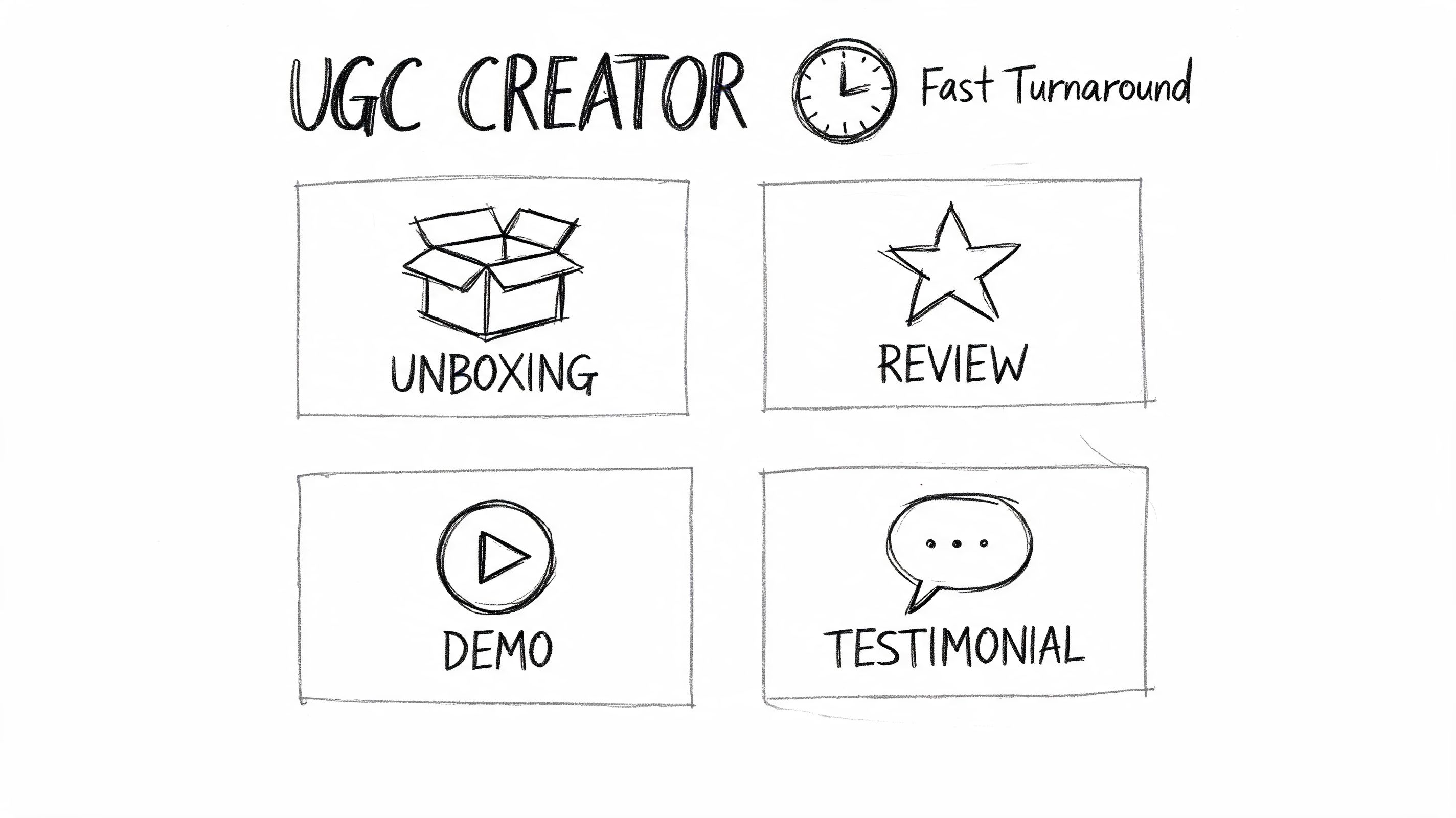
A good UGC bio looks like this: UGC creator for beauty brands | Demos, testimonials, reviews | Book below
That line tells a brand what it's buying. Compare it with “creator | lifestyle | daily uploads”, which says almost nothing about deliverables.
What high-intent UGC bios include
Use service language, not influencer language:
Content types: Unboxings, demos, voiceovers, testimonials, product reviews
Buyer type: DTC brands, restaurants, hospitality groups, beauty brands
Action path: Book below, portfolio in link, email for briefs
UK-focused bio strategy is increasingly about conversion, local intent, and trust, not just profile personality. That's why location cues, offer clarity, and a direct action path are so useful for creators selling UGC services to restaurants, ecommerce brands, and multi-location businesses, as outlined in JoinStatus guidance on TikTok bio conversion strategy.
What to avoid
Don't claim “high-converting” unless you can support it elsewhere in your portfolio. Don't overpromise turnaround speed if you can't maintain it. And don't hide your specialism behind generic creator wording.
A UGC client wants operational clarity. They want to know whether you can shoot product demos, follow a brief, and deliver usable assets.
For a quick visual breakdown of how many creators position this offer, this example video shows the format in action:
UGC bios work best when they sound like a service listing, not a diary entry.
7. Limited-Time Offer & Exclusivity Bio
Urgency can work in a TikTok bio, but only when it's real.
If you're fully booked most months, launching a seasonal package, or opening a small number of campaign slots, a scarcity-led bio can prompt faster enquiries. The key is making it specific. “Limited spots” is lazy. “Booking 2 April collabs” is clearer and more credible.
Examples that tend to work:
Monthly capacity: Booking 2 beauty UGC slots this month
Campaign window: Taking spring restaurant collabs in London
Selective positioning: Q2 partnerships open | Food + hospitality only
Why this angle can convert
TikTok's UK audience has expanded quickly, and competition for attention has grown with it. Hootsuite cites UK adult TikTok usage rising from 21% in 2021 to 37% in 2025 in its social media statistics summary for the UK market. In a more crowded creator market, clarity plus timing can be more persuasive than a static, evergreen bio.
That doesn't mean everyone should force urgency. It means availability can be a useful buying signal when it's true.
The line between urgency and gimmick
This approach fails when the scarcity looks fake. If your bio has said “2 spots left” for three months, brands notice. So do agencies. You don't look in demand. You look automated.
Scarcity only works when your profile, inbox handling, and booking process back it up.
Use this structure if you manage demand. It's especially effective for freelancers, UGC creators, and niche local creators who want fewer, better-fit partnerships instead of lots of low-quality inbound.
If your schedule is flexible and you want volume, skip exclusivity language. A straightforward partnership bio will usually perform better.
8. Success Stories & Track Record Bio
This is the most powerful bio style, and the easiest one to misuse.
A track-record bio works when you have proof that matters to buyers. That could be notable brand categories, repeat partnerships, creator services delivered, or a link to testimonials and case studies. It fails when creators stuff in unverified claims, vanity metrics, or exaggerated outcomes that a brand can't validate.
Safer ways to show proof
Because space is tight, focus on credible shorthand:
Client fit: Trusted by hospitality and DTC brands
Proof of experience: Repeat creator partner for food and beauty brands
Portfolio-led: Case studies + testimonials in link
Operational proof: UGC, reviews, whitelisting-friendly assets
If you have specific results and permission to share them, place the detail in your linked media kit or portfolio, not necessarily in the bio itself. The bio should create confidence. The landing page should carry the evidence.
What brands actually read here
They're looking for trust markers. Relevant past work. Signs that you understand campaign objectives. Signals that you won't need basic hand-holding.
One useful commercial lens comes from Sup's own positioning. The platform is built around matched micro and nano creators, outreach workflows, tracking codes, UTM links, and promo-code attribution, which is why measurable proof matters so much when brands evaluate creators for ongoing work. In that environment, a bio that hints at professionalism and sends buyers to verifiable proof is more valuable than one that tries to cram every win into a single line.
Use this format carefully:
“Trusted by local hospitality brands | UGC + case studies below”
That's restrained, believable, and useful. It invites the click without making claims your profile can't support.
8 TikTok Bio Ideas Comparison
Bio Type | 🔄 Implementation Complexity | ⚡ Resource Requirements & Maintenance | ⭐ Expected Effectiveness / Outcomes | 📊 Ideal Use Cases | 💡 Key Advantages / Tips |
|---|---|---|---|---|---|
Micro-Influencer Creator Bio with Location Tag | Low, simple copy edits and location tag | Low, occasional updates when relocating | High locally, strong for geographic discovery | Local restaurants, regional campaigns, location-based platforms (e.g., Sup) | Put city first, use location hashtags/emojis, update on move |
Brand Partnership & Collaboration-Focused Bio | Medium, requires professional wording and links | Medium, maintain media kit and manage inquiries | High for direct outreach and agency selection | Creators seeking steady paid gigs and agency-managed campaigns | List past brands, include contact, state response time |
Niche Expertise & Authority Bio | Medium, craft authority claims and proof points | Medium, consistent niche content and credential upkeep | High for specialised brand matches and premium rates | Brands needing subject-matter creators (food, sustainability, etc.) | Lead with expertise, add years/certs, use niche keywords |
Call-to-Action (CTA) Focused Bio with Link | Medium, needs clear CTA and landing setup | Medium–High, maintain landing page and link tracking | High for conversions and streamlined bookings | Creators selling services, booking calls, or sharing media kits | Use action language, track UTM/link clicks, keep page current |
Audience Demographics & Engagement Bio | Medium, requires accurate analytics and verification | Medium, analytics tools and monthly metric updates | High with performance marketers; helps ROI assessment | Data-driven campaigns, performance marketing agencies | Display verified ER/demos, update regularly, cite tools used |
UGC Creator Specialisation Bio | Medium, specify services, portfolio and capacity | High, portfolio upkeep, production and editing resources | High demand from ecommerce; can command higher fees | DTC brands, ecommerce ads, agencies needing multiple assets | State "UGC Creator," link portfolio, note turnaround & formats |
Limited-Time Offer & Exclusivity Bio | Low, simple urgency language but needs honesty | Medium, frequent availability updates and booking controls | Moderate–High for rapid inquiries; credibility risk if misused | In‑demand creators, seasonal campaigns, capacity-limited offers | Use real limits, specify dates/slots, manage bookings promptly |
Success Stories & Track Record Bio | Medium–High, prepare verifiable case studies and metrics | High, collect data, testimonials, and maintain case pages | Very high for performance-focused brands and premium deals | Brands/Agencies seeking proven ROI and repeatable results | Show verifiable metrics, link case studies, request testimonials |
From Bio to Business Activate Your Strategy
A strong TikTok bio doesn't just describe you. It filters opportunities, improves inbound quality, and helps the right brands decide faster.
That's the difference between weak and effective tiktok bio ideas. Weak bios try to appeal to everyone, show too much personality without enough context, or waste precious characters on lines that sound clever but don't tell a buyer anything useful. Effective bios do one job well. They establish fit, make the offer clear, and point to the next action.
For creators, the right structure depends on the kind of work you want. If you're targeting local restaurants, location and niche should carry the bio. If you sell UGC to ecommerce brands, deliverables and booking language should lead. If you want agency work, your bio should sound operationally reliable, not casual. And if you already have proof, use the bio to tee up the evidence rather than forcing every detail into 80 characters.
For brands, the same logic applies when reviewing creators. A well-built bio helps you screen faster. You can spot local relevance, category fit, professionalism, and likely campaign alignment without starting a long DM exchange. That matters when you're managing multiple creators or trying to scale local activations across several locations.
The most overlooked shift is this. A bio is no longer just identity copy. It's a lightweight conversion asset. It can push a viewer to book, buy, enquire, or qualify themselves for a partnership. That's why clarity usually beats creativity when commercial intent is involved.
If you're rewriting yours, keep the order simple:
Start with fit: niche, location, or service
Add proof: authority, buyer type, or track record
End with action: book, view, shop, enquire
Then test it against the rest of your profile. Your pinned videos, link page, email address, and content should all support the promise the bio makes. If they don't, fix the mismatch first.
Creators who are serious about turning profiles into revenue channels should also think beyond the bio itself. The best results come when the bio connects to a real campaign system, making platforms that combine sourcing, outreach, and attribution particularly useful. If you want a broader commercial playbook around creator revenue, the BlitzReels guide to TikTok monetization is a useful companion read.
A bio won't close every deal on its own. But it can open the right ones, cut wasted conversations, and make your profile easier to hire.
If you want your TikTok bio to lead to actual partnerships instead of passive profile visits, Sup helps connect that profile strategy to measurable creator campaigns. Brands, agencies, restaurants, and ecommerce teams use Sup to find verified micro and nano creators by niche and location, launch campaigns with tracking built in, and tie content back to clicks, bookings, sales, and revenue.

Matt Greenwell
Share