
In 2026, the challenge for restaurateurs isn't just about cooking great food; it's about putting bums on seats consistently. The old methods of simply offering a discount or posting a pretty picture on social media no longer guarantee a full dining room. Customers are more discerning, competition is fiercer, and the connection between online engagement and actual footfall is often difficult to measure. This leaves many restaurant owners spending money on marketing efforts without a clear understanding of what actually works.
This article cuts through the noise. We're moving beyond generic advice to provide a practical playbook of restaurant marketing ideas that actually drive covers in 2026. Forget vague theories; this is a roundup of concrete, measurable strategies designed to increase your seated customers. Each idea is broken down into actionable steps, explains exactly why it is effective, and shows you how to track the results. We will focus heavily on strategies that generate tangible outcomes, such as:
Authentic Local Reach: Using hyper-local micro-influencers and nano-creator communities to build genuine trust and drive local foot traffic.
Measurable ROI: Implementing real-time attribution and promo code tracking to finally connect your digital campaigns to in-house sales.
Content Amplification: Repurposing user-generated content (UGC) across paid ad channels to boost authenticity and lower your ad spend.
You'll find real-world examples and clear implementation guides for everything from TikTok creator challenges to building long-term brand ambassador programmes. This guide is built for busy restaurant owners and marketers who need strategies that can be implemented efficiently and deliver a quantifiable impact on their bottom line. Let's get started.
1. Hyper-Local Micro-Influencer Campaigns for Restaurant Foot Traffic
Forget casting a wide, expensive net with celebrity influencers. The future of restaurant marketing in 2026 is intensely local. This strategy involves partnering with verified micro-influencers (10K-100K followers) and nano-influencers (1K-10K followers) who live, work, and socialise within a specific radius of your restaurant. Their authentic connection to the neighbourhood provides a level of trust and immediacy that larger, more generic accounts simply cannot match, making this one of the most effective restaurant marketing ideas that actually drive covers.
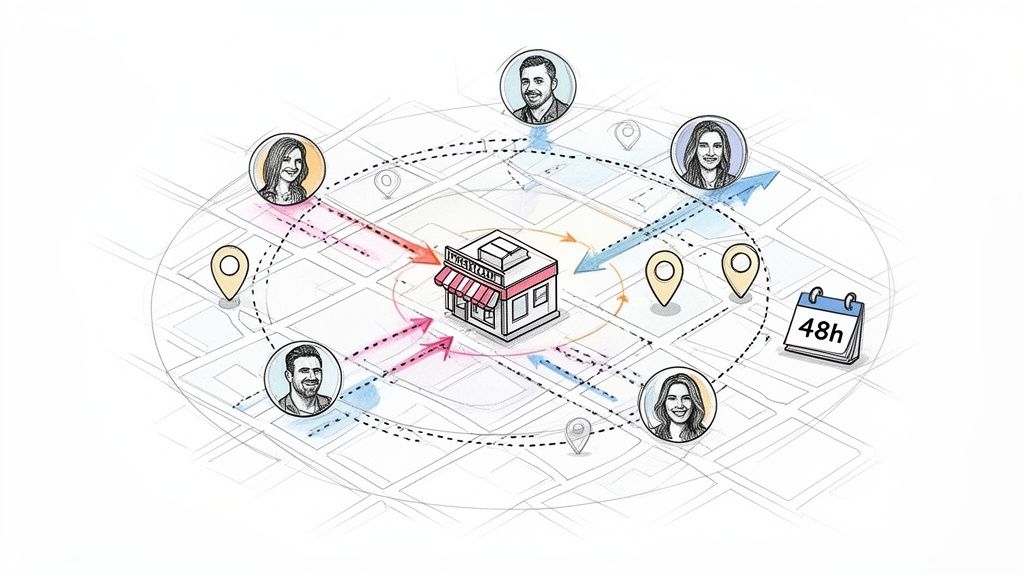
This approach moves beyond simple brand awareness. It's about generating immediate foot traffic by reaching potential diners who can realistically visit your establishment on short notice. When a local creator posts about enjoying your new lunch special or a cosy corner for an after-work drink, their followers in the area see it as a genuine, actionable recommendation from a neighbour, not a paid advertisement. Chains like Sweetgreen have successfully used this model to build a community feel in new markets, while independent restaurants use it to fill tables during traditionally quiet off-peak hours.
Quick Implementation Steps
Identify Creators by Proximity: Use a platform with location-based discovery to find creators within a 3-5 mile radius of your restaurant. This ensures their audience is geographically relevant. For a deeper dive, you can learn how to find local food influencers in your city and build a targeted list.
Track Everything: Assign a unique promotional code or a special reservation link to each influencer. This is crucial for attribution, allowing you to track which partnerships are driving actual seated covers, not just likes or views.
Brief with Precision: Guide your chosen creators. Inform them about your signature dishes, optimal photo spots, and specific times you want to promote, like a quiet Tuesday evening.
Start Small, Then Scale: Begin with a test group of 10-15 local creators per location. Analyse the results, identify your top performers, and build ongoing relationships with those who deliver measurable ROI.
2. UGC Content Repurposing for Multi-Channel Ad Spend
Once you've partnered with creators, their content shouldn't just live and die on their social media feeds. The real value in 2026 lies in systematically collecting and repurposing this authentic user-generated content (UGC) into high-performing paid advertising assets. This strategy involves taking genuine photos and videos from your influencer collaborations and using them to fuel your ad campaigns on platforms like Instagram, TikTok, Google, and even in your email marketing, creating a powerful engine for generating reservations.
This method works because UGC is inherently more trustworthy and relatable than polished, branded creative. When potential diners see ads featuring real people enjoying your food and atmosphere, it feels like a recommendation from a peer, not a corporate message. This social proof cuts through the noise of traditional advertising, leading to higher engagement and lower customer acquisition costs. Chipotle's #FoodWithIntention campaign is a prime example, repurposing thousands of creator videos into targeted ads that felt native to the platform and resonated deeply with their audience. This is one of the most cost-effective restaurant marketing ideas that actually drive covers.
Quick Implementation Steps
Secure Content Rights Upfront: Build content usage rights directly into your creator contracts. Specify a 90-180 day period for multi-channel usage, ensuring you can legally repurpose the content for paid advertising without future negotiations.
Organise and Categorise Your Assets: Don't just dump all UGC into one folder. Categorise content by type (e.g., food close-ups, group dining shots, testimonials, atmospheric videos) to easily find the right asset for specific campaigns.
Test and Learn Rapidly: Launch A/B tests with 3-5 different creator assets simultaneously in your paid social channels. This allows you to quickly identify which styles of content and which creators generate the most clicks, reservations, or covers.
Prevent Ad Fatigue: Rotate your best-performing UGC assets every 7-14 days. This keeps your campaigns fresh, maintains high performance, and prevents your target audience from seeing the same ad repeatedly.
3. Real-Time Attribution and Promo Code Tracking for ROI Accountability
The era of "spray and pray" influencer marketing is over. In 2026, every pound spent on marketing must be accounted for, and this strategy brings data-driven accountability to your creator collaborations. It involves assigning a unique promotional code and trackable link to each influencer, allowing you to directly connect their content to specific outcomes like online reservations, phone bookings, and, most importantly, seated covers. This method transforms influencer marketing from a brand awareness play into a direct-response revenue channel.
This isn't about simply handing out discounts; it’s about creating a transparent attribution system. By tracking which codes are redeemed, you can precisely measure the return on investment (ROI) from each partnership. This data is gold. It tells you which creators are not just generating engagement, but are genuinely persuading their followers to dine with you. Fine dining chains use this model to prove the value of local marketing to franchisees, while quick-service restaurants measure which creators drive the most redemptions and, crucially, repeat visits. It’s one of the most vital restaurant marketing ideas that actually drive covers because it proves what works.
Quick Implementation Steps
Assign Unique Codes: Create a simple, memorable promo code for each influencer (e.g., "SOPHIE20"). Brief creators to mention the code clearly and repeatedly in their content, especially in video, for better recall.
Integrate with Your POS/Booking System: Ensure your point-of-sale and online reservation systems can accept and track these unique codes. This integration is crucial for linking a code redemption directly to a customer's bill or booking.
Set a Performance Baseline: Before launching the campaign, establish your average weekly reservation and cover volume. This baseline allows you to accurately measure the uplift generated by your influencer collaborations. To get a complete picture, learn how to properly track influencer marketing attribution with promo codes and set up your system correctly.
Analyse and Optimise: Regularly review the performance data. Identify which influencers are driving the highest number of redemptions and the largest average spend per table. Share this performance data with your top creators to foster strong, long-term partnerships and double down on what’s working.
4. Nano-Creator Micro-Communities for Authentic Local Reviews
While one-off influencer posts can create a temporary buzz, 2026 is about building sustained momentum. This is where creating a dedicated micro-community of nano-creators (under 5K followers) comes in. This strategy involves recruiting a small army of 10-50 hyper-local, high-engagement creators to act as consistent brand advocates, generating a steady stream of authentic content and reviews. Their genuine connection to their small but mighty following makes their endorsements incredibly powerful.
Unlike a single campaign, this is an ongoing relationship. Imagine a neighbourhood pizza parlour with 20 community advocates constantly sharing photos of their weekly slice, or a regional cafe group with an ambassador programme that generates organic mentions every time a new seasonal menu drops. This constant, low-level promotion keeps your brand top-of-mind within key postcodes and creates a powerful social proof engine. It is one of the restaurant marketing ideas that actually drive covers in 2026 by building a loyal, vocal customer base.
Quick Implementation Steps
Recruit Authentically: Identify nano-creators who already post about your restaurant or similar local businesses. Start by inviting existing regular customers who have a social presence; their advocacy will be the most believable.
Create a Communication Hub: Set up a private WhatsApp or Slack group for your community. Use it for weekly updates on menu specials, seasonal promotions, and specific content requests, making them feel like true insiders.
Offer Tiered Benefits: Structure a simple ambassador programme. Benefits can range from a free monthly meal and exclusive tasting events to creator fees and performance bonuses for posts that generate high engagement or verified reviews.
Track and Recognise: Use a dashboard to monitor individual creator output (posts, stories, reviews). Publicly recognise your top contributors on your own social channels to foster friendly competition and encourage continued participation.
5. TikTok and Instagram Reels Creator Challenges for Viral Reach and Engagement
Short-form video challenges on platforms like TikTok and Instagram Reels are a powerful way to generate massive amounts of user-generated content (UGC) and create a viral buzz around your restaurant. This strategy involves launching a branded contest where creators compete to produce the most creative or entertaining video featuring your establishment, a signature dish, or a specific dining experience. The competitive element gamifies content creation, turning your brand into a trending topic.

The real power of this idea is its ability to create an exponential wave of authentic promotion at a fraction of the cost of traditional advertising. When executed correctly, a successful challenge can lead to millions of views and a direct increase in footfall, as seen with major chains like Chipotle and their #GuacDayChallenge. For independent restaurants, this approach offers a direct line to a younger, highly engaged audience, making it one of the most dynamic restaurant marketing ideas that actually drive covers in 2026.
Quick Implementation Steps
Define a Visual Challenge: Centre your contest around a specific, visually appealing moment. This could be building the perfect burger, capturing the cheese pull from a pizza, or showing a creative way to enjoy your summer cocktails.
Seed with Key Creators: Don't leave the launch to chance. Brief 20-30 creators before the challenge goes live to seed the hashtag with high-quality content. This sets the standard and provides initial momentum for the algorithm.
Offer Tiered Prizes: Motivate participation with a clear prize structure. For example: a £500 cash prize for first place, £250 for second, and meal vouchers for the next 10 best entries.
Track and Promote: In your brief, instruct creators to include a unique promo code in their videos. This allows for direct attribution of covers. To ensure your restaurant's content reaches the widest possible audience, learning about the Top 10 Best Hashtags for Instagram Reels to Maximize Your Reach in 2026 is essential.
Set a Clear Timeline: Run the challenge for 2-4 weeks. This is long enough to build momentum but short enough to maintain urgency and prevent audience fatigue. Actively repost and engage with the best submissions throughout the campaign.
6. Creator Collaboration Bundles for Multi-Location Chain Expansion
Expanding a restaurant chain into new markets or launching new locations requires generating immediate buzz and footfall. In 2026, the key is to orchestrate a unified yet localised creator marketing blitz. This strategy involves packaging 20-40 micro-creator collaborations into coordinated, location-specific "bundles" that are deployed systematically to announce and sustain a new opening. This method goes far beyond a scattered approach, creating a powerful wave of social proof that dominates local feeds and drives immediate traffic, making it one of the most effective restaurant marketing ideas that actually drive covers for growing chains.
This is not about one-off posts; it's a campaign designed for maximum impact and market saturation from day one. By coordinating a high volume of local creators, a new restaurant can appear to be the most talked-about spot in town overnight. For example, a national QSR chain like Wingstop uses these coordinated creator drops to build momentum for new location announcements, ensuring queues are forming before the doors even officially open. The combined effect of multiple trusted local voices all posting within a tight timeframe creates an undeniable sense of FOMO (fear of missing out) and credibility.
Quick Implementation Steps
Segment Creators by Goal: Don't treat all creators the same. Segment your bundle into tiers to achieve different objectives: foodies for menu credibility, lifestyle creators for aspirational branding, and family-focused accounts to highlight your venue's welcoming atmosphere.
Stagger the Launch Content: Plan a multi-week content calendar. Have 3-5 creators post within the first 48 hours of opening to build initial momentum. Stagger the remaining posts over the following 2-3 weeks to maintain content freshness and sustained visibility.
Provide Location-Specific Briefs: Equip creators with tailored briefs that highlight the new location’s unique features, opening-week specials, and specific menu items you want to promote. This ensures the content feels authentic to that specific branch. If you're managing multiple launches, it's vital to understand how to run influencer campaigns for multiple restaurant locations effectively.
Offer Exclusive Creator Discounts: Empower your creator bundle with a unique discount code or offer exclusive to their followers during the opening week. This creates a powerful incentive for their audience to visit immediately and allows you to directly track which partnerships are driving covers.
7. Seasonal and Event-Based Creator Campaigns for Traffic Spikes
Aligning your creator marketing efforts with the calendar is one of the smartest restaurant marketing ideas that actually drive covers in 2026. Instead of running generic campaigns year-round, this strategy focuses your budget and creative energy on specific, high-intent periods like holidays, seasonal changes, and major local events. This creates a timely and relevant message that capitalises on existing consumer behaviour, driving immediate and significant traffic spikes.
The logic is simple: you’re meeting customers where their attention already is. When a cocktail bar partners with mixology creators to showcase festive drinks in November, they are tapping into the natural search for holiday party venues. Similarly, a family restaurant launching a back-to-school campaign in August with parent creators addresses a real, immediate need for easy weeknight dinner solutions. This targeted approach ensures your marketing spend is not just for brand awareness but is directly tied to periods of peak potential revenue.
Quick Implementation Steps
Map Your Calendar: Identify your top 3-4 revenue-driving seasons (e.g., Summer, Christmas, Valentine's Day). Begin your creator recruitment and onboarding process 8-10 weeks in advance to allow ample time for briefing, content creation, and approvals. Plan your big Christmas push by October at the latest.
Create Seasonal Briefs: Develop specific creative briefs for each campaign. These should detail seasonal menu items, limited-time offers, and the exact atmosphere you want to convey. For example, a "Cosy Autumn Nights" brief would highlight warming dishes and intimate seating, while a "Summer Patio Season" brief would focus on refreshing cocktails and outdoor dining.
Amplify with Paid Spend: Don't rely solely on organic reach. Coordinate your creator content schedule with your paid social media advertising. Boost the best-performing creator posts to a wider, yet still targeted, local audience to maximise visibility and bookings.
Train Your Team: A seasonal campaign's success also depends on your in-house team. Beyond just campaigns, smart strategies like how to upsell seasonal beverages can maximise every customer interaction and boost the campaign's overall profitability.
8. Creator Reviews and Social Proof Aggregation for Conversion Optimisation
Positive reviews are powerful, but authentic creator testimonials are game-changing. In 2026, simply getting a good rating isn't enough; you need to strategically gather and showcase compelling user-generated content (UGC) from creators to build undeniable social proof. This approach involves systematically collecting creator reviews, particularly video testimonials, and distributing them across all your key conversion points, from your booking page to your paid ads. This is a crucial tactic among restaurant marketing ideas that actually drive covers because it answers potential diners' questions with a trusted, third-party voice before they even ask.
The goal is to reduce booking friction by showing, not just telling. When a potential customer is on your website, seeing a short video of a creator raving about the flavour of your signature pasta or the cosy atmosphere of your bar removes doubt and builds excitement. Fine dining establishments use these video reviews in pre-booking emails to set expectations and build anticipation, while quick-service chains feature creator testimonials in their Google Business Profile to stand out in local search results. This constant, multi-channel reinforcement of positive experiences turns passive browsers into seated diners.
Quick Implementation Steps
Request Specific Video Testimonials: Ask every creator you partner with for a 30-60 second video review. Provide clear prompts like, "What surprised you most about your experience?" or "Describe your favourite dish and why someone has to try it."
Feature on High-Intent Pages: Embed 3-5 of the best, most recent creator testimonials directly on your website's homepage and, most importantly, on your online booking or reservation page. This reassures customers at the final point of decision.
Repurpose for All Channels: Transcribe video testimonials to create text-based quotes for your website and Google Business Profile Q&A section. Edit the videos into short, 15-second clips for Instagram Reels and TikTok to maximise reach and engagement.
Automate with Email: Integrate creator video reviews into your welcome email sequence for new subscribers. This builds immediate trust with your most engaged audience and keeps your restaurant top-of-mind for their next meal out.
9. Creator Partnership Loyalty and Long-Term Ambassador Programs
The days of one-off, transactional creator posts are ending. In 2026, the most impactful restaurant marketing ideas focus on building authentic, long-term relationships. This means transitioning from paying for a single review to cultivating a small, dedicated group of 5-15 brand ambassadors per location who genuinely love your restaurant and consistently share their experiences. These ongoing partnerships build deep-seated trust and create a continuous stream of authentic content that one-off campaigns cannot replicate.
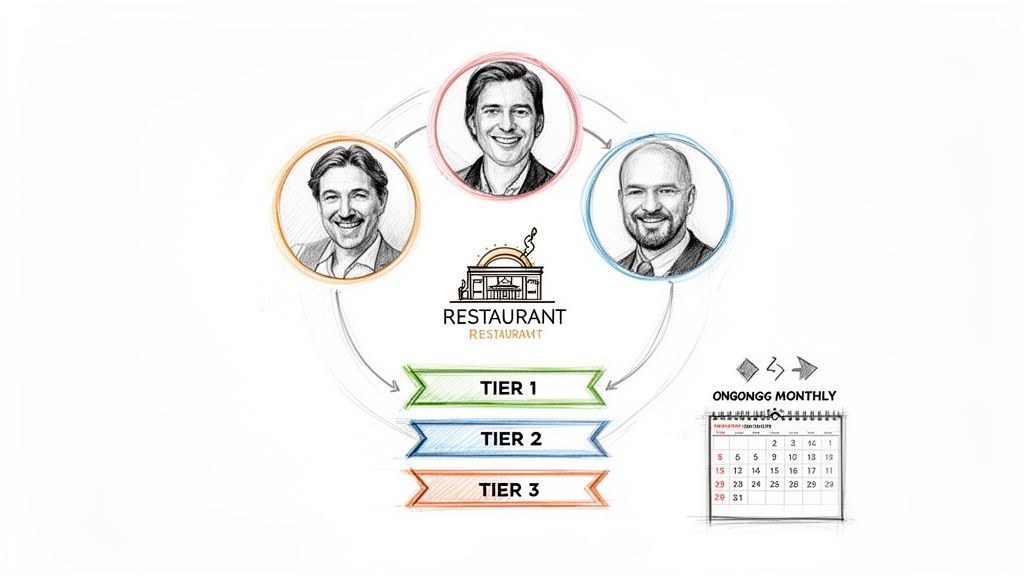
By moving to an ambassador model, you transform creators from hired megaphones into true partners invested in your success. This consistency familiarises their audience with your brand, making your restaurant a regular, trusted feature in their social feeds. Regional chains can assign 'official' creators to each market for steady promotion, while QSR brands are implementing annual agreements with exclusive menu access and even revenue-share models. The goal is to create a core team that generates predictable monthly content, drives measurable footfall, and becomes a vital part of your marketing engine.
Quick Implementation Steps
Select Your Core Ambassadors: Review past campaign performance and identify your top 5-10 creators. These are individuals who not only generated engagement but also drove actual covers. They become your primary candidates for an ambassador programme.
Create Tiered Annual Partnerships: Structure clear agreements. For example: a 'Tier 1' partnership could offer a £500-£1000 monthly retainer, while a 'Tier 3' might involve complimentary meals plus a £100 fee per post. This allows you to work with creators at different levels.
Define Clear Deliverables and Exclusivity: Your agreement should specify content requirements, such as a minimum of 4-8 posts and 2 Reels per month. Importantly, include an exclusivity clause that prevents them from working with direct competitors in the same category for the duration of the partnership.
Integrate and Collaborate: Treat your ambassadors like part of the team. Invite them to exclusive menu tastings, brand planning sessions, and special events. Feature their content on your own social media channels and in-restaurant marketing materials to reinforce the partnership. This makes the relationship feel genuine to both the creator and their audience.
10. Data-Driven Creator Matching by Audience Demographic Alignment
Moving beyond guesswork, this strategy involves using audience demographic data to partner with creators whose followers precisely mirror your restaurant's ideal customer profile. It’s no longer enough for a creator to like your food; their audience must be your target audience. This scientific approach ensures your marketing spend reaches people with the right age, income level, location, and dining habits, making it one of the most efficient restaurant marketing ideas that actually drive covers.
This is about precision targeting at its finest. Instead of hoping for the best, you are making an informed decision based on data. For instance, a fine-dining establishment would partner with a creator whose audience consists of high-earning professionals aged 35-55, while a family-friendly pizzeria would seek out creators followed by parents in their local area. This alignment drastically increases the probability of converting a follower into a seated diner because the content speaks directly to their lifestyle and purchasing power.
Quick Implementation Steps
Define Your Customer Persona: Before anything else, create a detailed profile of your ideal diner. Include age, income bracket (HHI), family status, specific neighbourhoods, and lifestyle interests like "loves craft beer" or "seeks vegan options."
Prioritise Location, Then Demographics: Your first filter should always be geographic proximity, ensuring the creator’s audience is within a 5-10 mile radius. Once that’s confirmed, apply your demographic filters to find the perfect match.
Request Audience Data: During your vetting process, ask creators for a screenshot of their audience insights (age, gender, top cities/countries). Professional creators will have this readily available and be happy to share it.
Use Matching Technology: Platforms like Sup can automate this process, scoring and ranking potential creators based on how well their audience demographics align with your pre-defined customer profile, saving you hours of manual research.
Track and Refine: Analyse which creator demographics convert best. You might find that one segment drives more lunch covers while another is better for weekend dinners. Use these insights to continually refine your creator selection strategy for maximum ROI.
10-Point Comparison: Creator-Driven Restaurant Marketing Ideas (2026)
Campaign | 🔄 Implementation Complexity | ⚡ Resource Requirements | 📊 Expected Outcomes | Ideal Use Cases | ⭐ Key Advantages | 💡 Quick Tips |
|---|---|---|---|---|---|---|
Hyper-Local Micro-Influencer Campaigns for Restaurant Foot Traffic | Moderate — vetting & local matching, quick setup | Low–Medium — per-creator fees and location management | Local engagement → short-term reservation & cover lift within days | New locations, off-peak fills, neighborhood restaurants | High engagement and cost-effective local conversions | Use location-based codes, test 10–15 creators, track reservations |
UGC Content Repurposing for Multi-Channel Ad Spend | Medium — rights management & ad integrations | Medium — content library, AI scoring, ad budget | Higher ad conversion, lower CPC, scalable creative pool | Paid media scaling, multi-channel ads, creative volume needs | Converts better than branded content; efficient asset reuse | Secure multi-channel rights, categorize UGC, rotate assets weekly |
Real-Time Attribution and Promo Code Tracking for ROI Accountability | High — requires POS/reservation integrations & dashboards | Medium — tracking tools, promo-code systems, reporting | Clear revenue attribution → optimized spend & creator payments | Performance-based partnerships, franchise ROI reporting | Data-driven ROI; enables performance payments & budget optimization | Use simple codes, track delayed redemptions, set baseline traffic |
Nano-Creator Micro-Communities for Authentic Local Reviews | Medium — onboarding & ongoing community management | Low–Medium — perks, small fees, community tools | Steady organic mentions → improved trust and local search ranking | Independent shops, neighborhood-focused brands | Extremely authentic reviews and defensible local loyalty | Recruit frequent patrons, offer tiered perks, track creator outputs |
TikTok and Instagram Reels Creator Challenges for Viral Reach and Engagement | Medium — challenge design, seeding, moderation | Medium — prize budget, seeding creators; scalable organically | Potentially massive reach and engagement; variable attribution | Brand awareness, viral campaigns, seasonal spikes | Massive organic scale from minimal brand effort | Seed 20–30 creators, use trending sounds, set clear rules & prizes |
Creator Collaboration Bundles for Multi-Location Chain Expansion | High — coordinate 15–30 creators and schedules | High — larger spend, centralized management & scheduling | Rapid local awareness and launch momentum for openings | New location launches, market entry for chains | Efficient multi-creator launch impact and audience diversity | Segment creators by persona, stagger posts, integrate PR/paid |
Seasonal and Event-Based Creator Campaigns for Traffic Spikes | Medium — advance planning and themed briefs | Medium — timed spend during peak windows, creator booking | Concentrated revenue spikes with measurable seasonal lift | Holidays, sporting events, summer/Valentine’s campaigns | Higher-intent messaging and predictable seasonal ROI | Plan 8–10 weeks ahead, reuse templates, align with paid media |
Creator Reviews and Social Proof Aggregation for Conversion Optimization | Medium — automate collection and site/widget integration | Low–Medium — video editing, CMS/widgets, minimal spend | Boosts booking conversions and reduces friction (15–30% lift) | Booking pages, email flows, local SEO and paid creative | Strong conversion lift from video testimonials and trust signals | Request 30–60s videos, transcribe, rotate testimonials monthly |
Creator Partnership Loyalty and Long-Term Ambassador Programs | High — contractual agreements & ongoing relationship mgmt | High — annual fees, events, dedicated CRM & perks | Predictable content cadence, improved quality, sustained bookings | Brands seeking sustained advocacy and reliable creators | Deep brand alignment, consistent quality, content reuse | Start with top performers, define deliverables, include bonuses |
Data-Driven Creator Matching by Audience Demographic Alignment | High — advanced analytics and continuous reassessment | Medium–High — paid analytics tools, audience data access | Higher conversion and reduced wasted impressions via precision | Targeted concepts, multi-concept brands, segmented campaigns | Precision targeting and improved campaign efficiency | Prioritize location, define ICP, verify creator audience data |
From Ideas to Full Tables: Implementing Your 2026 Marketing Plan
We've explored ten powerful restaurant marketing ideas that actually drive covers in 2026, moving beyond generic advice to focus on what truly works. The common thread weaving through these strategies is a shift towards authenticity, data-driven decisions, and hyper-local community building. Gone are the days of casting a wide, expensive net and hoping for the best. Success in the current hospitality climate is about precision, connection, and measurable results.
The strategies detailed, from hyper-local micro-influencer campaigns to building long-term creator ambassador programmes, all point to a single, critical truth: your most powerful advocates are real people sharing genuine experiences. The customer journey no longer begins with a traditional advertisement; it starts in a TikTok feed, an Instagram Story, or a trusted local's Google review. Your role is to find, activate, and amplify these authentic voices to build social proof that translates directly into seated diners.
Your Immediate Action Plan
Turning these concepts into a concrete strategy can feel overwhelming, but it begins with small, deliberate steps. Don't try to implement everything at once. Instead, focus your energy where it will have the most immediate impact.
Start with Attribution: Before you spend another pound on marketing, ensure your tracking is solid. Implement unique promo codes for different campaigns and creators. Master your analytics to understand which channels and partnerships are genuinely putting people in seats. This is the foundation upon which all successful marketing is built; without it, you are simply guessing.
Find Your First Micro-Creators: Identify five to ten local creators whose audience and aesthetic align perfectly with your brand. These don't need to be professional influencers; they could be local foodies, community organisers, or simply residents with an engaged following. Reach out with a genuine, personalised offer for a complimentary dining experience in exchange for honest content. This initial test will provide valuable user-generated content and insights at a minimal cost.
Repurpose and Amplify: Take the content generated from your initial creator outreach and put a small, targeted ad budget behind it. Promote a UGC-style Reel to a lookalike audience within a five-mile radius of your restaurant. This approach combines the authenticity of a real customer's experience with the precision of paid advertising, delivering a message that is both trusted and seen by the right people.
The True Value of a Modern Marketing Approach
Mastering these restaurant marketing ideas that actually drive covers in 2026 is about more than just filling tables on a Friday night. It's about building a resilient, future-proof brand. When you cultivate a community of advocates, you create a powerful, self-sustaining marketing engine. Positive reviews from nano-creators build trust, viral creator challenges generate widespread awareness, and long-term ambassador programmes ensure a consistent stream of authentic promotion.
This strategic pivot protects your business from fluctuating ad costs and algorithm changes. It grounds your brand in the local community, fostering a level of loyalty that a generic billboard or radio ad could never achieve. By prioritising real connections and measurable outcomes, you move from spending money on marketing to investing in a tangible asset: a stellar reputation that consistently brings new and returning customers through your doors. The goal is to create a restaurant so well-regarded and talked about online that it becomes the default choice for diners in your area.
Ready to stop guessing and start measuring the real-world impact of your creator collaborations? Sup provides the essential tools for restaurants to run data-driven influencer campaigns, track footfall attribution, and prove ROI. Find the right local creators and see exactly how many covers their content drives by visiting Sup.

Matt Greenwell
Share