London's dining market is crowded, expensive, and loud. If you're managing a restaurant here, you already know that good food alone doesn't guarantee covers. You can have a sharp menu, a strong fit-out, and a decent location and still get drowned out by venues that show up better in feeds, search, and local recommendation loops.
That's why London food bloggers matter. London has a mature food-creator ecosystem with major audience reach, including creators listed in a 2026 London directory such as Sophie Macfie with 1.63 million followers, Pretty Little London with 1.55 million followers, and Ben Lippett with 1.23 million followers. The same directory also reflects a broad citywide creator pool across food, drink, vegan, and restaurant niches, while London had 11,400+ restaurants as of May 2025, up 4.6% since 2023, which makes discoverability a real operating issue, not a branding nice-to-have (London food influencer directory and restaurant market snapshot).
Old-school ads still have a place. They just don't do enough on their own when diners increasingly discover where to eat through creators, searchable short-form content, and recommendation-led browsing. This guide is built for the operator who needs more than a list of names. You need to know who to contact, what kind of venue each blogger suits, how to brief them without wasting comps, how to track whether a collaboration worked, and how to turn ad hoc gifting into a repeatable acquisition channel.
1. London Eater (Kang Leong)
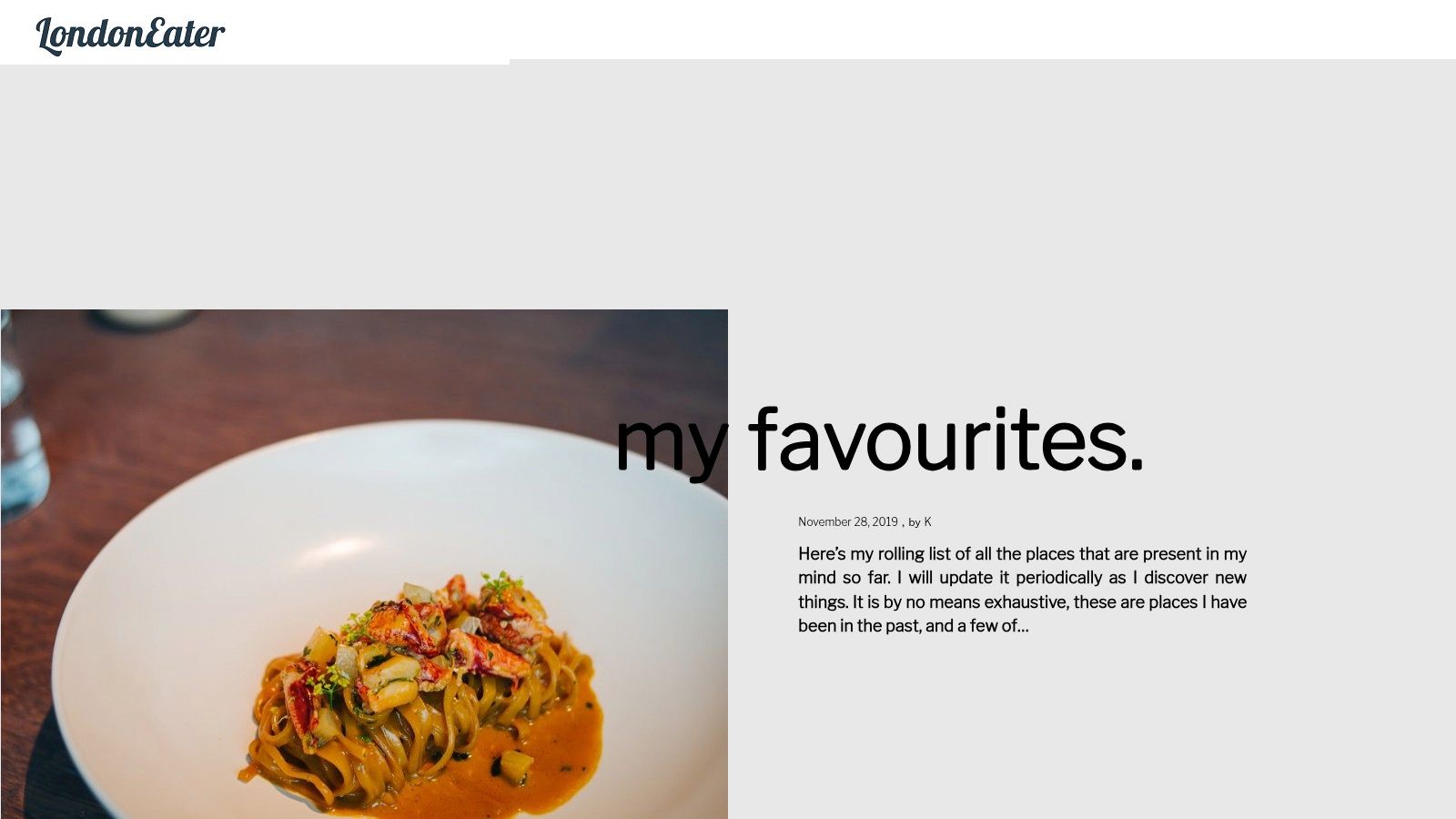
London Eater is the blogger I'd shortlist when you want considered coverage, not fast hype. The site has been around for years, and that matters because readers don't go there for a throwaway “best bites” reel. They go there to decide whether a place is worth a booking.
For a restaurant manager, the commercial value is intent. A detailed first-person review with dish-level observations reaches diners who compare options before they commit. That's useful for chef-led openings, tasting menus, regional concepts, and restaurants where the story behind the food needs more than eight seconds of vertical video.
Best fit for thoughtful bookings
London Eater works best when your menu rewards explanation. If you're plating technically ambitious dishes, changing menus seasonally, or trying to educate guests on provenance, process, or style, long-form review content does more heavy lifting than a quick montage.
It's less useful if your entire strategy depends on short-form velocity. London Eater isn't the obvious choice for a launch that needs dozens of reactive story mentions over a weekend.
A practical way to approach this kind of creator is to treat the invite like a press briefing, not a promo ask. Share the menu structure, signature dishes, chef background, and any service notes that affect the experience. Don't over-script the angle.
Practical rule: If a blogger's value comes from credibility, don't ask for guaranteed positivity. Ask for an honest visit and give them enough context to review you accurately.
A few trade-offs are worth being clear about:
Best for depth: Strong when guests need reasons to book, not just awareness.
Less suited to speed: You won't get the same volume of short-form assets you'd expect from a TikTok-first creator.
Good for archive value: Long reviews can keep helping discovery after the initial post date.
If you're building a structured creator programme, pair one credibility-led reviewer like London Eater with several social-first micro-creators. That mix gives you both trust and frequency. Sup's breakdown of how restaurants work with food influencers in London is a useful model for that layered approach.
2. The Picky Glutton
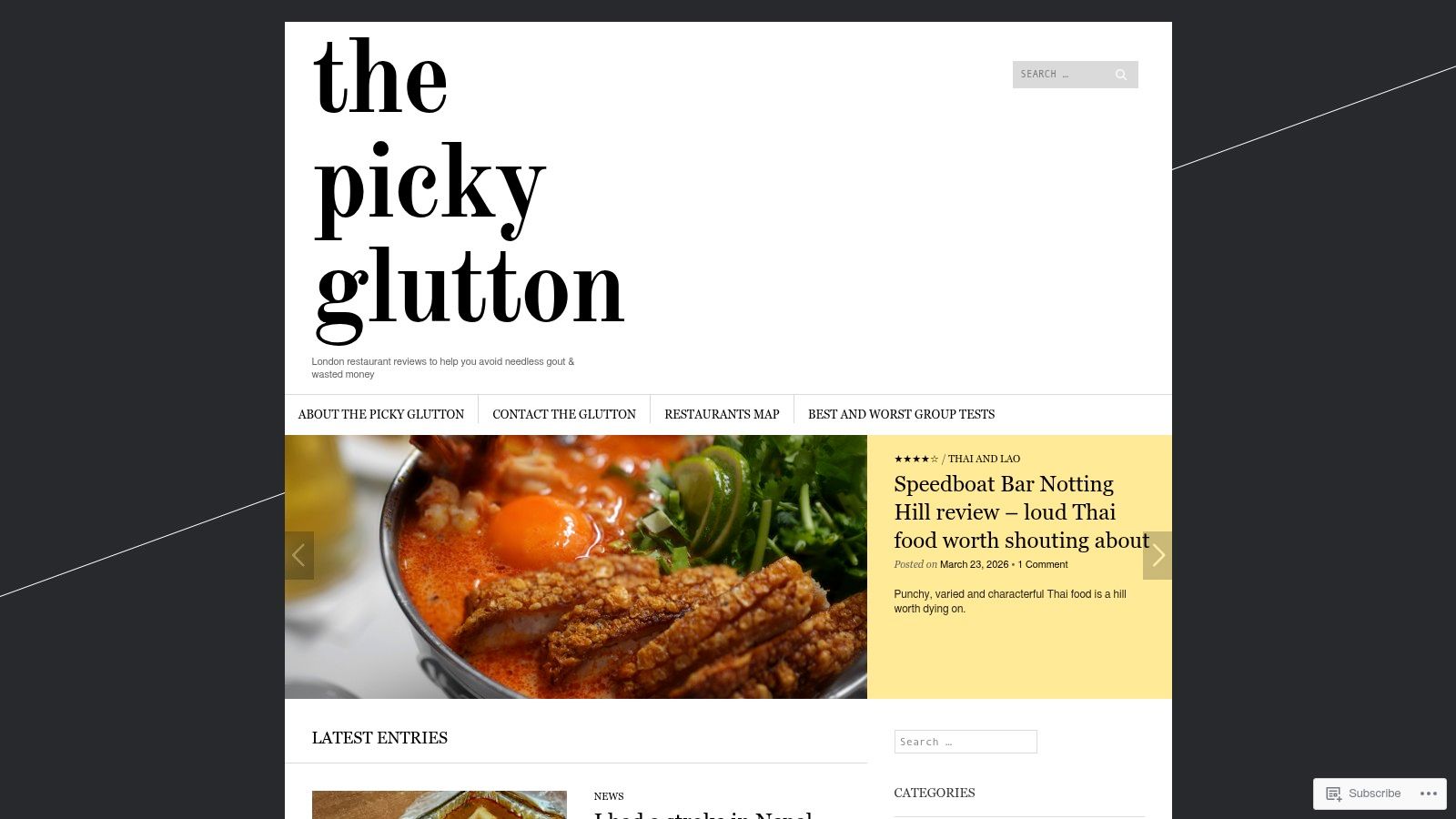
If your venue is strong and you want validation from a blunt editorial voice, The Picky Glutton is worth attention. The appeal here is clarity. Reviews are direct, ratings are visible, and the tone doesn't read like sponsored fluff.
That has obvious upside and obvious risk. Restaurants with substance benefit from critical transparency because it signals confidence. Restaurants still ironing out service, pricing logic, or menu coherence should think twice before offering an open-ended visit.
Where it helps most
This site is useful when your target diner cares about value as much as novelty. It also works for broad cuisine categories and neighbourhoods where people are actively comparing alternatives. A straight verdict often converts better than overly polished content because readers feel someone has done the filtering for them.
I also like The Picky Glutton for group-test style content and category comparisons. That's especially relevant in London because the city's restaurant scene has diversified sharply. Between 2019 and 2022, London's number of vegan restaurants rose from 156 to 209, while fast food, ghost kitchens, and street food pop-ups expanded as casual dining softened, creating more recommendation niches for creators and operators alike (London restaurant industry trend analysis).
That context matters. In a market with more formats and more specialisation, a blogger who compares rather than merely showcases can send more qualified traffic.
Use for honest validation: Strong if you want readers who are already evaluating options.
Avoid forced messaging: This isn't the right partner for a rigid script or sales-heavy brief.
Think in categories: Invite them when you can credibly compete within a cuisine, occasion, or price band.
One operational note. Don't send a generic PR email saying you'd “love to collaborate”. Send a concise pitch with why your venue is review-worthy now. New menu, chef appointment, major refurb, or a dish category you believe you can own.
If your team struggles to build local outreach lists, Sup's guide on how to find local food influencers in your city is a solid starting point for narrowing creators by geography and fit, not just follower count.
3. Cheese and Biscuits (Chris Pople)
Cheese and Biscuits sits firmly in the serious-review camp. Chris Pople's style is narrative, scored, and often more useful to hospitality insiders and highly engaged diners than to casual scrollers. That's exactly why it can be commercially valuable.
Some launches need borrowed authority. If you're opening a destination restaurant, introducing a chef with a following, or trying to signal that you belong in a more discerning conversation, this kind of coverage can sharpen positioning in a way promo-led content often can't.
Strong for chef-led and destination openings
The archive matters here. Long-running blogs accumulate search presence around restaurant names, neighbourhoods, and dining occasions. If someone hears about your venue and starts researching, this is the sort of review that can influence the final decision.
The trade-off is obvious. You don't control the narrative, and you shouldn't expect to. Serious reviewers are useful because they aren't there to function like an ad unit.
I'd brief this type of blogger the same way I'd brief a critic-friendly press visit. Confirm reservation details cleanly. Make sure the service team knows there's a guest with editorial intent. Don't over-manage the floor. The quickest way to create awkward coverage is to make the experience feel stage-managed.
Good long-form coverage doesn't rescue a weak operation. It amplifies what's already true.
Cheese and Biscuits is less suitable if your main objective is content reuse for paid social. You may get a strong written review, but not the bank of short-form creative that a content-first creator would produce.
The upside is trust. If your venue can handle scrutiny, that trust is worth more than a stack of generic “must visit” captions. Use it when you want to strengthen market perception, not just fill tonight's empty tables.
4. Halal Food Guy
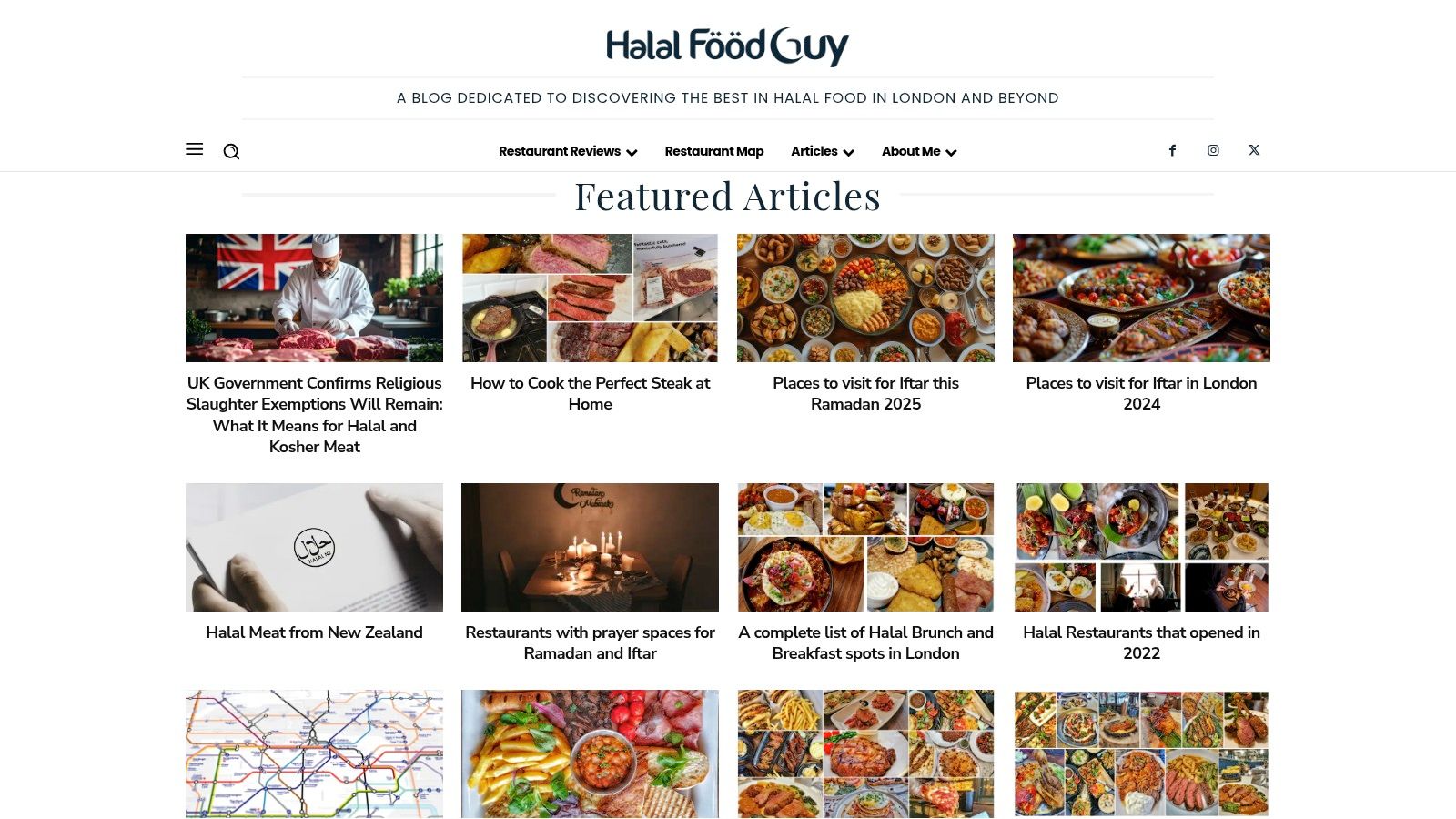
Halal Food Guy is one of the clearest examples of why niche relevance beats broad reach. If your venue offers halal-compliant dining, alcohol-free options, or a fitting Ramadan and iftar experience, this is the kind of specialist publisher that can drive qualified footfall.
General London food bloggers can mention your venue. A halal-focused authority can answer the questions that determine whether someone visits. Is it fully halal, partially halal, HMC-certified, alcohol-free, family-friendly, and easy to find by area? Those specifics matter more than aesthetic plating shots for this audience.
Why specialist trust converts better
This site's practical tools matter. Location sorting, halal-status notes, themed lists, and category pages make it easier for users to move from browsing to decision. That's the type of workflow restaurants should respect because it mirrors actual intent.
In the UK, blogger-led food discovery increasingly shapes where people choose to eat, with creators acting as digital storytellers and catalysts for emerging trends. For operators, that means discovery content works best when it aligns with searchable local intent rather than broad awareness alone (how food bloggers are changing the way we eat in the UK).
For Halal Food Guy, that means your outreach should be specific. Lead with neighbourhood, halal credentials, cuisine type, standout dishes, and any service window tied to seasonal moments.
Lead with compliance detail: Don't make the creator chase basic halal information.
Pitch real utility: “Best halal lunch near Liverpool Street” is stronger than “trendy new opening”.
Use moment-based campaigns: Ramadan, Eid, late-night dining, and family dining all make sense.
This is also where many restaurant teams get lazy. They say they're “halal friendly” without defining what that means. Don't do that. Be precise, or skip the outreach until you can be.
If you need a campaign structure for invites, gifting, paid content, and follow-ups, Sup's playbook on how to get food influencers to promote your restaurant gives a useful operating framework.
5. East London Girl
East London Girl is a practical pick for neighbourhood discovery. If your venue is outside the obvious central tourist loop, or you need to win local consideration rather than broad London awareness, this type of creator is often a better investment than a larger but less geographically relevant account.
Area guides are a key asset. Diners don't just search for “best restaurant London”. They search by district, occasion, and social plan. That makes neighbourhood roundups commercially useful, especially for independents trying to become part of a local shortlist.
Useful for localised discoverability
Many campaigns miss the mark. They obsess over who has the biggest audience instead of who sits inside the user journey. East London Girl is valuable because the content often matches how people decide. They're going to Hackney, Shoreditch, Bethnal Green, or Stratford and need a place to eat or drink.
That's increasingly important because practical discovery needs are getting sharper. Most blogger roundups still lean aspirational, but users increasingly need recommendations filtered by neighbourhood, price, and dietary fit, especially as food and non-alcoholic beverage inflation stayed above general CPI in 2024 and London remained the UK region with the highest average café and restaurant price levels in ONS regional pricing data (ONS-linked summary on London price pressure and recommendation gaps).
That means your pitch should help the creator answer a real user query.
Anchor on location: Lead with the neighbourhood and nearest station.
Clarify price position: Affordable, mid-market, special occasion, or tasting-led.
Add decision filters: Vegan-friendly, date-night, group dinner, solo lunch, late-night.
Operator takeaway: The most useful local coverage answers “Should I go here tonight?” not “Does this look nice on Instagram?”
East London Girl is less suited to deep critical analysis than a reviewer-led blog. That's fine. Use it for local visibility, roundups, and inclusion in practical city guides.
6. Eat Cook Explore
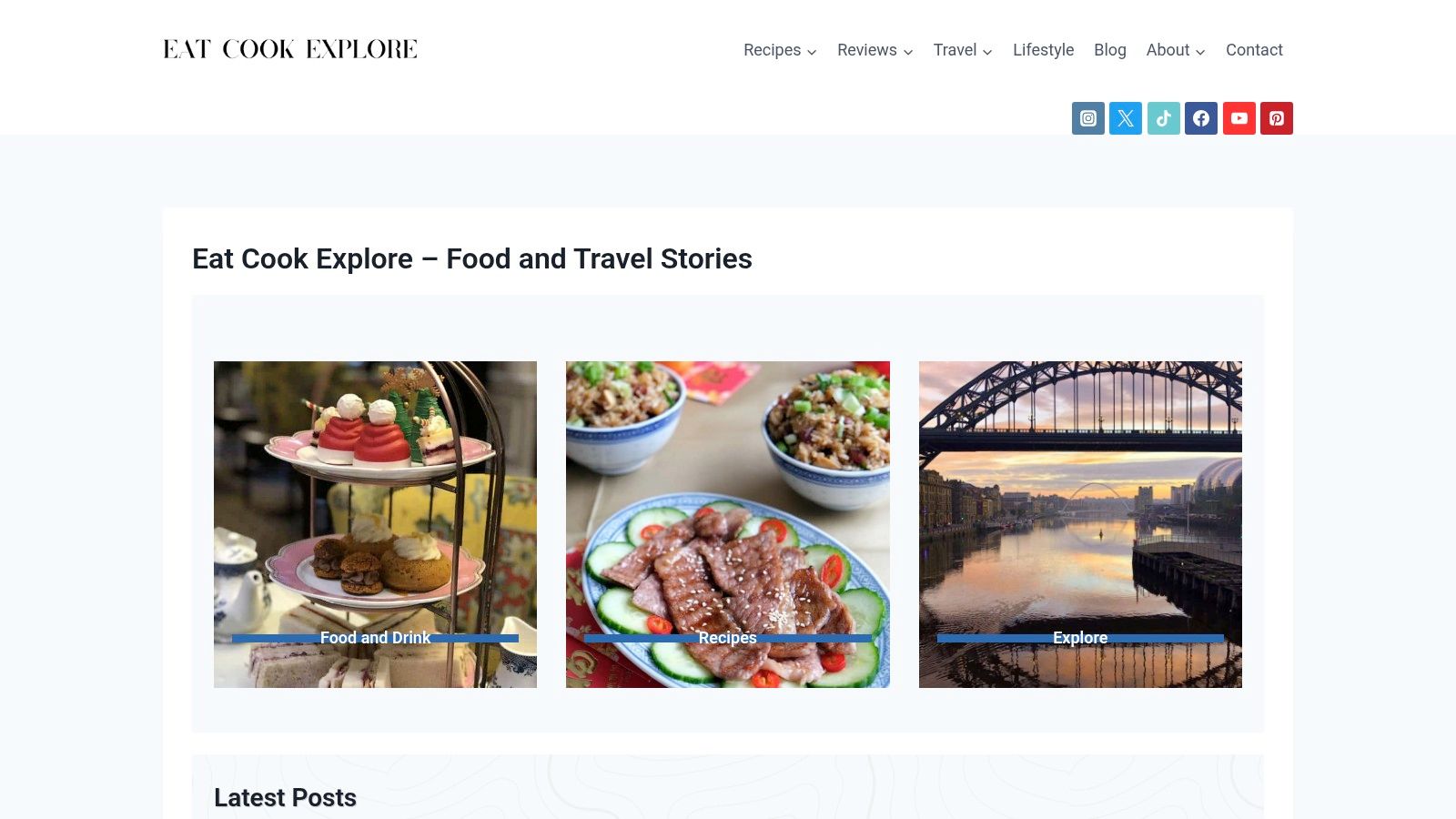
Eat Cook Explore is useful when you want more than a straight restaurant mention. The site blends restaurant coverage with recipes, product features, and broader food storytelling. For the right venue, that creates more angles than a simple review slot.
This is especially helpful if your concept has ingredients, techniques, or cultural context worth extending into editorial content. A chef's table, regional cuisine, cookery-led activation, or menu collaboration can all work well in this format.
Better for multi-format partnerships
A lot of restaurant teams brief creators too narrowly. They ask for one meal post when they could get website coverage, social content, story frames, and reusable creative from the same partnership. Eat Cook Explore is a better fit for that broader content package than for a one-line launch mention.
The caution is audience concentration. Because the site also covers travel and wider food content, it may not deliver the same pure London dining intent as a specialist local reviewer. You're choosing versatility over focus.
That said, versatility is often exactly what brands need. If you're a restaurant group, premium FMCG partner, drinks brand, or venue with retail products, one creator who can bridge restaurant and ingredient storytelling can simplify campaign management.
Consider offering a more developed brief:
Restaurant experience: Hosted meal with clear menu highlights.
Story angle: Ingredient sourcing, heritage, or chef perspective.
Reuse rights: Agree upfront whether photos or clips can be used on your channels.
Disclosure terms: Set expectations clearly before the visit.
This last point matters more than many operators realise. UK scrutiny around influencer disclosure has tightened, and trust is becoming central to how audiences evaluate recommendations. If gifted meals, paid placements, or affiliate links are involved, make sure the commercial arrangement is explicit and compliant. Existing coverage often ignores how disclosure changes trust, even though that's now part of the evaluation process for younger social users in particular.
7. Scott Can Eat
Scott Can Eat is the most commercially straightforward option on this list. The site presents a clear partnership posture, and that matters if you need scoped deliverables, cleaner communication, and less back-and-forth.
Some bloggers are editorial-first. Scott Can Eat reads more like a creator business with service clarity. That can save a restaurant team a lot of friction, especially if you need to move quickly and want to know exactly what's being delivered.
Best when you need structure
This kind of creator works well for launch windows, menu pushes, seasonal activations, and campaigns where content reuse matters. If your internal team wants a defined set of assets and timelines, a partnership-oriented creator is often easier to manage than a pure reviewer.
The trade-off is concentration. It isn't an exclusively London-only platform, and the blog cadence can vary. So I'd use Scott Can Eat for campaign execution rather than for prestige validation.
A straightforward outreach email works best here. Keep it short:
Hi Scott, we're launching a new [concept/menu] in [neighbourhood]. We think it fits your London dining coverage, particularly your posts on [relevant angle]. We'd like to invite you for a hosted visit and discuss a paid content package including [deliverables]. If useful, I can send menu highlights, target dates, and usage needs.
That email gets replies because it respects the creator's time. It signals fit, commercial intent, and operational readiness.
For restaurants that don't have a dedicated influencer manager, creators like this are often the easiest starting point. They help you learn what deliverables matter, what content you can reuse, and which collaboration formats move bookings.
Top 7 London Food Bloggers Comparison
Publication | Implementation Complexity 🔄 | Resource Requirements ⚡ | Expected Outcomes 📊⭐ | Ideal Use Cases 💡 | Key Advantages |
|---|---|---|---|---|---|
London Eater (Kang Leong) | Moderate, feature-length posts with scheduling lead time | Moderate, press meal access; good photography appreciated | ⭐⭐⭐⭐, high credibility, engaged readership and long-term SEO value 📊 | Nuanced launches, fine-dining or discovery-driven campaigns | Established trust and detailed culinary context |
The Picky Glutton | Low–Moderate, concise reviews and quick visits | Low, short reviews; minimal asset needs | ⭐⭐⭐⭐, clear, critical validation that influences booking decisions 📊 | Value-conscious campaigns; transparency-focused promotions | Star ratings and broad neighbourhood coverage |
Cheese and Biscuits (Chris Pople) | Moderate–High, long-form narrative reviews needing depth | Moderate, time for interviews/context and quality writeups | ⭐⭐⭐⭐, strong industry credibility and SEO longevity 📊 | Chef-driven openings, destination restaurants, industry PR | Narrative depth and trusted long-term archive |
Halal Food Guy | Low–Moderate, targeted, specialist checks (halal credentials) | Moderate, halal verification details; map/list integration | ⭐⭐⭐⭐, high qualified footfall from niche audience 📊 | Halal-certified venues, Ramadan/iftar campaigns | Niche authority with practical discovery tools (maps, top lists) |
East London Girl | Low, high-frequency, area-specific roundups | Low, local outreach; social-ready content | ⭐⭐⭐, good local discoverability and steady referral traffic 📊 | Neighbourhood-focused outreach and indie/casual venues | Strong East London reach and frequent exposure |
Eat Cook Explore | Moderate, multi-format (recipes, reviews, video) | Moderate–High, social assets, recipe/ingredient content | ⭐⭐⭐⭐, versatile reach across platforms and content types 📊 | Brand partnerships, recipe-led storytelling, multi-channel launches | Multi-format capability and clear PR/collab processes |
Scott Can Eat | Low–Moderate, partnership-ready with scoped deliverables | Moderate, expects deliverables (social + blog) for campaigns | ⭐⭐⭐, predictable outcomes and reusable assets for campaigns 📊 | Structured influencer campaigns and packaged content deals | Clear commercial offering and content-reuse focus |
The Brand's Playbook From Outreach to ROI
A list of London food bloggers is only useful if it changes the way your team works. Most restaurant creator programmes fail for boring reasons. The outreach is vague, the invite goes to the wrong people, the brief is too loose, and nobody tracks whether the post produced bookings, clicks, reviews, or repeat visits.
Start with creator-market fit. Don't ask the same thing from every blogger. A long-form reviewer can shape trust. A neighbourhood guide can improve local discoverability. A niche specialist like Halal Food Guy can deliver qualified demand from the right audience. A partnership-led creator like Scott Can Eat can give you reusable assets and predictable deliverables.
Outreach that gets a reply
Most outreach fails because it reads like mass PR. Keep it to five parts: why them, why now, why your venue, what you're offering, and what happens next.
Use a script like this:
Subject line: Invite to try [Restaurant Name] in [Neighbourhood]
Opening: Mention a specific post, roundup, or content angle that proves fit.
Context: Explain what is new or worth covering now.
Offer: Hosted meal, paid package, event invite, or content brief.
Close: Ask whether they want details and available dates.
If you're gifting, say so. If it's paid, say that too. Ambiguity slows replies and creates trust problems later.
Collaboration design that avoids wasted comps
Don't invite creators before you know what success looks like. A launch campaign and a weekday lunch campaign need different talent, different content, and different calls to action.
Build every collaboration around one primary objective:
Bookings: Use reservation links, booking notes, or creator-specific landing pages.
Footfall: Use named dishes, limited windows, or creator codes staff can recognise.
Content production: Specify asset count, usage rights, and delivery timeline.
Review generation: Ask staff to prompt happy guests after the creator post lands.
The easiest mistake is trying to get awareness, UGC, bookings, press credibility, and SEO value from one dinner invite. Split those goals across different creator types.
Tracking that finance teams will accept
If you can't attribute outcomes, the budget gets cut. Every creator campaign should have unique tracking, even if the partnership is partly gifted.
Use a basic stack:
UTM links: One link per creator, per campaign.
Unique codes: Easy to say, easy to remember, easy for front-of-house to log.
Booking notes: Ask guests to include the creator name when reserving.
Post-campaign review: Compare clicks, code use, covers, revenue, and content value.
If you need a primer on attribution, this guide on measuring social media return on investment is a useful reference.
A simple reporting view is enough at first. Track creator name, content date, deliverables, clicks, code redemptions, bookings, revenue, and whether the content is reusable for paid or organic social. That already puts you ahead of most restaurant teams.
Paid creator work becomes much easier to defend when you can tie each post to a code, a link, or a booking trail.
How to scale without drowning in admin
Manual outreach breaks fast. Once you're chasing replies, reminders, visit dates, usage permissions, codes, invoices, and reporting across multiple creators, the process turns into spreadsheet debt.
That's where a platform like Sup is useful. Sup combines sourcing, campaign setup, outreach, follow-ups, tracking codes, UTM links, and reporting in one workflow. For a restaurant manager or lean marketing team, that matters because it replaces fragmented DMs and one-off admin with a repeatable system. Sup says teams can save up to 95% of their time and get campaigns set up in about 20 minutes, while managing attribution across views, clicks, conversions, bookings, revenue, and content reuse.
A key advantage isn't just speed. It's consistency. When your creator programme has standard briefs, standard tracking, and a clear mix of discovery creators, review-led bloggers, and local micro-influencers, you stop treating influencer marketing like a side task. It becomes a channel you can optimise.
If you want to turn London food bloggers into a measurable growth channel instead of a pile of DMs, Sup is built for that. It helps restaurants source relevant local creators, launch campaigns fast, track bookings and revenue with unique codes and UTMs, and keep every collaboration organised in one place so your team spends less time chasing creators and more time driving covers.

Matt Greenwell
Share