Influencer Marketing for Pop-Up Events and Temporary Activations: A ROI Playbook

Matt Greenwell
Apr 15, 2026
Pop-ups are taking a larger share of marketing spend because they can generate attention, footfall, and sales inside a tight window. The gap in execution is measurement. Too many teams still judge influencer-led activations by reach screenshots and post-event sentiment, then struggle to explain which creator drove store visits, bookings, or revenue.
That is the wrong starting point.
Influencer Marketing for Pop-Up Events and Temporary Activations works best when attribution is built before launch, not patched together after the event. If a creator is promoting a one-day drop, a neighbourhood takeover, or a weekend retail test, every asset needs a trackable path back to a business outcome. That means creator-specific links, codes, landing pages, POS tags, and on-site redemption rules set up from day one.
This is the difference between content support and a measurable growth channel. Brands investing in creator-led commerce strategies that connect influence to conversion already understand the shift. A creator is not only there to generate interest. They are a distribution partner with a defined job, a local audience, and a measurable revenue contribution.
The trade-off is simple. Broad creator rosters can increase visibility, but they also make attribution messy if the tracking model is weak. Smaller, better-instrumented squads usually produce cleaner data, faster optimisation, and a clearer view of who is driving footfall versus who is only driving impressions.
For pop-ups, that visibility matters in real time. If one creator is filling early slots, another is pushing walk-ins, and a third is driving the highest basket value, the team needs to know while the activation is still live, not in a wrap-up deck a week later.
Why Influencer-Led Pop-Ups Are Your 2026 Growth Engine
Brand teams keep shifting budget into short-term physical activations for one reason. They can create demand and capture revenue in the same trading window.
Pop-ups sit in a useful middle ground between paid media and permanent retail. They generate attention fast, give people a reason to act now, and produce direct signals a team can use during the campaign, not after it. For operators under pressure to show revenue, that matters more than broad awareness alone.
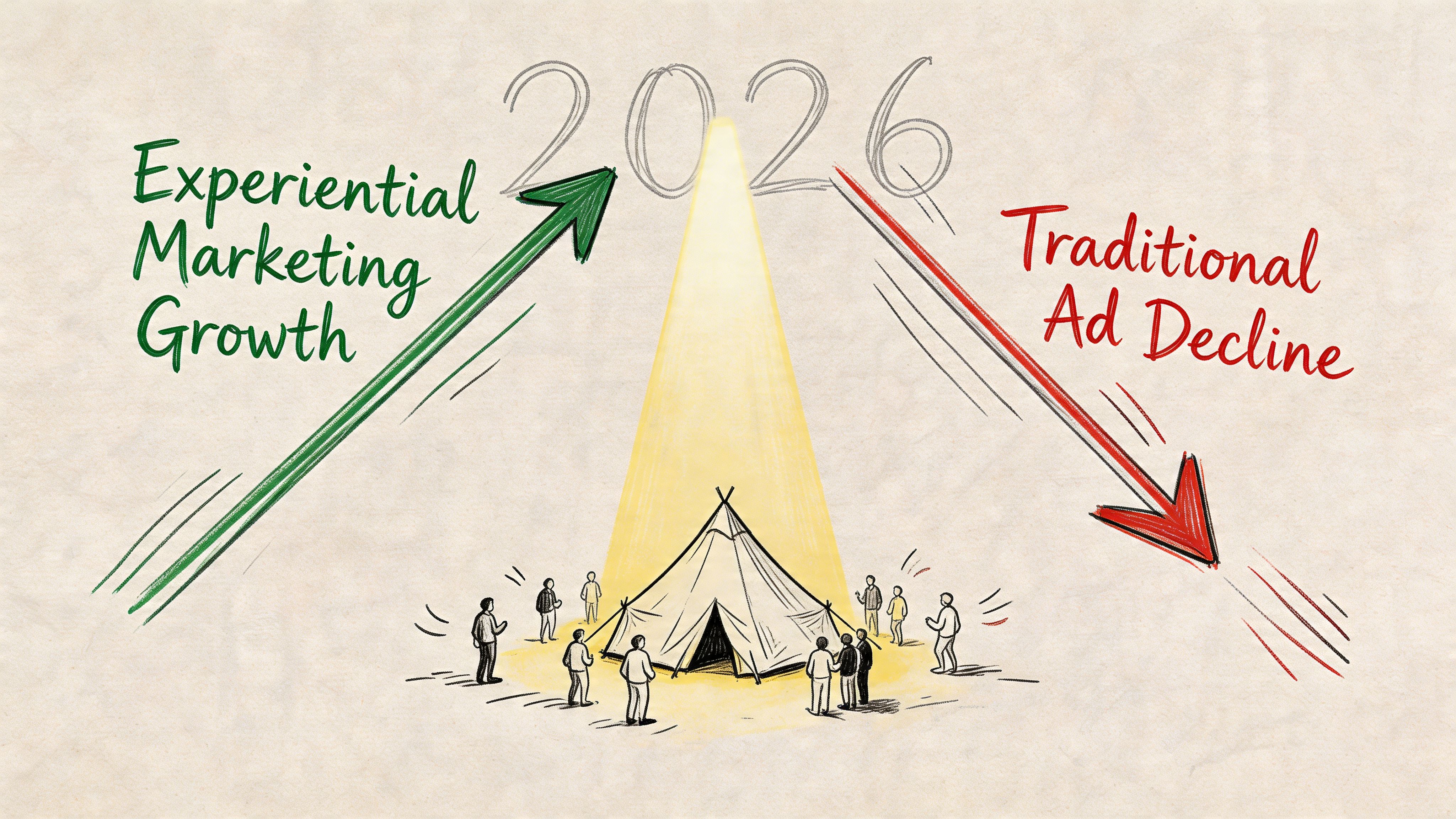
The main advantage is compression.
A good pop-up condenses discovery, consideration, trial, and purchase into a few hours or a few days. That makes it easier to see which marketing inputs are producing footfall and sales. It also exposes weak creator strategy fast. If a creator drives views but no walk-ins, the gap shows up immediately. If another creator fills your first two booking slots and lifts average order value, that becomes visible while the activation is still live.
That is why influencer-led pop-ups outperform generic event promotion. The right creator brings a local audience, social proof, and a clear call to action tied to a specific place and timeframe. For brands already investing in creator-led commerce strategies that connect discovery to conversion, the pop-up is one of the cleanest environments to prove that influence can drive transactions, not just attention.
Speed is the second advantage. A temporary activation lets a brand test a neighbourhood, product line, menu concept, or retail format without committing to a long lease or waiting a quarter for pattern changes to show up in aggregate reporting. You get immediate feedback from customers, staff, POS data, and creator performance in one place.
There is a trade-off.
Pop-ups create urgency, but they also compress your margin for error. If the creator mix is wrong, inventory is mismatched, or tracking is loose, the campaign can look busy and still underperform commercially. That is why I treat influencer-led pop-ups as measurement exercises as much as marketing exercises. The brands that win here do not stop at reach, content volume, or anecdotal queues outside the door. They know which creator drove RSVPs, which one converted walk-ins, and which one brought in the highest-value customers.
Local relevance usually beats broad reach in this format. A creator with 12,000 followers in the right postcode often does more for a two-day activation than a much larger account with a scattered audience. The smaller creator is easier to brief around timing, easier to track through codes and links, and more likely to drive action from people who can attend before the window closes.
That difference is what makes pop-ups a growth engine rather than a branding exercise. They give brands a short, high-signal environment where creator influence can be tied to physical visits and revenue in real time. If the attribution model is in place from day one, each activation becomes easier to optimise, justify, and scale.
Building Your Measurement Framework Before You Launch
The single biggest mistake in pop-up influencer campaigns is leaving measurement until after the creator list is signed off.
By then, control over attribution has often been lost. Codes were added as an afterthought. Landing pages weren’t separated by creator. Staff weren’t briefed on how to log walk-ins. Social reporting and sales reporting sit in different places. You end up with a recap full of activity and no clean answer on what produced revenue.
That’s fixable, but only if you set the plumbing first.
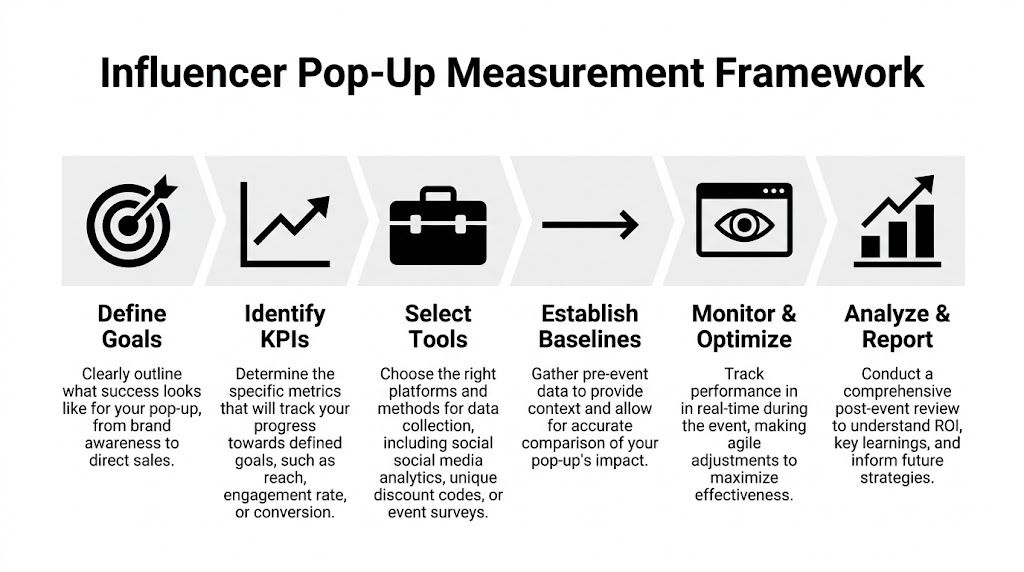
As Breef’s write-up on pop-up events points out, real-time attribution is a major blind spot in most guidance. Plenty of advice covers organic content and buzz. Very little covers how to track foot traffic or revenue when several creators are posting across platforms during a short activation.
Start with business outcomes, not platform metrics
Before you brief anyone, decide what the campaign is there to produce.
That sounds obvious, but many teams skip it. They’ll say the goal is awareness, community, launch support, sales, bookings, PR, footfall, and content capture all at once. That usually creates messy reporting because every stakeholder grades success differently.
Pick the primary commercial objective first. Then define secondary outcomes.
A simple way to structure that looks like this:
Campaign objective | Primary signal | Secondary signal |
|---|---|---|
Drive in-store visits | Code scans, redeemed offers, logged walk-ins | Story taps, map clicks |
Fill bookings | Booking code usage, reservations linked to creator | DMs, link clicks |
Sell product at event | Sales attached to promo code or tracked checkout | Product page visits |
Generate reusable UGC | Approved content delivered on time | Reach, saves, mentions |
If your team needs a refresher on the difference between soft and hard influencer metrics, this guide on how to measure influencer marketing and the metrics that actually matter is worth reviewing before campaign setup.
Build a creator-by-creator attribution map
Every creator needs their own measurement path. Not one shared event URL. Not one generic discount code.
At minimum, assign each creator:
A unique UTM link that identifies platform, creator name, campaign, and content type.
A unique promo code tied to a concrete action such as a booking perk, menu item, gift-with-purchase, or event-only offer.
A content window so you can compare posting time against traffic spikes.
A destination that matches intent, such as a reservation page, RSVP page, product page, or map/location page.
Different creators drive different kinds of action. One may generate direct reservations from Story taps. Another may create walk-ins through local social proof. A third may drive post-event ecommerce sales when followers miss the activation but still buy online.
Without creator-level tracking, all of that gets blurred into campaign noise.
Track the path you expect people to take. If the CTA is “book now”, don’t send people to the homepage. If the CTA is “come down tonight”, don’t bury the address three clicks deep.
Define what staff will capture on the ground
Digital attribution only tells part of the story for physical events.
If the event is likely to generate walk-ins, your on-site team needs a simple logging method. Keep it friction-light. Front-of-house staff should be able to ask one short attribution question without slowing the queue.
Good examples:
“Did someone specific send you here?”
“Do you have a creator code today?”
“Was this from Instagram, TikTok, or a friend?”
Don’t ask for a survey. Ask for operationally useful signals.
The cleanest setup is to align front-of-house categories with your creator roster and campaign channels. That way, your sales sheet, booking system, and social dashboard can be reconciled later without guesswork.
Establish baselines before the activation starts
You can’t judge uplift if you don’t know what normal looks like.
For a restaurant pop-up, that baseline may be average bookings, average walk-ins, or normal sales by time of day. For a retail activation, it may be expected conversion without creator support. For a DTC event, it may be the site’s normal traffic and branded search trend during a similar period.
You don’t need a complicated econometric model. You do need a reasonable pre-event reference point.
Use the baseline to answer questions like:
Did creator traffic arrive before doors opened or only after live posting?
Did one creator drive earlier footfall while another drove checkout volume?
Did codes perform differently by daypart?
Did same-day content outperform pre-event teaser content?
Decide your live dashboard before the event
A campaign dashboard is only useful if the team checks it while decisions can still change.
For pop-ups, the live view should be brutally simple. If you need a half-hour meeting to interpret it, it’s too complicated. The team should be able to glance at the dashboard and know who is driving traffic, which code is converting, and whether the event needs a mid-flight adjustment.
The dashboard should answer:
Which creators have posted
Which tracked links are getting clicks
Which codes are being redeemed
Which booking or sales pages are converting
Whether traffic is rising after specific content drops
A pre-launch checklist that actually helps
Use this before contracts are final and before any content goes live.
Lock the commercial goal: Footfall, bookings, sales, or UGC can’t all be the top KPI.
Assign unique tracking assets: Every creator gets their own link and code.
Match landing pages to intent: Reservation CTA goes to reservations. Event CTA goes to event details.
Brief venue staff: They need to recognise creator codes and log source data consistently.
Set reporting rhythm: Decide who watches live data and who can approve changes during the event.
Prepare contingency offers: If one creator underdelivers, have a reserve lever ready, such as extra Stories, a new code push, or a timed offer.
Most of the work in attribution isn’t glamorous. It’s naming conventions, spreadsheet hygiene, dashboard logic, and front-of-house coordination. That’s exactly why it works. Clean setup creates clean decisions.
Sourcing and Vetting Your Pop-Up Creator Squad
The wrong creator can make a busy-looking campaign that doesn’t move a single real person through the door.
That usually happens when brands optimise for aesthetics or follower count instead of local influence. Pop-ups don’t need broad fame. They need proximity, credibility, and actionability.
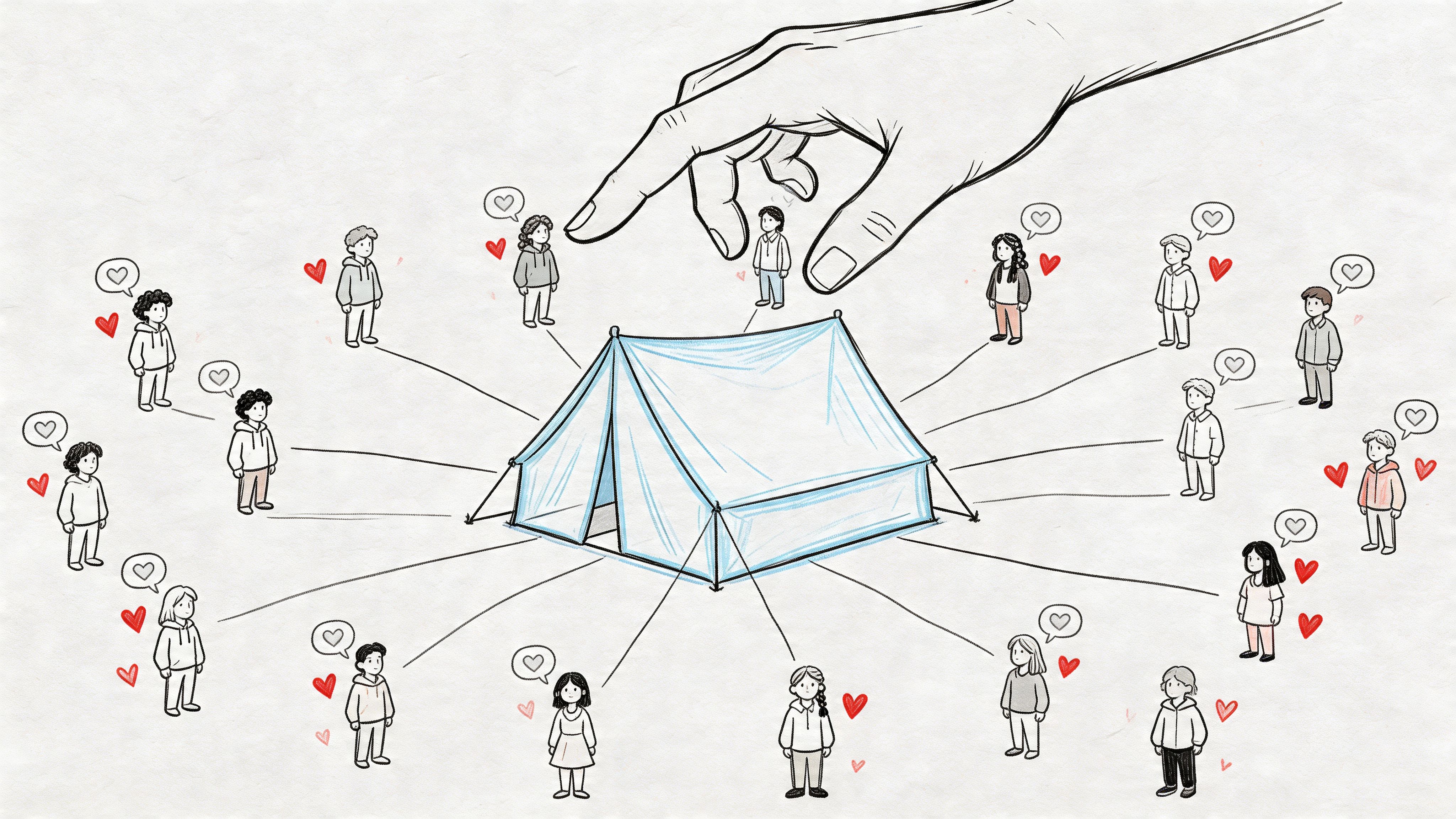
Prioritise postcode over popularity
For temporary activations, the first screening question is simple. Can this creator reach people who can realistically attend?
That means checking location in more than one way. Don’t rely on the creator bio alone. Look at tagged venues, recent content locations, local comment patterns, recurring neighbourhood references, and whether their audience behaviour fits the event area.
If you’re planning food, drink, or hospitality campaigns, this practical guide on how to find local food influencers in your city is a useful starting point for creator discovery.
A creator can be perfect for your brand and still wrong for your pop-up if their audience isn’t geographically aligned.
What to vet before you shortlist
Teams often check content quality and stop there. That’s not enough.
For pop-up performance, vet creators against four filters:
Audience geography: You want evidence that their followers are concentrated near the activation.
Niche fit: A local food creator can work for a restaurant launch. They may not work for a skincare pop-up unless their audience already responds to beauty-led recommendations.
Action style: Some creators are strong storytellers but weak at direct call-to-action content. Pop-ups need both.
Operational reliability: Deadlines matter more here because the campaign window is short.
A creator who posts beautifully but misses their slot by half a day can tank part of your event plan.
Look for signs they can drive attendance, not just engagement
Engagement can still mislead. A creator may get plenty of comments because their audience likes the personality, not because they follow recommendations.
Review their older branded posts and event content. You’re looking for clues:
Signal to check | What good looks like | Red flag |
|---|---|---|
Event content | Clear calls to attend, visit, book, or try | Generic lifestyle montage with no action |
Comment quality | Followers ask where, when, how much, or how to book | Mostly emojis and unrelated chat |
Story behaviour | Repeated use of links, stickers, or direct response prompts | Feed-first creator who rarely uses Stories to drive action |
Local relevance | Frequent references to neighbourhood spots and city habits | Audience appears broad but non-local |
If you need a broader framework to measure event activation ROI, it helps to think in layers: attendance, participation, conversion, and post-event value. That same logic improves creator vetting because it forces you to ask which creators can influence each stage.
Small creators are powerful, but they create operational drag
In this scenario, most brands underestimate the workload.
According to BizBash’s discussion of influencers in event marketing, the complexity of coordinating 50+ nano-creators for a single 3-day pop-up is substantial. Preview access, posting windows, approvals, and real-time changes all create friction. Existing advice often skips the management layer, even though that’s where many campaigns break.
The creator roster that looks strongest on paper can still fail if no one owns scheduling, approvals, replacement plans, and day-of communication.
That means your shortlist should include not only “best fit” creators, but also creators who are manageable within your team’s capacity.
Here’s the practical trade-off:
More nano creators usually gives you stronger neighbourhood spread and more authentic local coverage.
Fewer, slightly larger micro creators are easier to manage and can simplify briefing and reporting.
Neither option is universally right. The right mix depends on how much coordination your team can handle without losing execution quality.
A simple shortlist model
Use three buckets.
Core drivers are the creators you expect to produce the clearest attendance or booking response.
Scene setters make the activation look desirable and socially relevant. They may not convert hardest, but they improve perceived momentum.
Content workhorses are dependable creators who deliver usable footage, quick turnarounds, and strong Stories from the venue.
That blend usually performs better than picking everyone on one criterion.
A quick visual explainer can help teams align on what that creator mix should look like before outreach begins.
The main point is simple. Creator selection for pop-ups is not a talent exercise. It’s a local demand-generation exercise. Vet creators based on whether they can move people in a specific place within a short window, then make sure your team can manage the roster you’ve chosen.
The Activation Playbook Outreach and On-Site Workflows
Strong creator campaigns are won before opening day.
The best pop-up activations feel spontaneous to the audience, but the internal workflow is tightly organised. Outreach is specific. Deliverables are unambiguous. Posting windows are deliberate. The venue team knows who is arriving, what each creator needs, and what content needs to go live while the event is still hot.
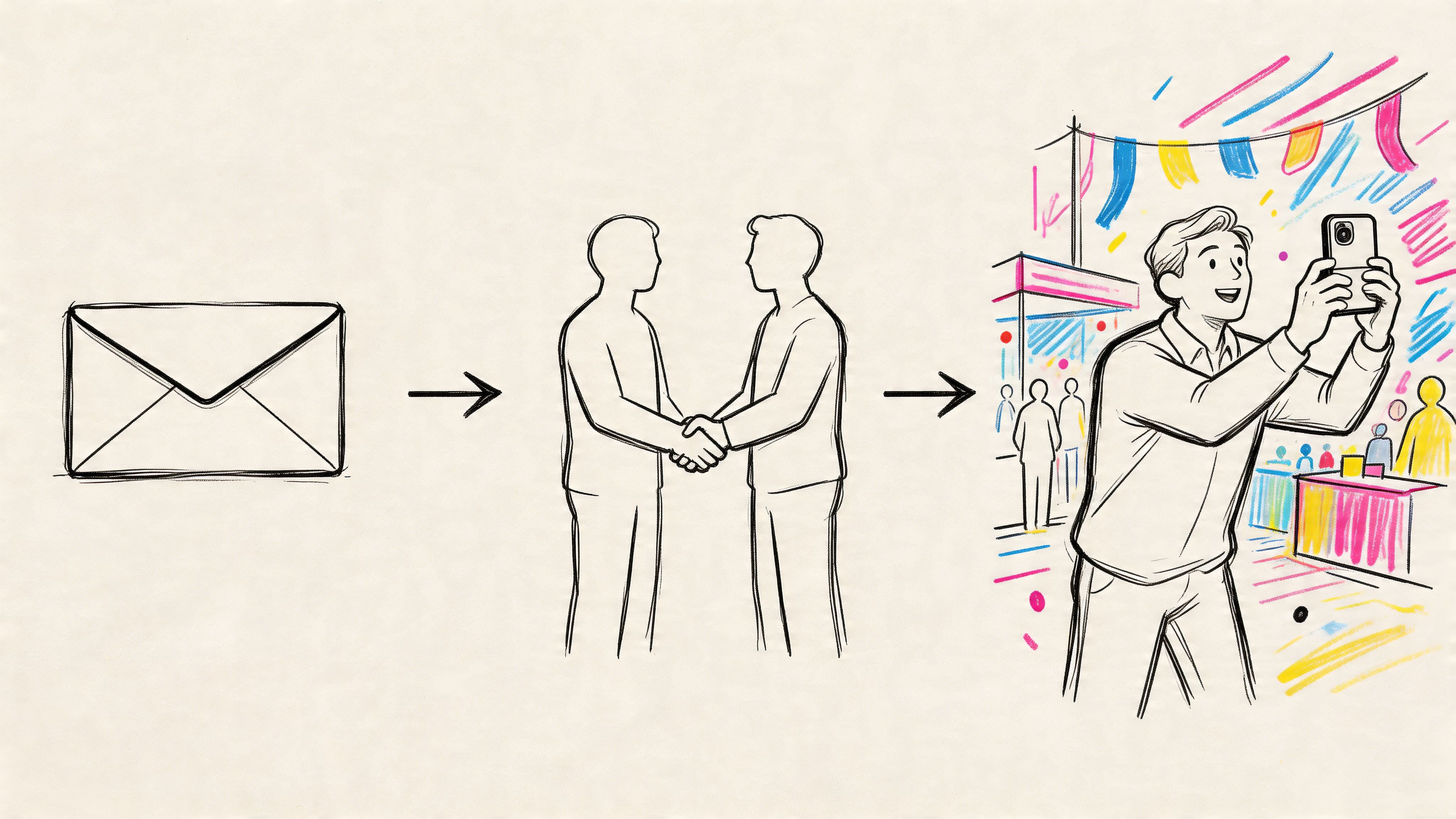
For UK pop-ups, a location-matched nano and micro influencer model can produce 15.2% engagement on TikTok, and campaigns that are pre-built with unique UTM links and promo codes can deliver a benchmark ROI of £5.78 per £1 spent, according to Charle Agency’s influencer marketing statistics. That only happens when the campaign is operationally sound. Real-time Stories and Reels are especially important because they capture urgency while the activation is live.
Use outreach that filters for fit
Generic “we’d love to collaborate” messages waste time.
A good pop-up invite does two things at once. It sells the event, and it makes it easy for the creator to decide whether they’re a fit. If your brief is vague, you’ll attract vague replies and spend days clarifying basics.
A practical outreach structure looks like this:
Hi [Name], we’re running a limited-time pop-up in [Location] on [Date range]. We’re inviting a small group of local creators whose audience matches [audience type].
We’re looking for [specific deliverables], with posting centred around [key date/time]. We’ll provide a unique tracked link and creator code so performance is attributable.
If this sounds relevant, reply with your rate, city audience fit, and availability for [preview / launch window / event day].
That message does useful work. It narrows for location, sets expectations, and signals that this isn’t a vanity collab.
Confirm the moving parts in one creator brief
Once a creator is in, don’t scatter details across DMs, email threads, and calendar notes.
Use one document or page that covers:
Event basics: address, dates, access times, parking or entry details
Content requirements: what must be captured, what’s optional, and what must not be missed
Posting windows: teaser, live attendance push, and post-event recap if needed
Tracking assets: their link, their code, and the CTA to use
Disclosure requirements: how paid or gifted content should be labelled
On-site contact: one named person with a phone number
Most campaign confusion comes from fragmentation, not creator unwillingness.
Plan the venue around content flow
A pop-up that looks good in person but films badly will underperform on social.
You need obvious capture points. Clear lighting. Clean branding. Product presentation that makes sense on vertical video. Staff who know not to interrupt the key shot. Fast access to hero moments so creators don’t waste time hunting for angles.
I’d structure the space around three content zones:
Zone | Purpose | Typical creator output |
|---|---|---|
Arrival point | Establishes where they are and why it matters | Story intro, check-in, queue shot |
Hero moment | The most visually distinctive part of the activation | Reel hook, TikTok opener, main photo |
Conversion moment | Shows the action you want viewers to take | Product demo, tasting, purchase, booking cue |
That setup helps creators produce content that is both attractive and useful.
If you want inspiration from real-world successful activations, studying event execution through the lens of environment design and user interaction is more helpful than looking only at final content output.
Day-of workflow matters more than most brands realise
At this point, strong plans often wobble.
Creators arrive late. A queue forms early. Lighting changes. The best product angle gets blocked. Someone forgets the code. Another creator posts before the agreed window. None of this is unusual. It’s normal.
The fix is not “work harder on the day”. The fix is having a simple operating rhythm:
Check creators in quickly
Confirm arrival, remind them of the CTA, and make sure they have the right code and link.Walk them through the must-capture moments
Don’t overdirect. Just show them the essentials first.Get the first live content out fast
Early Stories or short clips help establish momentum and let the team watch traffic response.Monitor response and adjust
If one angle is landing, encourage more of it. If footfall is soft, prompt another live attendance push.Collect raw assets before creators leave
Don’t rely on post-event follow-up for everything.
On-site rule: One person should own creator flow. If three staff members are all giving directions, creators lose time and content quality drops.
A practical on-site checklist
Keep this short enough to use under pressure.
Creator arrival list ready: Names, handles, slots, and contact details
Codes and links verified: Test before doors open
Disclosure reminder sent: No ambiguity on compliance
Capture zones staged: Lighting, products, signage, and props checked
Staff briefed on attribution: They need to recognise creator codes and source mentions
Asset collection process ready: AirDrop, upload folder, or agreed send method
Contingency script prepared: If a creator no-shows, someone knows the fallback action
The teams that run pop-ups well don’t treat influencer activation as a side task. They run it like live performance marketing. The content is happening in public, the response is immediate, and the margin for sloppy execution is small.
From Views to Revenue How to Measure and Scale Success
If your reporting stops at views, you’re only measuring exposure.
Pop-up campaigns create a chain of actions. Someone sees a Story. They tap a link. They save the event. They show up later that afternoon. They mention a creator at checkout. They redeem a code. They buy. Then they post their own content, which influences the next wave. Good measurement follows that chain as far as your systems allow.
That doesn’t require perfect data. It requires disciplined interpretation.
Watch the right signals while the event is live
The easiest mistake is waiting until the activation ends to analyse performance.
For short events, that kills your ability to improve outcomes. You need a live read on which creators are producing movement and which ones are only producing surface-level engagement.
Focus on signals that lead to commercial action:
Tracked link clicks tell you whether the content is making people act now.
Promo code redemptions show direct attributable conversion.
Booking completions reveal whether intent is turning into confirmed demand.
On-site source logging catches walk-ins who skipped the link but responded to the creator.
Sales timing helps match revenue spikes to content drops.
If a creator posts and the dashboard stays flat, don’t wait politely. Check the CTA, the landing page, the posting format, and the timing.
Interpret the gaps, not just the wins
Raw numbers don’t explain much on their own. Pattern reading does.
Here’s a simple way to diagnose performance mid-campaign:
What you see | Likely issue | Action |
|---|---|---|
High views, low clicks | Weak CTA or passive content format | Ask for a stronger attendance prompt or clearer offer |
Clicks, low conversions | Landing page friction or offer mismatch | Simplify destination and restate incentive |
Strong redemptions from one creator | High audience-action fit | Extend with additional Stories or repost support |
Walk-ins mention creators but no code usage | Staff capture is working but conversion tracking is incomplete | Tighten front-of-house prompts and signage |
Good first-day response, weaker second day | Novelty drop or posting fatigue | Shift angle, introduce a new hook, or re-sequence creators |
This is the advantage of real-time attribution. You can react while the event still has selling time left.
Don’t optimise for fairness across creators. Optimise for output. If one creator is clearly driving attendance, give them more room to push.
Separate creator roles in your analysis
Not every creator should be judged by the same yardstick.
Some drive direct conversions. Others make the event feel busy and desirable, which improves conversion from later posts. Some create the best reusable UGC even if their immediate code redemptions are modest. Treating every creator as if they serve the same purpose creates bad decision-making.
A useful post-event breakdown looks like this:
Direct response creators
Best measured through clicks, codes, bookings, and linked sales.Footfall drivers
Often show up in walk-in mentions, map visits, queue spikes, and same-day demand.Content multipliers
Strong at producing high-quality assets that can keep working after the event through organic reposting, paid social, or email.
When teams ignore these distinctions, they often overvalue aesthetic content and undervalue creators who effectively drive transactions.
Build a defensible ROI view
For pop-up campaigns, ROI doesn’t need to become a finance dissertation. It does need to be credible.
Start with the attributable inputs you can verify:
creator fees or gifting cost
production support tied to creator execution
event-specific paid amplification if used on creator content
staff or coordination costs directly linked to the creator programme
Then match those against attributable outcomes:
tracked ecommerce sales
bookings linked to code usage
point-of-sale redemptions
recorded walk-ins where source was captured
post-event sales that came through creator links during the defined campaign window
Keep it honest. If a sale can’t reasonably be tied back, don’t force it in.
The strongest ROI model usually has three layers:
Layer | What it includes | Confidence level |
|---|---|---|
Direct attribution | Code redemptions, tracked purchases, booking completions | Highest |
Assisted attribution | Walk-in mentions, map clicks, post-view traffic patterns | Medium |
Residual value | Reusable UGC, follower growth, brand lift signals | Directional |
This layered approach gives stakeholders a realistic picture. It shows what was provable, what was strongly indicated, and what still has value without pretending everything is equally measurable.
Use the campaign to improve the next one
The smartest brands don’t treat a pop-up as a one-off. They treat it as a local growth test.
Once the event ends, review the campaign through a scaling lens:
Which creator traits correlated with action
Was it neighbourhood specificity? A certain content style? A stronger verbal CTA? Better Story sequencing? Faster posting after arrival?
Document that. It becomes your next sourcing criteria.
Which offer produced the cleanest response
Some audiences respond to exclusivity. Others want a practical reason to show up, such as a limited menu item, a booking perk, or an event-only bundle. Keep the offer that produced measurable movement.
Which timings worked
You may find teaser content was weaker than same-day urgency. Or that afternoon posting outperformed morning hype. This matters more for temporary activations than for evergreen creator campaigns.
Which assets are worth reusing
The pop-up should leave behind more than a sales report. It should also leave a library of content that can keep earning.
Useful post-event reuse includes:
Paid social creative: especially vertical clips with strong opening hooks
Organic social: recap posts, customer testimonials, creator edits
Email: “missed the pop-up” follow-up using creator footage
Landing pages: social proof from real event attendance
Sales decks or client reporting: if you run campaigns for multiple locations or brands
Keep this habit: tag every saved asset by creator, location, product focus, and content type while the campaign is fresh. If you leave content organisation for later, valuable UGC gets lost in folders and message threads.
What scaling actually looks like
Scaling doesn’t mean copying the exact same creator list into the next city.
It means identifying the repeatable parts of the system:
the attribution setup
the briefing template
the on-site workflow
the offer structure
the reporting model
the creator profile that produced the best local response
Once those are stable, you can swap in new local creators by city, neighbourhood, or store cluster and keep the operating model intact.
That’s when influencer-led pop-ups stop being creative experiments and start behaving like a measurable channel.
Making Your Next Pop-Up Your Most Profitable Yet
The biggest shift is mental, not technical.
Most brands still approach pop-up influencer work as a visibility play with some hoped-for sales attached. The better operators reverse that. They build the campaign around attribution first, then use creators to amplify what can already be measured.
That changes everything.
You source differently because local fit matters more than vanity reach. You brief differently because every creator needs a clear action path. You run the event differently because on-site staff, creator handling, and live reporting all affect commercial output. You report differently because views are only the start of the story.
The upside is that pop-ups become easier to justify internally.
When you can connect creators to footfall, bookings, code usage, sales, and reusable content, the channel stops looking like a gamble. It starts looking like something you can repeat by city, by store, by launch type, or by season.
That’s why Influencer Marketing for Pop-Up Events and Temporary Activations has become so valuable for DTC brands, hospitality groups, agencies, and multi-location chains. It combines local trust, compressed demand, and fast feedback in a way few other channels can.
The teams that win here aren’t the ones with the loudest campaign. They’re the ones with the cleanest system.
Build the tracking before the hype. Vet creators for local action, not just polished feeds. Run the event like live performance marketing. Analyse creator output against real business outcomes. Then keep the learnings, the content, and the workflow for the next activation.
Do that consistently and your next pop-up won’t just look busy. It will prove its value.
If you want a faster way to run creator-led pop-ups with real attribution, Sup helps brands and agencies source local micro and nano creators, launch campaigns with unique tracking links and promo codes, manage outreach and scheduling, and see clicks, redemptions, bookings, and revenue in one place.
Matt Greenwell
Share