You've set a budget for influencer marketing, opened a dozen tabs, and now you're staring at a familiar problem. There's no shortage of fashion influencers UK brands can approach. The hard part is working out who can sell product, fit the brief, and slot into a campaign process your team can repeat.
That matters more in the UK than many teams realise. Influencer discovery is already mainstream among core shopping audiences. In a 2023 survey, 84% of UK Gen Z respondents followed influencers, and the same was true for over two-thirds of millennials, according to Statista's influencer marketing overview for the UK. Brands also aren't operating in a tiny creator pool. The same overview notes a large UK market and a deep supply of creators, which is why campaign planning has shifted from “can we find anyone?” to “which creators deserve budget?”
For fashion, that distinction is the whole game. Some creators give you glossy awareness. Some give you content you can repurpose. A smaller group can do both while also driving attributable clicks, code redemptions, and repeat briefs. If you're building a serious programme, you need more than a list of popular names. You need a selection framework, a briefing standard, and a way to measure what happened after the post goes live.
That's where this guide is useful. It's built like an operator's shortlist, not a fan ranking. Alongside seven established UK creators, I'll call out where each one fits, where they can miss, and how I'd use them inside a wider creator mix. If you're tightening your broader channel plan at the same time, this roundup pairs well with these social media marketing strategies for 2026.
1. Victoria Magrath (InTheFrow)
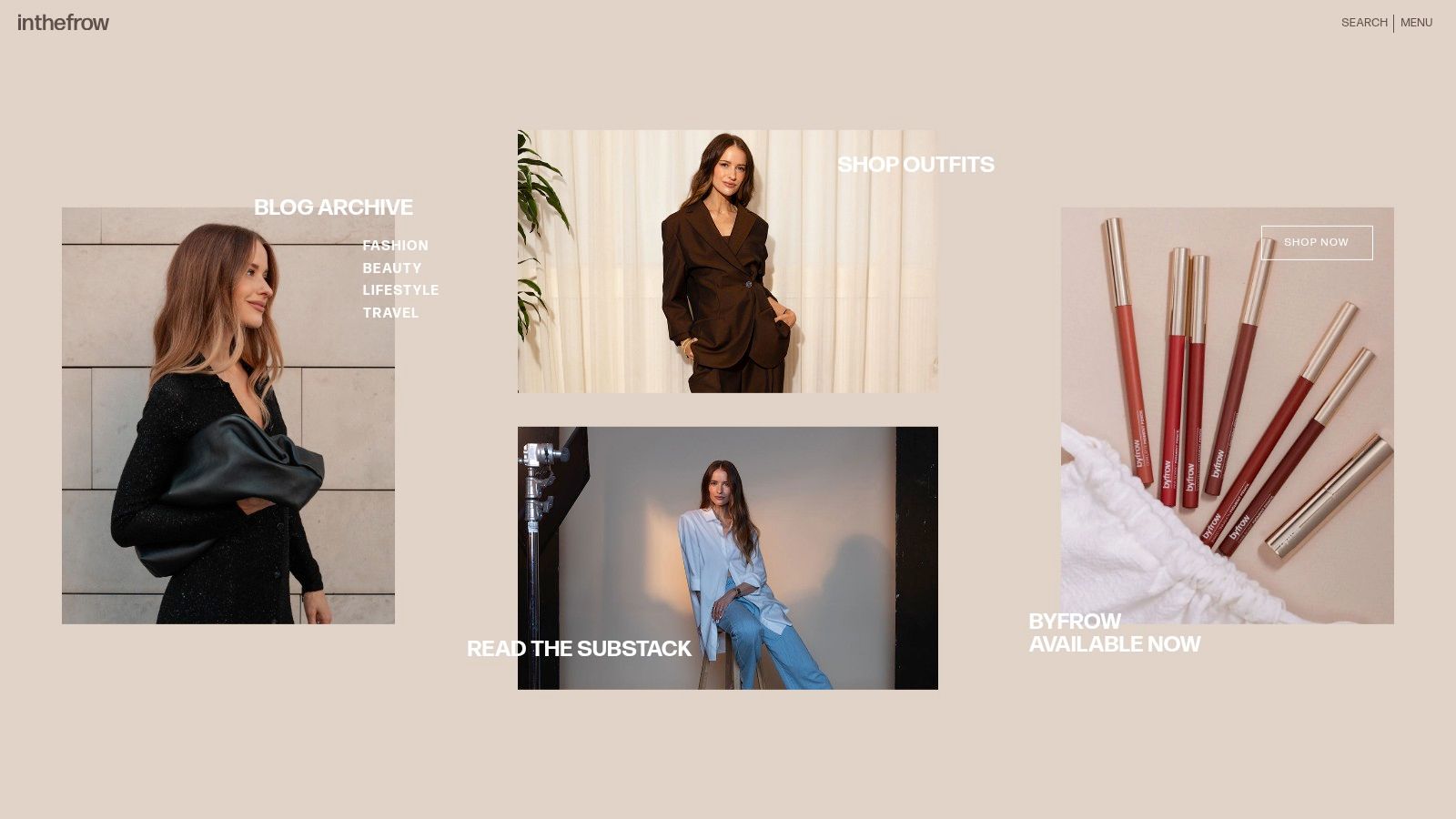
Victoria Magrath sits firmly in the premium end of fashion influencers UK brands look at when they need polish, authority, and controlled brand presentation. Her platform, InTheFrow, works because it isn't built on one channel alone. You're buying into an ecosystem of blog, video, social, and a creator identity that already reads as editorial.
That changes the kind of campaign she suits. If you're launching a luxury capsule, positioning a heritage accessory line, or trying to make a premium product feel culturally relevant without making it feel cheap, this is strong territory. She's less useful when the commercial ask is discount-led, highly reactive, or built around fast-turn trend churn.
Where she earns her keep
The best reason to shortlist Victoria isn't follower count. It's format depth. A creator with a long-form publishing habit usually gives brands more message retention than someone who only posts short captions and quick reels. For a fashion team, that means more room for product context, styling logic, and search-friendly content that can live beyond launch week.
Her aesthetic also lowers creative risk. Internal teams usually know what they're going to get. That's valuable when approvals matter and legal or brand teams want confidence before sign-off.
Practical rule: Use luxury creators for narrative density, not just reach. If the product needs craftsmanship, provenance, or styling education, a multi-format creator can carry that better than a pure short-form profile.
A good brief for her should include:
Hero product hierarchy: Specify the one item that must lead the story, then list supporting pieces.
Usage context: Define whether the content should feel event-led, travel-led, seasonal, or wardrobe-led.
Message boundaries: Protect premium positioning by avoiding overstuffed CTAs and aggressive sales language.
Trade-offs to plan around
The downside is usually speed and efficiency. Higher-production creators often need longer lead times, tighter shot planning, and a clearer approval process. That isn't bad. It just means you shouldn't drop them into a campaign built like a flash sale.
If I were building a UK fashion programme around names like Victoria, I'd pair that prestige layer with a broader base of smaller creators for ongoing testing and attribution. That's the model behind effective influencer marketing for fashion and apparel brands. One creator sets the tone. The rest prove where conversion sits.
2. Lydia Elise Millen
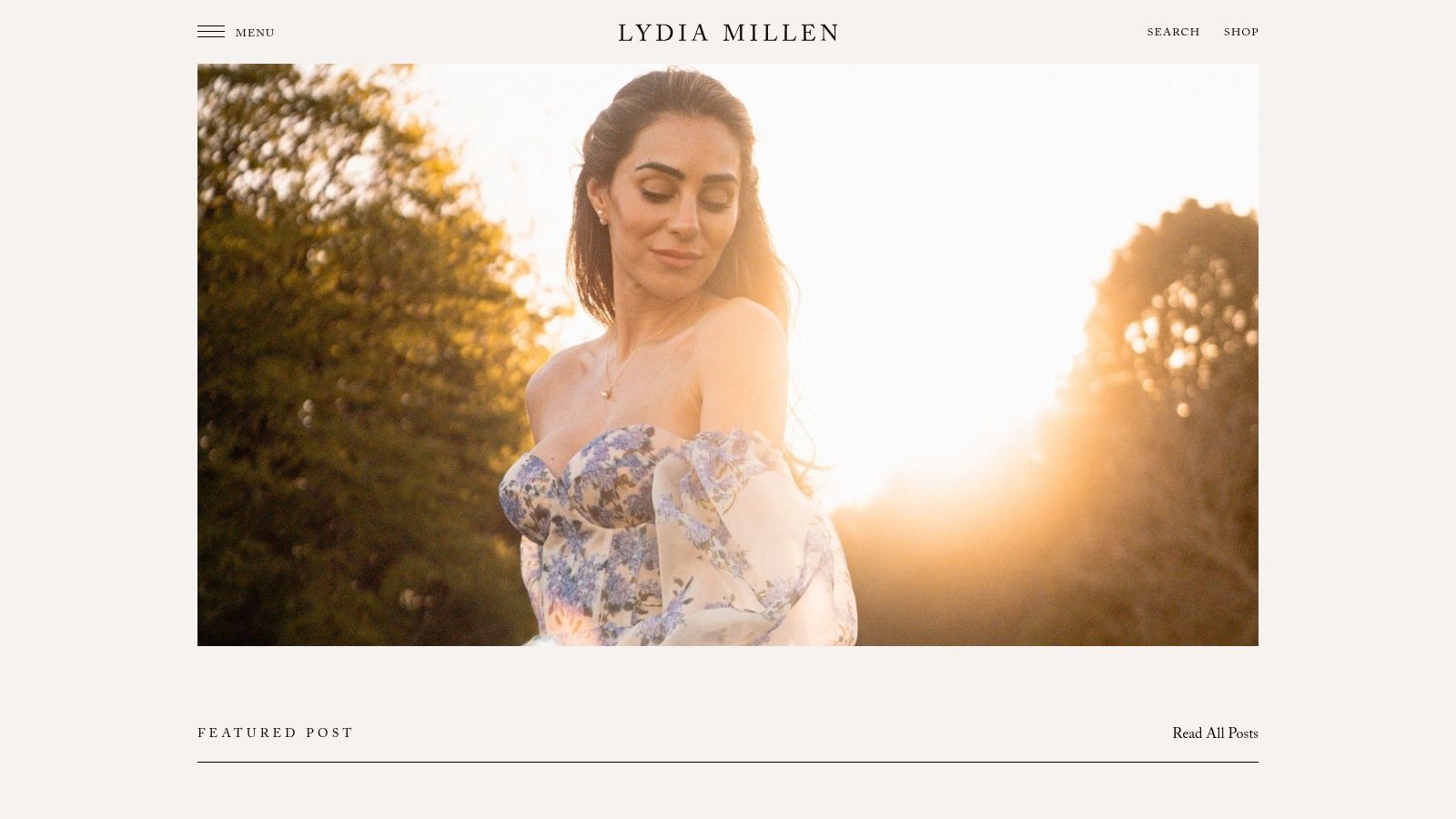
A team has a premium product, strong visuals, and a healthy media budget, yet the campaign still underperforms because the creator only shows the item in isolation. Lydia Elise Millen solves a different problem. Her platform on Lydia Elise Millen places fashion inside a fully built lifestyle world, which gives premium brands more context to sell taste, routine, and setting alongside the product.
That makes her a strong fit for campaigns where aspiration carries part of the conversion job.
The upside is clear. Categories like outerwear, occasionwear, accessories, beauty, gifting, and home-adjacent fashion placements tend to benefit when the product appears inside a polished environment that already matches the customer's ambition. The trade-off is just as clear. Brands relying on urgency, heavy discount language, or fast trend turnover can lose sharpness in that setting.
Best use case: premium brands that need context
Lydia works well when the brief asks for more than product display. She can show how an item fits into a season, a routine, or a broader personal style system. That usually improves performance for brands selling higher-consideration pieces, where the buyer wants reassurance on taste and compatibility before clicking through.
From a campaign planning perspective, I would not judge this type of creator on last-click sales alone. Value often shows up earlier in the funnel. Save rate, branded search lift, direct traffic during the posting window, and assisted conversions give a more accurate read on whether the placement is doing its job.
What to ask for in the brief
With Lydia, structure matters more than raw content volume. A scattered set of deliverables usually wastes the aesthetic consistency you are paying for.
I'd brief for:
A lead visual anchor: One hero moment that establishes styling, setting, and product priority.
A second use case: A follow-up placement that shows repeat wear or a more natural daily context.
Clear environment guidance: Specify whether the brand wants country, travel, home, event, or seasonal framing.
Measured calls to action: Premium audiences usually respond better to controlled product direction than overt sales language.
The better question is not “how many assets do we get?” It is “how many credible buying moments do we create?”
One caution matters here. Her audience expects a classic, refined point of view. If the product is highly trend-led, youth-coded, or aggressively price-first, the partnership can feel forced even if the content looks good. In practice, Lydia is best used as a brand-fit filter. If the item belongs naturally in her world, the collaboration can strengthen perception and support conversion over a longer window.
3. Emma Hill
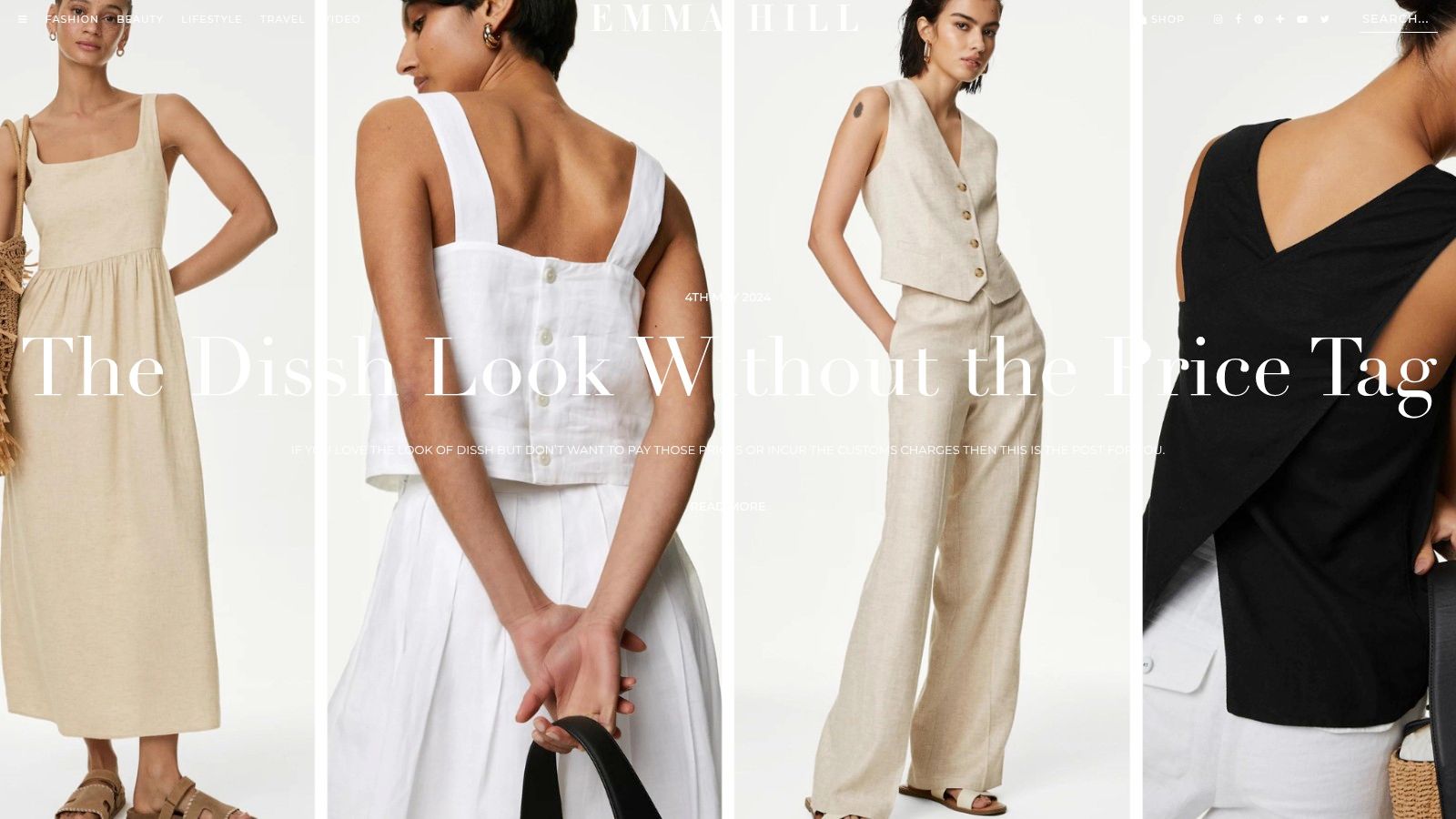
Emma Hill is one of the clearest examples of a creator whose value comes from utility. On Emma Hill's site, the proposition is practical styling. Neutral palettes, repeatable outfit formulas, wardrobe staples, packing edits, and product explanations all make her particularly strong for brands selling items people expect to wear often.
That sounds obvious, but it affects conversion mechanics. Essentials, outerwear, denim, knitwear, bags, and shoes usually sell better when the creator shows repeat wear logic. Emma's style language supports that naturally.
Why brands like wardrobe logic
A lot of fashion campaigns fail because they produce pretty content with no purchase rationale. Emma's content usually closes that gap. The styling is understated, but the buying argument is clearer. Viewers can see where the item fits, what it replaces, and how often it might be worn.
For ecommerce teams, that often makes briefs easier to write. You can ask for comparison, versatility, and use-case clarity without forcing a creator into an unnatural script.
A few brief notes I'd include:
Prioritise outfit construction: Don't just ask her to “feature” the product. Ask her to build multiple wearable combinations around it.
Give product facts: Fabric, fit, care, and sizing guidance matter more here than lofty brand language.
Use landing pages wisely: Send traffic to collection pages or curated edits, not generic homepages.
Where she won't be the right pick
Emma is less suited to brands chasing maximalism, fashion spectacle, or youth-trend experimentation. If your core offer is about colour shock, novelty, or rapid style shifts, you may end up fighting her natural visual grammar.
That's not a criticism. It's exactly the sort of mismatch teams should spot before outreach. The best fashion influencers UK campaigns aren't built by convincing creators to become someone else for a fee. They work when the product fits the creator's existing logic.
One more strategic point matters here. The UK market structure supports creator mixes that go beyond headline names. Grand View Research reports UK fashion influencer marketing revenue of USD 200.1 million in 2020, rising to a projected USD 1,244.4 million by 2027, with a 29.8% CAGR from 2021 to 2027 in its UK fashion influencer market outlook. In the same outlook, nanoinfluencers held the largest revenue share in 2020, while microinfluencers were identified as the fastest-growing sub-segment. In practice, that means creators like Emma often work best as part of a layered mix, where clear-styling voices support measurable product testing.
4. Lizzy Hadfield (Shot From The Street)
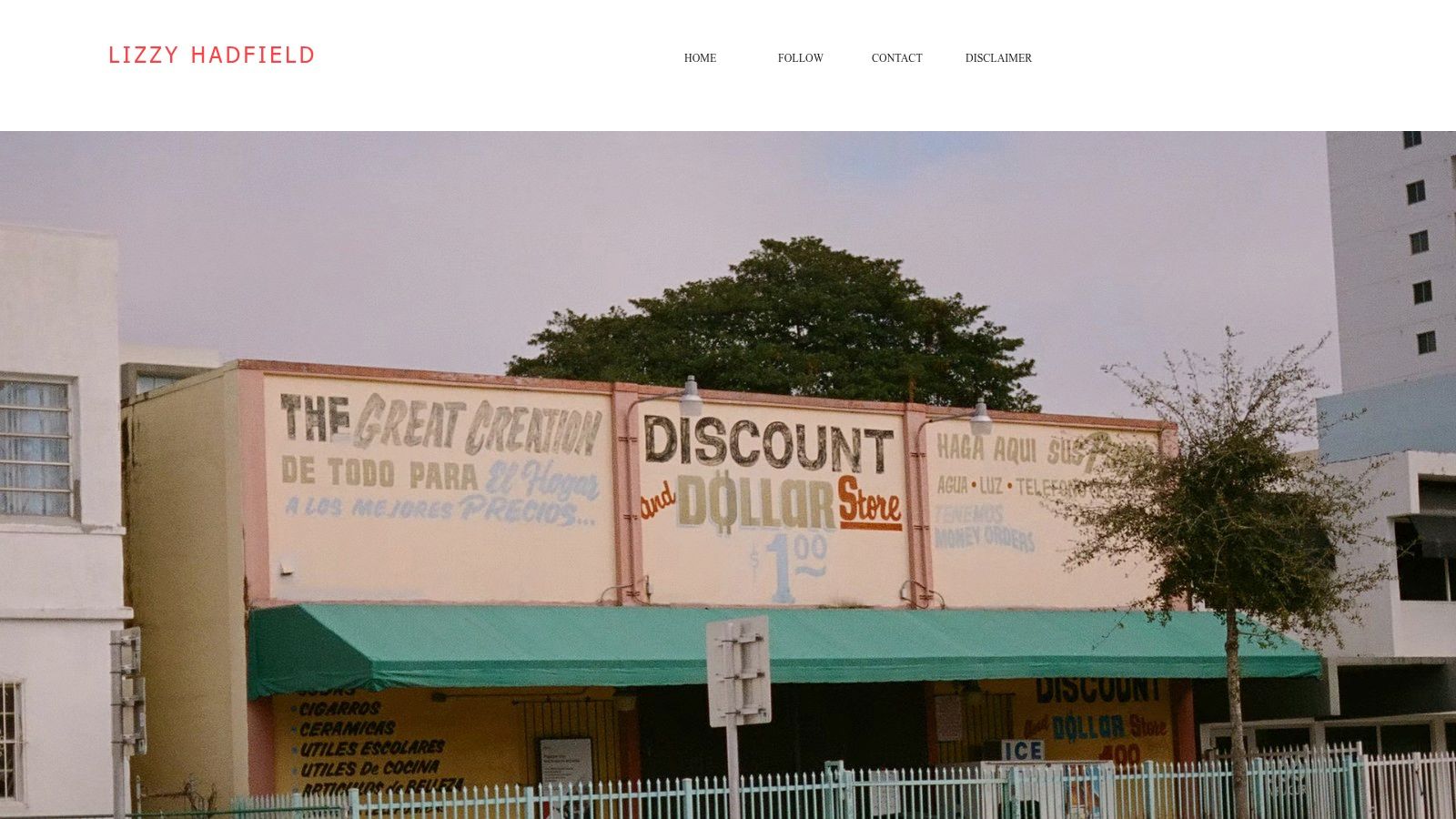
Lizzy Hadfield's strength is restraint. Her platform at Shot From The Street feels editorial, minimal, and highly considered. For premium contemporary labels, especially those selling tailoring, denim, outerwear, leather goods, and refined basics, that's a real advantage.
You don't hire Lizzy to create noise. You hire her to create taste, precision, and visual confidence.
A creator for high-standard creative teams
Some creators need heavy art direction. Lizzy usually doesn't. If your internal team cares about framing, styling balance, and campaign consistency, her work reduces the amount of corrective feedback that usually slows collaborations down.
That said, she isn't the right answer for every brief. Minimal creators can make colourful or highly playful products feel slightly out of place unless the fit is excellent. Frequency can also be a planning consideration compared with creators who live in rapid short-form output.
What works: Give Lizzy room to interpret within a clear visual lane. Over-controlling shot lists often weakens the result.
When briefing her, I'd focus on:
Product selection discipline: Fewer, better pieces usually outperform broad seeding.
Creative references: Show the campaign mood and silhouette direction, not just logos and slogans.
Usage rights upfront: Her polished visuals are often suitable for paid reuse, so clarify licensing before content goes live.
How she fits into a broader mix
Lizzy is a strong top-of-funnel or mid-funnel creator when the brand wants quality perception. But if the end goal is aggressive sales velocity, I'd rarely run this type of creator alone. I'd pair her with a wider network of smaller, sharper-conversion profiles.
That's why many teams move budget toward smaller creators in testing rounds. As noted in the UK market outlook earlier, micro and nano tiers play a major role in programme structure. There's a practical reason for that, and it's the same logic behind why micro influencers outperform macro influencers with data. A creator like Lizzy can set the brand standard. Smaller creators can then pressure-test price point, messaging angle, and product-market fit at scale.
5. Megan Ellaby
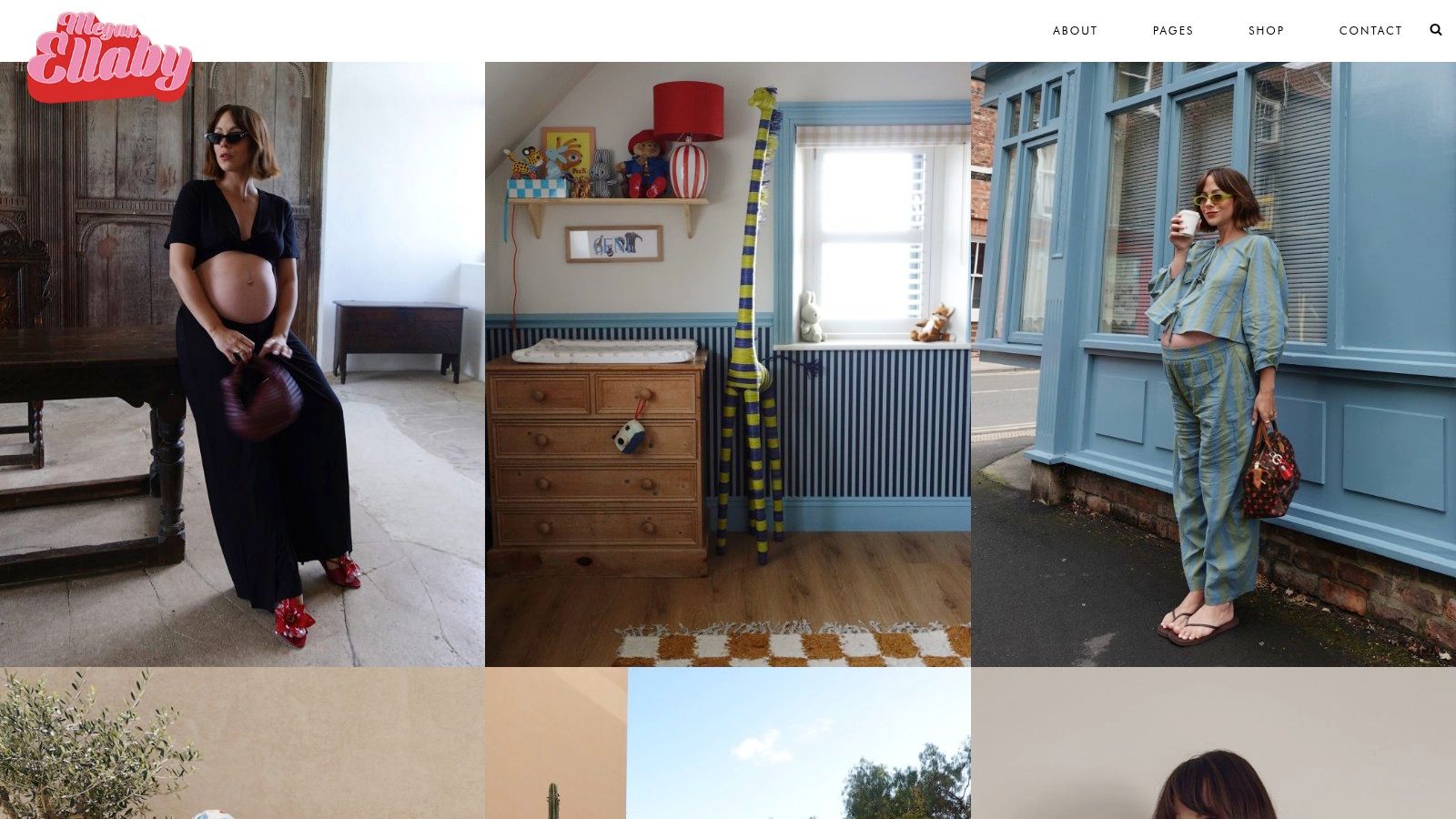
Megan Ellaby is what I'd call a pattern-breaker. In a feed full of beige minimalism, her world on Megan Ellaby is colour-forward, retro-leaning, and recognisable at a glance. If your product needs to stand out quickly, that matters.
She's especially useful for statement pieces, knitwear, personality-led collections, and campaigns where the creative needs to stop the scroll before it explains the product. Her ownership of a fashion label also gives her a more product-native perspective than some creator-only profiles.
Best used for launches and bold product stories
Megan can work well when a brand has something visually distinctive to say. If the clothes already have attitude, the partnership can feel obvious in a good way. If the collection is generic, a creator with this much point of view can expose that quickly.
The bigger commercial upside is that she can support more than a single sponsored post. For some brands, she's a candidate for co-designed edits, launch storytelling, and content that stretches into ecommerce use. That's where creator partnerships start to feel more like product collaboration than media buying.
A few things I'd lock in before campaign sign-off:
Visual essentials: Agree which colours, silhouettes, or prints must appear.
Commercial mechanics: If you need trackable sales, set code logic and landing pages before content production begins.
Scheduling: Book early. Creators with their own labels and multiple commitments usually need more lead time.
Where the risk sits
The main risk is mismatch. Her bold aesthetic won't rescue a brand whose identity is quiet, pared-back, and classic. It can also split opinion internally if your team confuses “not our taste” with “not commercially useful”.
For ecommerce operators, this is where campaign infrastructure matters. Distinctive creators tend to generate strong creative assets, but that only becomes profitable if you can tie content to traffic and transactions. That's why teams running serious DTC programmes usually need a more operational setup, closer to influencer marketing for ecommerce in a repeatable system, rather than ad hoc one-offs.
6. Anna Newton (The Anna Edit)
Anna Newton works for brands that want considered purchasing, not impulse chaos. On The Anna Edit, her tone is practical, organised, and grounded in capsule wardrobes, seasonal edits, and everyday usefulness. That makes her especially relevant for brands selling core lines that need repeat wear logic.
She isn't the creator I'd choose for avant-garde fashion or runway theatrics. She is the creator I'd shortlist for knitwear, shirts, trousers, workwear, layering pieces, and any range that benefits from calm explanation.
A strong fit for low-friction buying journeys
Anna's audience is accustomed to edited recommendations rather than endless novelty. That gives brands an opening to present products with more clarity and less hype. In campaign terms, this often leads to better briefs because the content can focus on usefulness, fit, and versatility instead of exaggerated trend claims.
That matters because one of the biggest gaps in the fashion influencers UK space is attribution. Much of the coverage around creators still stops at popularity and aesthetics, not whether audiences buy. That criticism is well captured in Disrupt Marketing's discussion of UK fashion influencers and the missing conversion layer. For operators, the lesson is simple. If you can't connect content to clicks, redemptions, or repeat purchases, you're still guessing.
Good creator content reduces uncertainty for the buyer. Good campaign operations reduce uncertainty for the brand.
How I'd brief her
For Anna, the brief should be less campaign-slogan heavy and more decision-support oriented.
Explain the role of the product: What gap does it fill in a wardrobe?
Give real usage scenarios: Office, weekend, travel, layering, occasion dressing.
Support trust: Transparent fit notes, honest pricing context, and a natural reason the product belongs in her existing routine.
If a brand pushes too hard on overt promotion, the partnership can feel off. The right approach is to let the product earn inclusion through relevance.
7. Alexandra Stedman (The Frugality)
Alexandra Stedman occupies an important lane that many brands overlook. At The Frugality, she brings editorial taste to more accessible shopping behaviour. That makes her highly practical for high-street, mid-market, and value-conscious DTC brands that need trust as much as reach.
Luxury halo isn't the point here. Credibility around smart buying is.
Why value-led creators matter in UK fashion
A lot of brands assume “aspirational” must mean expensive. In practice, accessible style creators often have a clearer commercial role because they help buyers justify purchases in real-world terms. Re-wearing, re-styling, and price awareness aren't side notes in this kind of content. They're central to why the recommendation lands.
That aligns well with the UK's current platform reality. Brand activity is heavily concentrated on Instagram, and fashion performance there is already measurable at scale. A UK report summarised by News by Wire on Kolsquare's latest findings said Zara led Instagram's top 100 brands ranking in earned media value at £55.2 million, supported by 3,085 influencers, while ASOS generated £52 million from 2,972 influencers, H&M reached £40.7 million from 2,596 influencers, and Gymshark achieved £36 million from 1,069 influencers. The same report noted Primark among leading brands, and said L'Oréal Paris led on TikTok in the UK. Those figures matter because they show fashion and beauty campaigns aren't just generating chatter. Brands are already tracking creator output in commercial terms.
Best campaign use
Alexandra is a strong fit when you need:
Price transparency: The audience expects value logic, not vague desirability.
Editorial shopping context: Product recommendations work best when they feel curated.
Realistic wardrobe integration: Rewearing and practical styling should be central to the brief.
The trade-off is simple. If your brand relies on exclusivity cues and luxury signalling, she may not amplify that story the way a luxury-first creator would. But for brands selling attainable style with clear wardrobe value, she's often closer to where conversion happens.
Top 7 UK Fashion Influencers Comparison
Creator | 🔄 Implementation complexity | ⚡ Resource requirements & speed | 📊 Expected outcomes ⭐ | Ideal use cases | 💡 Key advantages |
|---|---|---|---|---|---|
Victoria Magrath (InTheFrow) | High, multi-format editorial shoots, longer lead times | High production cost; slower turnaround | Premium brand lift, sustained SEO traffic, ⭐⭐⭐ | Prestige launches, heritage brands, 360° campaigns | Integrated 360° activations; academic credibility |
Lydia Elise Millen | Medium‑High, polished, sequenced content drops | Medium‑High resources; moderate lead times | Aspirational positioning, strong affiliate potential, ⭐⭐⭐ | Premium apparel, beauty, home; long campaign arcs | Multi-category storytelling; blog hub for features |
Emma Hill | Medium, repeatable styling frameworks, practical assets | Moderate resources; efficient deliverables | Strong conversion for essentials; predictable creative, ⭐⭐⭐ | Evergreen essentials, outerwear, wardrobe staples | Searchable practical content; consistent aesthetic |
Lizzy Hadfield (Shot From The Street) | Medium, film/photo-led editorial with high creative standards | Medium resources; lower post frequency | High-quality visual campaigns; loyal niche audience, ⭐⭐⭐ | Premium-contemporary labels and quality essentials | Strong photographic direction; editorial feel |
Megan Ellaby | Medium, bold, statement-led shoots; co-design coordination | Medium resources; scheduling constraints | High engagement for launches; standout feed impact, ⭐⭐ | Colourful, personality-driven launches; capsule collaborations | Distinctive colour-forward aesthetic; brand-owner POV |
Anna Newton (The Anna Edit) | Low‑Medium, pragmatic, checklist-driven production | Moderate resources; efficient cross-format reach | Considered purchases; lower return rates, ⭐⭐ | Sustainability narratives; versatile core lines | Capsule-wardrobe expertise; trust-building curation |
Alexandra Stedman (The Frugality) | Low‑Medium, editorial shopping edits, value-led content | Low‑Medium resources; quick turnaround | Strong conversion for mid-market; value credibility, ⭐⭐ | Mid-market/DTC brands; accessible price-point campaigns | Practical re-wear focus; editorial shopping edits |
From Collaboration to Conversion: Scaling Your Influencer Strategy
A UK fashion team approves six creators for a seasonal push. Product goes out on time. Content lands. Engagement looks healthy. Two weeks later, the performance meeting starts and nobody can answer the only questions finance cares about: who drove qualified traffic, which posts converted, and whether the spend should be repeated.
That gap usually comes from process, not creator quality. Outreach sits in DMs, product seeding is tracked in scattered sheets, briefs change by account manager, and tracking gets added after content is already live. In a crowded UK creator market, that lack of structure burns budget quickly.
Social discovery is established, and Instagram still carries a large share of fashion influencer activity in the UK, as noted earlier. The commercial implication is simple. More brands are competing for the same attention, so weak briefing and weak attribution cost more than they did a few years ago.
The fix is to treat influencer activity like a channel with operating rules. I use three checkpoints.
First, vet for fit before reach. A strong creator shortlist should cover product relevance, audience-commercial fit, content reliability, brand safety, and the creator's usual conversion behaviour. A beautiful feed matters less than whether the person can sell the specific product category. Someone who performs well for premium outerwear may be a poor choice for entry-price accessories. Someone with high saves and comments may still struggle to drive code use.
Second, write briefs that remove ambiguity. Good briefs set the message hierarchy, required product angles, content format, disclosure requirements, usage rights, posting window, and success metric. They also leave room for the creator's own delivery style. Over-direct and the content looks like an ad. Under-direct and the brand message gets diluted.
Third, decide attribution before contracts are signed. Every creator should have a tracking method tied to the campaign objective: unique UTM links for traffic, creator-specific codes for direct response, landing pages for larger pushes, and post-campaign holdout or assisted-conversion review when the goal is broader brand lift. If tracking starts after launch, reporting turns into guesswork.
A layered creator mix usually works better than betting the budget on one headline name.
For UK fashion brands, that often means splitting roles across three groups: prestige creators who shape perception, mid-tier creators who deliver repeatable content and qualified traffic, and niche or value-led creators who convert efficiently within a defined segment. That structure reduces dependency on one face, one audience, or one content style. It also gives the team cleaner readouts on what drives revenue.
The strongest influencer programmes operate like a portfolio, not a one-off endorsement.
Sup is one option for teams that want the workflow handled in one place. According to the company's description, it combines AI-based creator matching with human campaign support and tracks performance through unique UTM links and promo codes tied to clicks, conversions, bookings, and revenue. For lean teams, that kind of setup removes a lot of admin and makes post-campaign reporting easier to trust.
The point is not to make creator work rigid. The point is to remove preventable mess so the team can spend its time on selection, creative quality, and performance analysis. If paid creator traffic is landing on product pages that are hard to convert, these strategies for higher e-commerce sales are worth aligning with your campaign plan before the next launch.
If you want a more measurable way to run UK creator campaigns, Sup is built for teams that need sourcing, outreach, and attribution in one workflow. It's a practical fit for brands that want to move beyond one-off gifting and turn influencer marketing into a repeatable channel with clearer reporting.

Matt Greenwell
Share