£770 million is the number that should change how you think about this question. Statista's projection puts the UK influencer marketing market at about £770 million in 2025 (Statista UK market size projection). At that size, “does influencer marketing work” stops being a debate about trendiness and becomes a performance question: under what conditions does it produce attributable revenue, and when does it fail?
That distinction matters. Plenty of channels can generate attention. Far fewer can be turned into a repeatable operating system with measurable spend, consistent creator selection, and clear attribution. Influencer marketing sits in the middle. It can be highly effective, but only when brands treat it less like PR theatre and more like paid media with creative partners attached.
The strongest business case isn't that creators can make a brand look relevant. It's that the right campaign design can connect recommendation, click, redemption, booking, and revenue in one chain. When that chain is visible, influencer marketing becomes easier to test, easier to scale, and easier to shut down if it isn't working.
Influencer Marketing Is Now a £770 Million Channel
A UK channel approaching £770 million in 2025, as noted earlier, signals something more useful than popularity. It shows that influencer marketing now sits inside mainstream budget planning, where spend is expected to justify itself against other acquisition and retention channels.
That shift changes how marketers should evaluate it. Once a channel reaches this level of adoption, the operative question is no longer whether creator partnerships can generate attention. The operative question is whether your team can run the channel with enough control to produce attributable commercial outcomes.
A mature market usually brings two things at once: more budget and less tolerance for vague reporting. Influencer marketing now faces the same scrutiny as paid social, affiliate, and sponsorship spend. Finance teams want to know what happened after the post went live. Growth teams want to know whether results can be repeated with a different creator, a new offer, or a larger budget.
Market size changes the operative question
A better evaluation framework starts with three checks:
Measurement quality: Can you connect creator activity to clicks, code use, leads, bookings, or revenue without relying on platform engagement alone?
Audience fit: Does the creator reach a commercially relevant audience, not just a large one?
Repeatability: Can your team turn one good placement into a tested process with briefing, tracking, creative review, and post-campaign analysis?
If the answer to those questions is no, the size of the market does not help much. It may even hide weak execution, because a fast-growing category can make almost any activity look strategically justified for a while.
That is one reason brands still misread the channel.
Some brand teams file influencer marketing under awareness and stop at reach, views, and comments. Some performance teams go the other way and judge it on last-click revenue only. Both methods miss how creator campaigns often work in practice, especially in categories with longer consideration cycles or stronger social proof effects.
A buyer might see a creator mention a product, search for the brand two days later, return through a retargeting ad, and convert with a discount code from an email. In a narrow attribution model, the creator looks unimportant. In a reporting model built around engagement, the sale disappears. Neither view gives management a reliable answer.
That's why the UK market's scale is more than a headline. It marks a stage where influencer marketing should be managed as an operating channel, not a side experiment. Teams that handle it well usually build the same fundamentals they use elsewhere: clear goals, creator selection criteria, tracking links, promo codes, holdout thinking where possible, and post-campaign review. Teams that skip those basics often conclude the channel is unpredictable, when the bigger problem is weak instrumentation.
For a broader view of how the market is developing, these influencer marketing statistics for 2026 help frame the scale and adoption trend. The business case, though, still depends on execution. A large market proves demand for the tactic. It does not prove fit for every brand, every product, or every measurement setup.
The Data Shows a £5.20 Return for Every £1 Spent
An average return of £5.20 for every £1 spent is high enough to merit scrutiny, not blind acceptance. Research cited by 99Firms' influencer marketing statistics roundup reports both that level of average return and that 89.2% of marketers who used influencer marketing considered it effective. Those figures support a practical conclusion: the channel can produce strong economics, but only under the right operating conditions.
The useful question is not whether influencer marketing works in theory. It is why returns can outperform other paid channels in some accounts and disappoint in others.
The answer usually sits in conversion mechanics. Creator content often reduces friction at the moment a buyer needs reassurance. A recommendation from a trusted voice can compress the path from awareness to consideration, especially in categories where product quality is hard to assess from an ad alone. Beauty, food, fitness, parenting, hospitality, and lifestyle ecommerce often benefit because proof, routine, and personal use matter.
That does not make influencer marketing automatically efficient. It makes it highly sensitive to execution.
Averages such as £5.20 to £1 are portfolio numbers. They combine strong campaigns, mediocre campaigns, and failed tests. Brands that earn attractive returns usually have four elements in place: a product people can understand quickly, creators whose audiences match actual buyers, an offer or call to action that gives viewers a reason to act, and tracking that captures value beyond a like or view. Remove one of those elements and reported ROI falls fast.
For a wider benchmark set on adoption, pricing, and performance, see these influencer marketing statistics for 2026.
The same source also notes that micro-influencer campaigns can generate 60% higher engagement than larger creator campaigns. The important business implication is not that smaller creators are always better. It is that headline reach is often overpriced when audience fit is weak. Higher engagement can translate into stronger economics when the campaign goal is product discovery among a narrow set of likely buyers, not mass awareness.
Many teams misread the benchmark by treating the average ROI figure as proof that any creator campaign should pay back. A better reading is narrower: influencer marketing can become a repeatable acquisition channel when it is measured like one. If a brand relies on vanity metrics, pays for broad relevance-free reach, or sends traffic to an unprepared landing page, the same channel that produced £5.20 elsewhere can struggle to break even.
So the statistic matters, but mainly as a signal. It shows the upside is real. It does not remove the need for measurement discipline, careful creator selection, or a clear view of when the channel is a poor fit.
Macro vs Micro-Influencers Which Tier Drives Real Results
Most brands overpay for reach before they've proved fit. That's the common planning error.
For UK marketers, creator effectiveness often improves when campaigns use localised, niche-matched micro- and nano-creators, because audience relevance drives stronger engagement efficiency than follower count (GRIN analysis on data in influencer marketing). This is especially important for restaurants, regional retail, hospitality, and targeted ecommerce where geography and intent shape conversion.
The strategic trade-off
Macro creators can deliver visibility fast. They can also bring broader audiences, higher fees, and weaker alignment if the brief is too general.
Micro creators usually trade scale for fit. That trade is often worth it when your goal is not “be seen by everyone” but “be seen by the right people who might act”.
Here's the planning lens I'd use.
Metric | Macro-Influencers (100k-1M+ followers) | Micro-Influencers (1-100k followers) |
|---|---|---|
Primary strength | Broad reach and fast awareness | Higher audience relevance and local fit |
Audience quality | More variable across niches and locations | Often tighter and more niche-matched |
Efficiency | Can become expensive if conversion intent is weak | Often stronger per pound spent when targeting is precise |
Credibility signal | Strong social proof through scale | Stronger sense of authenticity and familiarity |
Best fit | National launches, mass visibility, social proof | Local campaigns, niche ecommerce, hospitality, multi-location brands |
Main risk | Paying for impressions that don't convert | Operational complexity if managing many creators manually |
Why micro often wins in practice
The core issue is signal-to-noise ratio. If a Manchester café works with a lifestyle creator whose audience is mostly in London, the post may still look successful on platform. The business result won't match the engagement.
Smaller, local creators reduce that mismatch. Their audience is more likely to be nearby, interested in the category, and willing to act on a recommendation with a time-bound offer.
This is why many teams increasingly prefer a portfolio of smaller creators over one large partnership. The campaign becomes less dependent on a single post and more resilient across locations, offers, and creative angles.
If you want a deeper breakdown of that trade-off, this guide on why micro-influencers outperform macro-influencers is a useful companion.
Broad reach creates possibility. Tight relevance creates efficiency.
Where macro still makes sense
Macro partnerships still have a place. They can work when you need rapid awareness, strong visual association, or a credibility shortcut for a product launch.
But if the question is strictly “does influencer marketing work” in a measurable commercial sense, the more useful answer is often found in creator-audience fit, not in creator fame.
How to Measure Influencer Marketing Success
If you can't trace activity from creator post to business outcome, you're not measuring influencer marketing. You're watching it.
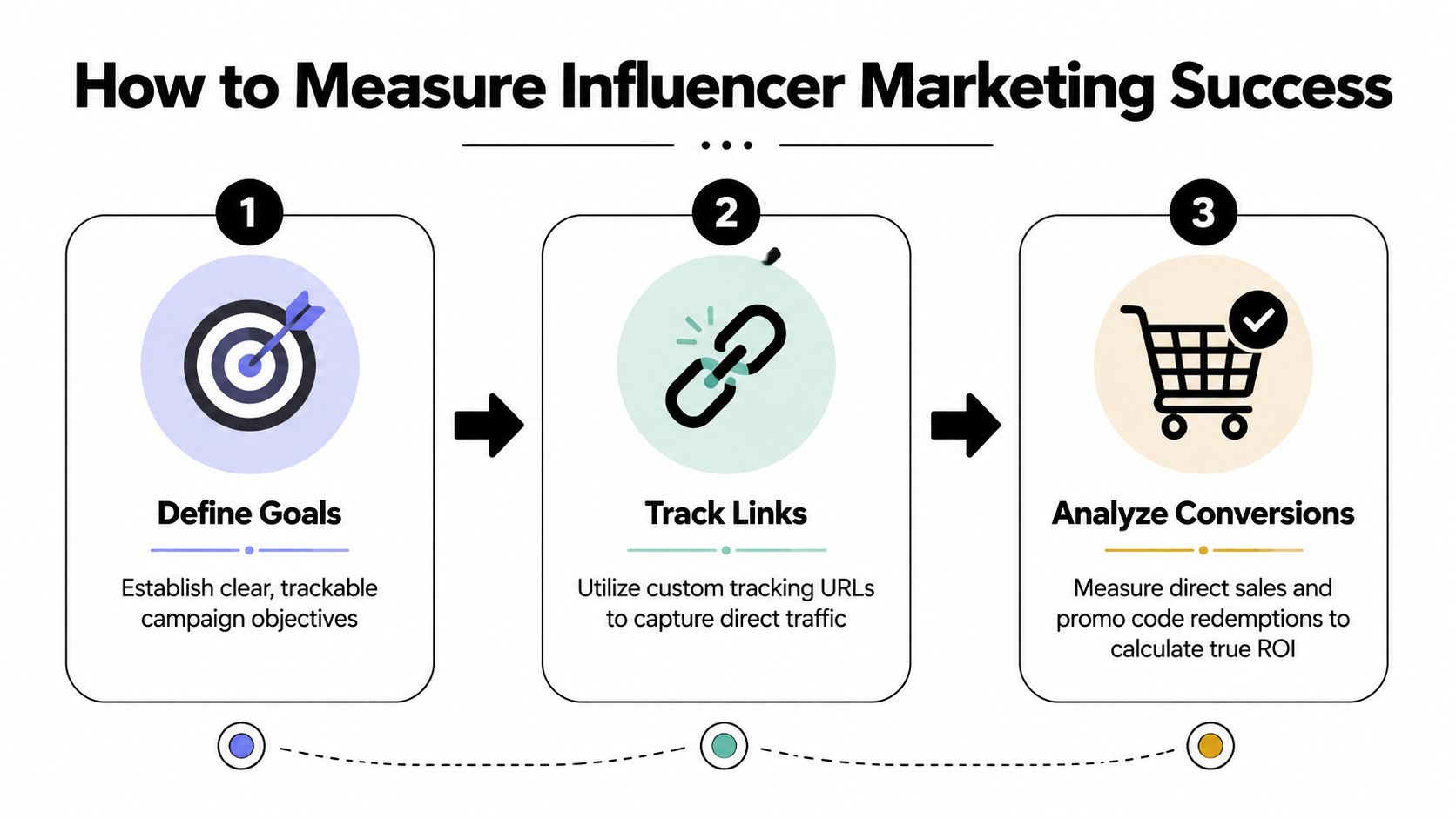
UK campaign guidance points in the right direction. A material share of campaigns now use unique discount codes, affiliate links, and UTM parameters so brands can attribute sales rather than relying on vanity metrics. The same guidance recommends evaluating campaigns with KPIs such as reach, engagement rate, CTR, and redemption rate because those map to different funnel stages (UK influencer tracking guidance).
Measure the full path, not just the post
A useful framework is to split metrics into three layers:
Content performance: Views, saves, shares, comments. These tell you whether the post earned attention.
Response behaviour: Click-through rate, profile visits, swipe-ups, code use. These show whether attention turned into action.
Business outcome: Purchases, bookings, revenue, customer acquisition cost. These tell you whether the campaign made commercial sense.
Most reporting fails because it stops at the first layer.
The mechanics that make attribution possible
For most brands, the minimum viable tracking stack includes:
Unique UTM links for each creator so traffic can be separated in analytics.
Creator-specific promo codes so purchases and bookings can be tied back to an individual partnership.
A dedicated landing page or geo page when location matters.
Platform-side analytics to compare content performance with off-platform actions.
This matters even more on short-form video. Creative decisions affect response quality, not just view count. Teams working heavily on Instagram should also review SleekPost Instagram Reels insights, especially around format and retention cues that can influence whether viewers click through.
Later in the process, video can help align teams on what good measurement looks like:
What a practical reporting setup looks like
One workable approach is to keep a creator scorecard with:
Creator name and niche
Post format and offer
Views and engagement
Clicks from unique UTM
Code redemptions or bookings
Revenue attributed
Cost per creator
Estimated ROI
For teams that want a system rather than a spreadsheet, Sup's influencer ROI measurement workflow outlines one operational model. Sup also provides creator-specific promo codes, UTM links, and a dashboard for views, clicks, redemptions, and payments. That's one example of how brands can reduce the manual work involved in attribution.
Working definition: Influencer marketing works when a creator campaign can be judged by the same commercial standards as any other acquisition channel.
Real-World Examples and ROI Calculation
Influencer marketing often gets boxed into beauty, fashion, and DTC. That's too narrow.
A UK-focused report found that 70% of UK consumers have visited a business after seeing it on social media, and 49% have bought from or booked with a business after seeing creator content (Sprout Social influencer marketing insights). That matters because it shifts the conversation from online engagement to real-world behaviour, especially for restaurants, cafés, service businesses, and location-led brands.
Three common use cases
Consider how measurement changes by business model.
A local restaurant: The campaign goal isn't just clicks. It's bookings, walk-ins, and perhaps review generation. The best setup uses creator-specific booking links or promo codes tied to a menu item or set offer.
A DTC ecommerce brand: The cleanest path is often creator-specific links plus checkout codes. That lets the team compare creators by traffic quality, conversion rate, and revenue.
A multi-location retail chain: The useful unit isn't one national total. It's store-level response. Each creator should map to a location, with local landing pages or branch-specific offers.
The lesson is that the same channel can support different commercial objectives, but only if the conversion path fits the business.
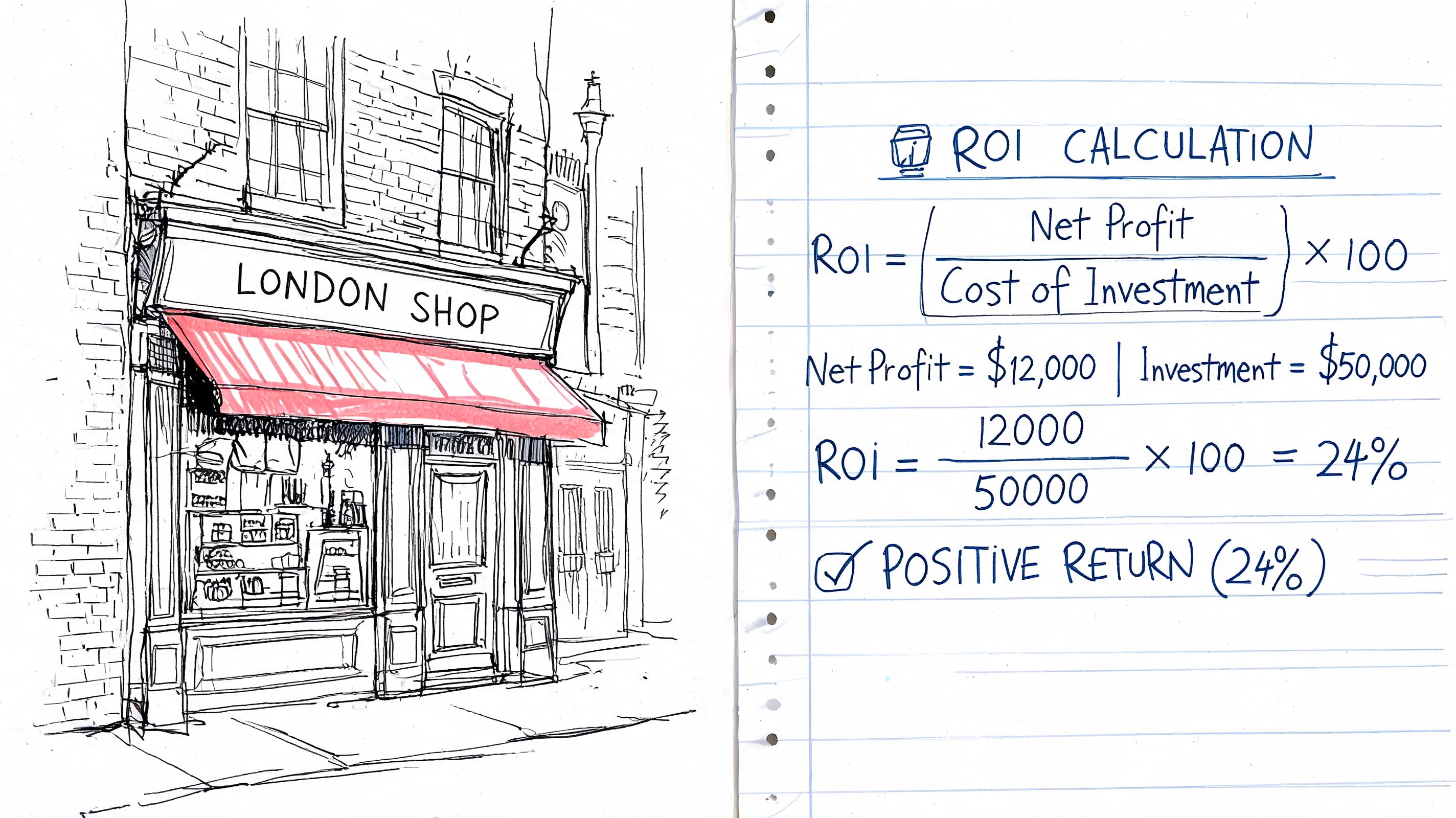
A simple ROI calculation
The formula is straightforward:
ROI = (Revenue attributed to the campaign - Campaign cost) / Campaign cost
Use it carefully. The hard part isn't the maths. It's deciding what revenue is credible to attribute.
A sensible calculation usually includes:
Direct revenue: Orders or bookings linked to creator-specific codes or tracked links.
Campaign cost: Creator fees, gifting cost if applicable, paid amplification if used, and internal or agency handling time if you want a fully loaded view.
If you want help checking the arithmetic on ecommerce outcomes, Statspresso's e-commerce marketing metrics tool is a practical calculator for ROAS and related metrics.
A campaign can look weak on likes and still perform well commercially. It can also look strong socially and fail financially. Always separate audience reaction from business return.
What these examples reveal
The answer to “does influencer marketing work” is narrower and more useful than most articles admit. It works when the business defines one conversion event, assigns a tracking method to it, and judges creators against that event. Without that discipline, the channel becomes storytelling with no audit trail.
Common Failure Modes and When to Avoid Influencer Marketing
Most failed influencer campaigns don't fail because the channel is broken. They fail because the setup is loose.
In the UK, the ASA/CMA disclosure framework has tightened expectations around clearly labelled ads, which makes vague or sloppy creator partnerships riskier for brands. At the same time, UK consumers are more selective, and trust and relevance matter more than follower count. Micro and nano creators can outperform larger creators because audiences often view them as more genuine (Lindenwood summary of UK disclosure and trust trends).

Where campaigns break
The failure points are usually operational.
Wrong creator, right audience size: A large following can hide weak local fit, poor niche overlap, or low purchase intent.
Creative that feels bolted on: If the post reads like a script from the brand team, the recommendation loses credibility.
No tracking plan: Without codes, UTMs, or booking links, every result becomes a debate.
Weak offer design: Even a trusted creator struggles if the audience has no reason to act now.
Compliance gaps: Poor ad labelling can damage trust and create unnecessary risk.
When influencer marketing is the wrong choice
Some businesses should test cautiously, or not at all.
A poor fit often looks like this:
Urgent-need services: If customers buy only in emergencies, creator content may not influence the moment of need enough to justify the spend.
Highly specialised B2B categories: If the buyer group is tiny and the sales cycle is long, direct creator partnerships may be less efficient than targeted outbound, events, or search.
Businesses without a conversion path: If you can't track orders, bookings, leads, or store-level activity, you'll struggle to judge success.
Teams that want instant scale: Influencer marketing usually rewards iteration. If there's no appetite to test creators and refine briefs, other channels may be easier to manage.
Compliance and credibility now sit inside performance. They're not separate concerns.
The balanced answer
Influencer marketing can be a strong growth channel, but it isn't magic and it isn't universal. It works best where trust shapes buying behaviour, where creative format matters, and where the business can measure a meaningful action after exposure.
A Step-by-Step Framework for Testing Influencer ROI
The best way to answer “does influencer marketing work” for your brand is to run a controlled pilot. Not a huge campaign. Not a vague awareness push. A test.
A practical five-step pilot
Pick one business outcome
Choose a single success metric. For ecommerce, that might be purchases. For a restaurant, it might be bookings. For a multi-location chain, it might be location-specific offer redemptions.Choose a small group of relevant creators
Prioritise niche and local fit over follower count. You're testing audience alignment, not chasing prestige.Build the tracking before outreach starts
Assign each creator a unique code, UTM, and landing page path where needed. If tracking is added later, the test becomes harder to trust.Launch with one offer and one clear brief
Keep the creative direction focused. The more variables you introduce, the harder it is to learn what caused the outcome.Review creator performance individually
Don't average away the signal. One creator may drive efficient conversions while another produces only engagement. Decide whether to scale the winners, adjust the brief, or stop.
How to judge the result
Use three questions:
Did the campaign generate the target action?
Was the attributed return acceptable relative to cost?
Can the process be repeated with better precision next time?
That last question matters most. A pilot isn't only about immediate profit. It's about whether the channel can become operationally reliable.
Teams refining creative and workflow around social content may also find this 2026 social media AI guide useful, particularly for planning, iteration, and production efficiency around creator-led campaigns.
If your pilot produces measurable actions, reliable attribution, and a repeatable process, influencer marketing isn't a maybe channel anymore. It becomes one more performance lever you can scale with confidence.
If you want to test creator campaigns without building the whole workflow from scratch, Sup gives brands and agencies a done-with-you way to source niche-matched creators, launch campaigns, track promo codes and UTM links, and see results in one dashboard.

Matt Greenwell
Share