92% is the number that frames this playbook. As noted earlier, that level of trust in recommendations over traditional advertising changes how restaurant marketers should allocate budget, judge channel performance, and define a successful campaign.
A second pattern matters just as much. Industry reporting cited earlier shows that social platforms already play a meaningful role in restaurant discovery. The practical implication is straightforward. Social content should be planned as the top of a measurable conversion path, not as a standalone brand output.
That creates a harder operational standard. If creator activity influences first visits, then restaurants need a way to connect posts to bookings, walk-ins, offer redemptions, review growth, and repeat purchase behaviour. Many teams still cannot do that reliably. The result is familiar: activity gets reported, but revenue impact stays unclear.
This article is built to solve that gap.
Each of the 50 statistics below is handled as a working input for decision-making. You’ll see the source, what the figure suggests, and what a restaurant marketer should do next if the goal is measurable return rather than vanity reach. That matters more in restaurants than in many other sectors because performance is local, margins are tight, and a campaign that looks strong at brand level can still fail site by site.
The UK evidence base for restaurant marketing remains patchy in places, especially once you narrow the question to creator attribution and in-store outcomes. That limitation is useful in itself. It signals where operators need their own benchmarks, cleaner tracking, and better campaign design. Platforms built around local creator matching and attribution help close that gap. Sup’s analysis of why micro-influencers outperform macro-influencers with data is one example of how restaurant teams can turn broad creator trends into location-level action.
The advantage in 2026 is not more posting. It is measurable local trust.
1. 92% of patrons trust recommendations from people more than traditional advertising
A 92% trust gap is not a branding detail. It changes how restaurant demand should be built.
As noted earlier, patrons put far more trust in recommendations from people than in traditional advertising. For restaurant marketers, the implication is straightforward. Reach matters less than credible local endorsement, and endorsement only becomes useful if it can be tied to a measurable action.
That is why creator marketing should be planned as an attribution channel, not just a content channel. A post that generates interest but cannot be connected to bookings, walk-ins, code use, or review growth gives the team very little to optimise. A smaller creator with a strong local audience can produce more commercial value than a larger creator with weak geographic relevance, especially for restaurants trading catchment by catchment. Sup explains that logic in more detail in its guide to why micro-influencers outperform macro-influencers with data.
The practical shift is different for independents and groups.
A single-site operator should treat trust as a local acquisition asset. That means working with nearby food creators, neighbourhood accounts, and occasion-led voices that already influence where people go this week. A multi-site group should build a repeatable system. The core components are creator selection by catchment, trackable offer mechanics, and reporting that shows performance at site level rather than only at brand level.
Three actions usually separate useful creator activity from expensive noise:
Choose for proximity and audience fit: Prioritise creators whose followers can realistically visit the site.
Build in attribution before launch: Use creator-specific links, codes, landing pages, or redemption prompts.
Run repeated collaborations: Trust compounds through repeated exposure and consistent proof, not a single visit post.
A simple test helps. If a campaign cannot be traced to a business outcome, it belongs in the awareness budget, not the performance budget.
2. Referrals drive 5x higher sales conversion rates than paid ads
As noted earlier, referrals convert at a far higher rate than paid ads. For restaurant marketers, that changes the measurement model. A creator campaign should not be judged like a CPM buy or a boosted post, because the mechanism is different.
A referral carries intent, context, and social proof before the diner even reaches your booking page. The person arriving has usually seen the food, understood the occasion, and accepted a recommendation from someone they already follow. That shortens the path from discovery to action.
The operational mistake is treating creators as a content production channel. The better model is partner-led acquisition with attribution built in from the start. If the brief ends at "post a reel", the restaurant gets content. If the brief includes a code, landing page, offer window, and site-level tracking, the restaurant gets a testable sales channel.
That distinction matters for ROI.
A local launch illustrates the point. If a sushi restaurant pays for generic awareness content, it may get reach with little proof of outcome. If it works with nearby creators and gives each one a specific redemption code tied to a weekday set menu, the team can track covers, revenue, and repeat demand by creator and by location.
Three setup choices usually improve referral performance:
Give each creator a distinct conversion path: use creator-specific codes, links, booking pages, or ask-for-this-item mechanics.
Tie the message to a real decision trigger: a lunch deal, opening week menu, limited-time dish, or off-peak incentive.
Measure offline as well as online: include in-venue redemptions and staff-recorded mentions, not just clicks.
The commercial implication is straightforward. Referral-led creator work often sits closer to affiliate thinking than brand publishing. Restaurants that recognise that earlier can allocate budget more rationally, cut weak placements faster, and prove which collaborations generate revenue rather than attention alone.
3. Word-of-mouth drives 13% of all sales globally each year
As noted earlier, word-of-mouth accounts for a meaningful share of global sales. In restaurants, that matters because purchase decisions are rarely made in isolation. One person suggests the venue, another checks the menu, and the group settles on an option that feels safe, current, and worth the spend.
That changes how marketers should treat creator activity.
A creator post is not only a piece of content. It is often the first step in a chain that includes shares in group chats, saved posts, direct recommendations, and offline discussion before a booking or walk-in happens. If you measure only clicks, you will miss part of the commercial effect.
The practical implication is budget allocation. Restaurants should treat word-of-mouth as a channel they can influence and attribute, not a by-product of good service.
Three campaign design choices usually improve that outcome:
Give people a reason to pass it on: a limited dish, opening-week offer, or time-bound social deal creates a clear prompt to share.
Make the recommendation easy to act on: use memorable codes, booking links, or redemption mechanics that staff can recognise at the till.
Track beyond the post itself: monitor saves, shares, code use, staff-recorded mentions, and review volume alongside direct conversions.
A useful test is to compare two creator campaigns with similar reach. One generates views but little secondary behaviour. The other drives shares, branded search, and in-venue redemptions over several days. The second campaign is usually more valuable, even if the top-line engagement rate looks less impressive at first glance.
That is why attribution matters here. Word-of-mouth has always influenced restaurant revenue, but it has often been left unmeasured. Tools such as Sup are relevant because they help teams connect creator activity to codes, visits, and site-level results, which turns a soft brand effect into something closer to measurable local demand.
4. Only 22% of UK restaurants are actively using influencer collaborations
Only 22% is low enough to matter.
As noted earlier, the source summary cites a 2025 UKHospitality reference indicating that only a minority of UK restaurants are actively using influencer collaborations. For marketers, that is less a popularity signal than an efficiency signal. A channel can still be underused while consumer attention has already shifted there.
The commercial implication is straightforward. In many local markets, restaurants are not competing against dozens of disciplined creator programmes. They are competing against inconsistent gifting, informal outreach, and activity with no reliable attribution. That leaves room for operators who can run creator work like a measurable acquisition channel.
Low adoption also explains why results are uneven. Many restaurant teams still handle creator outreach manually, approve visits case by case, and judge success on views or comments rather than redemptions, covers, or repeat visits. The problem is not creator marketing itself. The problem is weak measurement.
A better starting model looks like this:
Pick creators by catchment first: local audience concentration matters more than total follower count
Define the conversion event before outreach starts: booking, walk-in redemption, lunch cover growth, or opening-week traffic
Give each creator a distinct tracking method: code, link, landing page, or staff-recognised redemption phrase
Review performance at site level: one location may convert well while another underperforms with the same creator profile
The market split proves useful; early adopters can set internal standards before the channel becomes crowded. That usually means tighter briefs, cleaner reporting, and better comparison across locations. Tools and production systems such as the ShortGenius AI UGC ad platform can help teams produce and test creator-style assets at scale, but the larger advantage comes from attribution discipline, not content volume alone.
For Sup, the relevance is practical. If restaurants want creator activity to produce measurable ROI, they need campaign setup, tracking, and reporting that connect online exposure to offline revenue. In a market where adoption is still limited, the operators who build that system first are likely to gain cheaper local attention and clearer proof of return.
5. UK TikTok restaurant content reached 2.8B views in Q1 2026
UK restaurant content on TikTok reached 2.8 billion views in Q1 2026, as noted earlier. That figure matters because it changes the cost-benefit case for creator testing. A channel operating at that level of attention is no longer experimental for restaurants. It is a discovery layer with enough scale to influence site-level demand.
The commercial implication is straightforward. Restaurants should treat TikTok as a top-of-funnel traffic source, then build attribution around it from day one. Reach without a tracking mechanism produces activity reports. Reach with creator-specific codes, landing pages, or staff-recognised redemption prompts produces evidence.
A practical setup looks different from Instagram-led planning. TikTok tends to generate initial interest, fast menu consideration, and intent to visit. Instagram often helps with verification once the venue is already under consideration. That distinction matters because the content brief, call to action, and measurement method should match the role each platform plays.
Use TikTok to drive a measurable action:
Discovery content: new menu items, first-visit reactions, “worth it?” clips, occasion-led recommendations
Conversion path: booking link, creator code, walk-in offer, or named redemption phrase
Site reporting: compare results by location, daypart, and creator, not just at brand level
Teams producing creator-style assets in-house can also test variants faster with tools such as the ShortGenius AI UGC ad platform, but output volume is not the main constraint. Measurement is.
That is why Sup’s guide to TikTok influencer marketing for restaurants is relevant here. The operational question is not whether TikTok can generate attention. It is whether a restaurant group can connect that attention to bookings, redemptions, and repeatable ROI.
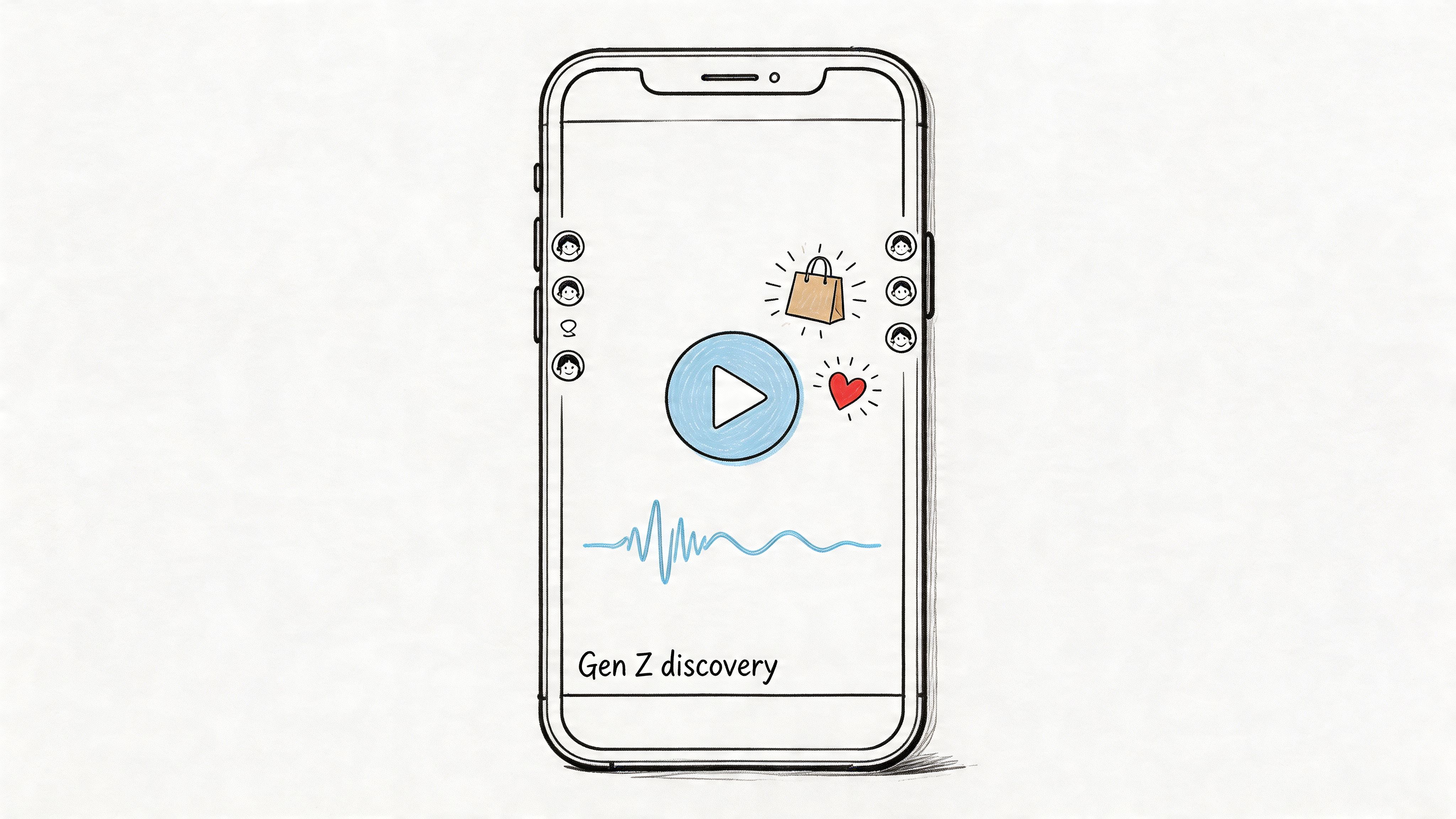
The common failure point is simple. Videos go live, views arrive, and nobody can tie the response back to a cover count or revenue line. For restaurant marketers, that turns a large audience signal into weak budget evidence.
6. UK TikTok restaurant content grew 42% year on year
A 42% year-on-year increase matters because growth rate is a better planning signal than view count alone. It shows where restaurant attention is accelerating in the UK, and where marketers still have room to build repeatable formats before the channel becomes more crowded.
For restaurant groups, the practical implication is not “post more”. It is to build a local testing model that can be measured site by site. Fast audience growth tends to reward brands that can publish quickly, brief creators clearly, and attribute responses back to bookings, redemptions, or walk-ins.
What restaurant marketers should do with this trend
A workable TikTok programme is operational, not creative-first.
One useful format is a location-level creator visit built around a single outcome:
creator films the arrival, signature dishes, and atmosphere
caption includes the site name and occasion
post uses a creator-specific code, booking link, or redemption phrase
team reports results by branch, daypart, and creator
That approach gives marketers something more valuable than reach. It gives them a way to compare performance across locations and decide which creator formats produce revenue, not just views.
The attribution layer needs to be planned before the content goes live. Sup’s TikTok influencer marketing guide for restaurants is useful here because the hard part is rarely getting content made. The hard part is setting up the code structure, link tracking, and staff process that turn attention into defensible ROI.
Channel growth creates opportunity. Measurement decides whether that opportunity becomes budget evidence.
7. 95% of UK marketers say manual tracking fails to prove ROI
A 95% failure rate is not a reporting problem. It is a budget problem.
As noted earlier in the UK source material, manual tracking leaves many marketing teams unable to prove return on spend. For restaurant teams, that gap shows up in familiar ways. A creator post goes live, footfall looks stronger, a few codes are mentioned at till, but nobody can separate coincidence from campaign effect. Finance sees activity. Marketing needs evidence.
The practical implication is straightforward. Creator marketing should be set up like a measurable acquisition channel, not treated as brand activity with a rough post-campaign estimate.
What better attribution looks like in practice
Use a small set of trackable signals that connect exposure to action:
Creator-specific promo codes for in-store redemption
UTM-tagged links for bookings, menus, or offer pages
Reservation clicks tracked by creator, location, and date
Online order starts tied to the campaign source
Review volume and review timing after a campaign goes live
This matters more in restaurants than in many other sectors because conversion often happens offline. A diner may see a TikTok on Tuesday, visit on Friday, and mention the offer verbally rather than click a link. If your measurement model only counts digital clicks, it will understate performance and bias spend towards the wrong creators.
A basic dashboard is usually enough. What matters is naming discipline, site-level reporting, and clear ownership across marketing and operations.
For teams building that process, Sup’s TikTok influencer marketing guide for restaurants is useful because it focuses on the mechanics that make attribution hold up later, including code structures, tracking links, and branch-level execution.
The teams that defend budget successfully do one extra thing. They decide how ROI will be measured before the first post goes live.
8. Sup says automated campaign setup can save up to 95% of the time
Sup states that its workflow can save up to 95% of the time compared with manual creator programme management. Treat that as a product claim, not an industry benchmark. The more useful takeaway is operational. Setup time directly affects whether a restaurant can run creator activity consistently enough to measure ROI.
Manual campaign admin creates cost before a post goes live. Someone has to source creators, send briefs, chase approvals, issue codes, check locations, collect content, and consolidate reporting. In a multi-site group, that admin load often becomes the primary constraint, not media budget.
Time savings matter because restaurant creator marketing depends on repetition. One campaign rarely gives enough signal to judge channel performance, creator fit, offer strength, and branch-level variation. If setup is slow, teams test less. If teams test less, attribution stays weak and budget decisions stay subjective.
That makes automation a measurement issue, not just a productivity one.
Sup’s perspective on how AI is changing influencer marketing in 2026 is relevant here because it points to the tasks that benefit most from standardisation. Brief creation, creator matching, code assignment, and workflow management are exactly the jobs that slow local campaign rollout.
For restaurant marketers, the practical recommendation is simple. Audit campaign setup like any other acquisition process. Measure hours spent per launch, approvals per campaign, and time to first post. If admin work is too high, the channel will look less profitable than it really is because your reporting captures creator fees but ignores internal labour.
9. Sup says teams can get campaigns set up in about 20 minutes
Sup says teams can get campaigns live in about 20 minutes. As noted earlier, that is a publisher claim rather than third-party research, but the operational point is still useful. Faster setup lowers the cost of testing.
That matters in restaurants because attribution depends on volume and consistency, not isolated creator posts. A team that can brief, issue codes, assign links, and approve content quickly can run more local tests across more sites. That produces a better read on which creators drive bookings, walk-ins, redemptions, and review lift.
A practical launch standard should include:
a creator shortlist filtered by cuisine, catchment, and audience fit
a fixed brief template with the offer, posting window, and call to action
unique codes and UTM rules for each creator and location
a clear approval path so posts do not stall in inboxes
a reporting view that ties content to redemptions, traffic, and review activity
The setup target is not speed for its own sake. It is faster learning with cleaner attribution.
That also affects reputation data. If a campaign drives a spike in first-time visits, marketers should track whether review volume and review sentiment shift alongside sales. A Modern Guide to Restaurant Review Management is useful here because post-campaign review changes can help explain whether a creator drove the right traffic, not just more traffic.
For restaurant groups, the recommendation is simple. Set a repeatable launch process, then measure time to launch, cost per campaign, and time to first attributable redemption. If setup stays slow, the channel becomes harder to scale and harder to defend in ROI terms.
10. Sup says it’s trusted by 650+ brands and agencies
Sup says it is trusted by 650+ brands and agencies. On its own, that is not a restaurant ROI metric, and it should not be treated as one. What it does show is market adoption. Enough operators and agencies now see creator campaign management and attribution as an operational category rather than a one-off experiment.
That distinction matters for restaurant marketers. A creator programme becomes more useful once it can be standardised across sites, offers, codes, payments, approvals, and reporting. Trust at this scale suggests buyers are not only testing for reach. They are buying for workflow control and clearer attribution.
For hospitality teams, the question is practical. Can the platform help your group connect creator activity to bookings, walk-ins, redemptions, revenue by site, and downstream reputation signals such as review volume? If not, adoption numbers are only a vanity proof point. If yes, they indicate that creator marketing is starting to look more like paid social or CRM. It can be managed, compared, and defended in budget reviews.
Practical takeaway
Use vendor adoption as a screening signal, then inspect the mechanics.
A restaurant group assessing creator tools should check for:
site-level tracking rather than brand-level rollups
unique codes, links, or redemption paths for each creator
approval and comms workflows that do not rely on scattered inboxes
reporting that ties activity to commercial outcomes, not only impressions
post-campaign review monitoring, using sources such as A Modern Guide to Restaurant Review Management
The useful conclusion is simple. Scale matters less than traceability. A platform trusted by a large client base is more credible if it helps your team prove which creator, offer, and location generated measurable return.
11. 73% of US restaurateurs use Facebook as their top social platform for promotion
Earlier in the article, the source material notes that 73% of US restaurateurs rank Facebook as their main promotional social platform. The useful read on that figure is operational, not strategic. Facebook remains the default for many restaurant teams because it is familiar, easy to update, and still effective for local announcements, events, and community management.
That does not make it the strongest channel for every growth objective.
There is a clear attribution point here. A restaurant can post consistently on Facebook and still struggle to explain whether those posts drove bookings, walk-ins, voucher redemptions, or only passive engagement. The platform may be widely used because it fits existing workflows, while actual discovery shifts elsewhere.
For marketers, channel choice should follow customer behaviour and measurement design. Facebook often works best lower in the funnel for practical actions such as promoting a midweek offer, pushing an event, or keeping regulars informed. Discovery-led activity often needs a different mix, especially if younger diners are finding venues through creator content and short-form video.
A better planning model is to assign each platform a clear commercial role:
Facebook for local updates, events, repeat-visit prompts, and community comments
Instagram for menu proof, venue identity, and social proof
TikTok for reach within local catchments and first-time discovery
The recommendation is simple. Do not let team habit decide media mix. Set a job for each platform, then track the response with codes, booking links, offer redemptions, or site-level sales signals. Tools such as Sup become more relevant here because they help restaurant groups connect creator activity and channel output to measurable outcomes by location, rather than treating every post as general brand awareness.
12. 67% of Gen Z and Millennials rely on social media to choose restaurants
As noted earlier, a majority of Gen Z and Millennial diners use social platforms as part of restaurant choice. The important point is not the platform mix on its own. It is where preference formation now happens.
For younger diners, social often acts as the first filter. A venue makes the shortlist before a customer checks the menu, opens Maps, or looks at review scores. That shifts the commercial role of creator content. It is not just for reach. It influences who gets considered at all.
The evaluation criteria are also different from older search-led behaviour. Younger diners look for proof that helps them judge fit quickly:
what the food looks like in ordinary lighting
whether the venue feels busy, current, and socially relevant
whether real customers appear to enjoy the experience
whether the setting suits a specific occasion, such as brunch, date night, or group drinks
That has a measurement implication. If social shapes the shortlist, restaurants need attribution that starts before the click. A creator post may not produce a direct booking in the same session, but it can still drive later search, walk-ins, or voucher use. Marketers who measure only last-click conversions will undervalue discovery content and overcredit capture channels.
A practical approach is to brief content around decision friction, then tag each campaign to a location and an outcome. For a brunch site, that means answering questions such as queue tolerance, best first order, table layout, noise level, and photo-worthiness. Sup is useful in this model because it helps teams connect creator activity to measurable site-level signals, rather than treating social as general awareness with no audit trail.
13. 37% of diners discover new dining options through Facebook, TikTok, or Instagram
As noted earlier, a meaningful share of diners now find new restaurants through Facebook, TikTok, and Instagram. That changes the acquisition model. Social is no longer only a channel for reminders and brand updates. It is part of first discovery.
For restaurant marketers, the implication is commercial, not cosmetic. If discovery starts on social, attribution has to start there too. Otherwise, paid search, branded search, and direct traffic will absorb credit for demand that creator content or social posts introduced.
A practical framework is to split the journey into three measurable stages:
discovery through creator posts, reels, and local social mentions
validation through tagged content, reviews, menus, and recent customer footage
conversion through bookings, walk-ins, voucher codes, or map actions
That structure makes budget decisions clearer. A site opening in Manchester, for example, may see social drive the first wave of awareness, while Google captures the booking intent a few days later. Without joined-up tracking, the discovery spend looks weaker than it is.
This is also why restaurants need better campaign infrastructure, not just more content. Teams using AI-assisted creator workflows can brief faster, match creators by catchment, and keep naming, links, and codes consistent across locations. Sup covers that in its guide to how AI is changing influencer marketing in 2026.
The practical takeaway is simple. Treat Facebook, TikTok, and Instagram as discovery layers with measurable downstream value. Then track what happens after exposure, not only what gets the last click.
14. 44% of Gen Z find deals on social media
Earlier research cited in this article shows that 44% of Gen Z discover deals through social media. For restaurant marketers, that changes the job of an offer. The offer itself matters less than the distribution and tracking around it.
A promotion buried on a website or posted once in an Instagram Story is hard to attribute and easy to miss. A better approach is to pair the offer with a clear mechanism. Use creator-specific codes, location-level landing pages, QR redemptions, or staff prompts at the till. That gives the marketing team a way to connect reach to redemptions and redemptions to revenue.
Brand protection matters here. Gen Z often responds to access, relevance, and timing as much as headline discount depth.
In practice, the strongest social offer formats are usually:
a creator code for a specific item, not the full bill
an off-peak incentive tied to quieter dayparts
early access to a limited menu drop
priority booking for an event, launch, or themed night
These mechanics do two things at once. They preserve margin and improve attribution.
They also suit local testing. One site can run a creator-led lunch code, another can test an event booking perk, and both can be measured against footfall, average transaction value, and repeat visit rate. Teams using structured creator workflows and consistent campaign naming tend to find this much easier to manage at scale. Sup outlines part of that process in its guide to AI-assisted creator campaign setup and measurement.
The practical takeaway is straightforward. If Gen Z finds deals on social, social needs to carry an offer that can be redeemed, tracked, and compared by site.
15. 51% of full-service US restaurants offer loyalty programmes
Earlier benchmarks in this article noted that just over half of full-service restaurants in the US now run loyalty programmes. The geography matters less than the direction of travel. Restaurants are treating retention as a measurable revenue channel, not a nice extra.
That has a direct implication for creator marketing. If a campaign drives a first visit but captures no customer data, the restaurant pays acquisition cost without building any future value.
Why loyalty should be built into creator campaigns
Creator activity and loyalty are often planned in separate workflows. That creates an attribution gap.
A better setup is to give creators a defined role in list growth and second-visit conversion. The mechanism needs to be clear before the post goes live, for example:
a creator offer that requires SMS or email sign-up
a VIP list for menu drops at a specific site
a birthday club tied to a tracked redemption
access to a members-only event with limited covers
Loyalty plays a key role in how campaign ROI is judged. A creator who produces modest first-week redemptions may still be one of the strongest partners if their audience signs up, returns within 30 days, and spends again without another paid touchpoint.
For restaurant marketers, the recommendation is practical. Brief creators against a retention action, not just a visit. Then track sign-ups, repeat bookings, and repeat spend by site so creator performance can be compared on customer value, not only reach.
16. 82% contactless payment adoption correlates with 51% loyalty programme engagement
As noted earlier, the source material links high contactless payment adoption with substantial loyalty programme participation. That does not prove payment method causes loyalty sign-up, but it does point to a practical pattern. Restaurants that reduce friction at checkout are often better placed to capture customer data and convert a one-off visit into a trackable repeat visit.
Why this matters for attribution
The payment moment is one of the few points where marketing intent, operational process, and customer identity can meet in the same workflow.
If a creator campaign drives someone into the venue, the transaction should not be the end of measurement. It should be the handoff into retention. That means linking the offer, the redemption, and the customer record while the visit is still happening.
A workable setup looks like this:
a creator-specific offer brings in the first visit
the till or payment flow prompts loyalty enrolment
the customer is tagged to a location, campaign, or offer type
the second visit can then be measured against the original acquisition source
The return on investment gains clarity. Without that handoff, the restaurant can count redemptions but not customer value. With it, marketers can compare creators by sign-up rate, repeat spend, and return window, not just by reach or first-week footfall.
For restaurant teams using platforms such as Sup, the takeaway is straightforward. Build attribution into the path from post to payment to retention, so contactless convenience does more than speed up checkout. It helps turn creator-led demand into measurable revenue.
17. Personalised social offers connect with younger diners
The same UK summary notes that personalised offers via social are tied to younger deal redemption behaviour. Even without adding extra unsupported figures here, the direction is clear. Generic promotions are weaker than audience-matched, platform-native offers.
What “personalised” should mean for restaurants
It doesn’t need to mean advanced AI segmentation. In practice, it usually means:
creator-specific wording
local relevance
occasion-based messaging
offer timing that matches audience habits
A late-night burger venue and a weekday lunch salad bar shouldn’t run the same creator CTA. One should lean into impulse and convenience. The other should lean into routine and proximity.
18. Nano-influencer campaigns under 10k followers yield 64% higher engagement than macro-influencers
As noted earlier, UK source material points to a clear pattern. Nano-influencer campaigns with fewer than 10,000 followers outperform macro creators on engagement. For restaurants, that matters because engagement is often the earliest visible signal of local intent.
The strategic implication is straightforward. A creator with modest reach but strong audience trust can generate more saves, comments, shares, and direct messages than a larger account with weaker relevance to the venue, the cuisine, or the catchment.
What this changes in campaign planning
Follower count is a poor proxy for restaurant ROI. Local fit, audience behaviour, and trackable response matter more.
For that reason, restaurant teams should spread creator budget across a small portfolio rather than concentrating spend on one large name. A sensible mix often includes:
Neighbourhood creators for catchment-level visibility
Cuisine-specific creators for stronger recommendation credibility
Occasion-led creators for moments such as brunch, date night, family meals, or late-night orders
This structure improves attribution as well as performance. With unique codes, links, or redemption prompts per creator, marketers can compare who drove attention and who drove visits. It also lowers execution risk. If one post underperforms, the campaign still has enough local coverage to produce usable results.
19. Nano-influencers in the food and beverage niche drive 5.2x higher engagement than macro-influencers
As noted earlier, the available source material shows a stronger pattern in food and beverage than in influencer marketing overall. In restaurant categories, smaller creators tend to generate materially higher engagement than macro accounts. That difference matters because category relevance affects whether followers treat a post as a recommendation or just another piece of content.
The practical point is narrower than “small is better”. Food-specific nano creators often win because they already train their audience to look for places to try, what to order, and whether a venue is worth the trip. For restaurant marketers, that makes niche fit a stronger screening factor than raw reach.
A useful creator review process should check for signals of action, not just attention:
consistent food and drink posting history
regular tags in the right towns, postcodes, or neighbourhoods
comments that show intent, such as planned visits, bookings, or menu questions
evidence that followers save, share, or ask who they were with
prior brand work that feels credible rather than generic
This is also where attribution becomes more disciplined. If a creator is selected for food-category trust, the brief should include a measurable response mechanism from day one. Use a location-specific code, a trackable booking link, a named menu item, or a staff-verifiable redemption prompt. Without that, high engagement stays anecdotal.
For operators using platforms such as Sup, the advantage is not just campaign speed. It is the ability to compare niche creators against actual outcomes by site, offer, and redemption type. That gives restaurant teams a clearer answer to the question that usually matters internally: which creator drove measurable ROI, and which one only generated noise?
20. Nano-influencer campaigns can suit multi-location chains better than celebrity-led work
This conclusion flows from the nano-creator data, not from a separate statistic. When engagement is stronger among smaller creators, chains gain a structural advantage by activating many local voices at once.
The chain-level advantage
A multi-location restaurant can mirror real customer geography. Each site gets creators who already influence nearby diners.
That matters because restaurant demand is hyperlocal. A single national creator may produce awareness, but local creators are more likely to drive action.
The smart model is hub and spoke:
central team sets rules, branding, codes, reporting
each location runs a localised creator mix
results roll up into one dashboard
21. First-party tracking tools are linked with stronger restaurant profit performance
Earlier source material in this article points to a clear pattern: restaurants that invest in first-party tracking tend to outperform on profit. The practical reason is straightforward. They can connect marketing activity to covers, spend, and repeat behaviour instead of relying on reach, views, or platform-reported engagement.
That changes how decisions get made.
A restaurant with first-party tracking can see which creator drove a booking, which offer produced an in-store redemption, and whether that guest returned at full price later. A restaurant without it is left judging performance through partial signals. That usually leads to overspending on channels that look busy but contribute little to margin.
For restaurant marketers, the minimum useful setup is:
tagged reservation and booking links by channel
unique offer or creator codes tied to in-venue redemption
loyalty or CRM capture at the point of visit
repeat-visit reporting by acquisition source
This matters most for attribution. If a campaign drives strong footfall but weak repeat behaviour, the team should know quickly. If one local creator sends fewer diners but those diners spend more and come back, that creator is often the better investment.
Platforms such as Sup fit this model because they help teams standardise campaign setup and track outcomes in a way finance and operations can use. The goal is not more reporting. It is clearer ROI by site, by creator, and by offer.
22. The casual dining profit benchmark in the available material is 14.5%
As noted earlier, the source material cites a 14.5% profit benchmark for casual dining. The exact figure matters less than the operating discipline behind it. In a category with limited margin room, marketing should be judged against profit protection as well as traffic generation.
That changes the standard for campaign success.
A busy promotion can still weaken performance if it shifts demand into discounted covers, pulls in low-value visits, or fills periods that would have sold anyway. For marketers, the useful question is not whether a campaign produced activity. It is whether the activity added profitable revenue after offer cost, channel cost, and operational impact.
What marketers should monitor
Tie campaign reporting to a small set of commercial measures:
Redemption rate: how many exposed diners converted
Average spend: whether the offer increased basket value or compressed it
Daypart effect: whether the campaign filled soft periods or displaced higher-margin demand
Return behaviour: whether first-time guests came back without a discount
Attribution proves commercially useful in evaluating campaign success. If one creator drives fewer redemptions but stronger repeat spend, that campaign may beat a higher-volume alternative on profit. Tools such as Sup are useful here because they help teams connect creator activity, offers, and site-level outcomes in a format that marketing, finance, and operations can review together.
23. Early adopters report 15% to 20% uplift in footfall from location-matched creator collaborations
A reported 15% to 20% footfall uplift is meaningful in restaurant marketing because store visits are the metric that matters most for local trading. As noted earlier, this figure comes from a compiled source, so it should be treated as directional rather than definitive. The useful signal is the mechanism behind it. Creator campaigns tend to work better when the audience already lives, works, or socialises within the site’s catchment.
That distinction affects attribution.
A creator with a large audience can produce strong view counts and weak store performance if their followers are spread too widely. A smaller local creator often has less visible reach but higher commercial relevance, especially for lunch, after-work visits, and casual occasions where travel time shapes demand.
For operators, the practical question is not which creator looks biggest on platform. It is which creator can move measurable visits at a specific site.
How to assess location fit properly
Review creator performance against local trading outcomes:
Catchment overlap: whether the creator’s audience is concentrated near the restaurant
Site-level redemption: whether visits or offer use show up at the intended location
Daypart response: whether the campaign lifted the periods it was designed to influence
Visit quality: whether those guests spent at an acceptable level and showed repeat intent
This is one of the clearer use cases for structured creator attribution. Platforms such as Sup help teams assign trackable offers, links, or redemption mechanics by creator and by site, which makes it easier to separate genuine footfall impact from general social noise. That matters most for multi-site groups, where one campaign can perform well in one neighbourhood and underdeliver in another.
24. Social media should be treated as a discovery layer, not just a publishing calendar
This item is a synthesis of the available data on social-led restaurant discovery. Too many teams still use social as a place to post updates. Diners use it as a place to decide.
A practical reset
If social is a discovery engine, content should answer buying questions:
what should I order?
is it worth visiting?
what’s the vibe?
what’s the offer?
how do I book?
That’s why creator content often beats house content. It naturally answers those questions in a way branded scheduling tools rarely do.
25. Creator content needs attribution from the start
This isn’t a new number. It’s the unavoidable conclusion from the manual tracking and first-party measurement evidence already covered.
Build the campaign backwards from the metric
Before outreach begins, define the success event:
booking
walk-in code redemption
online order
loyalty sign-up
review generation
Then create the content brief around that action. Restaurants that reverse this process usually end up with attractive content and weak reporting.
26. Micro and nano creators are best used as a portfolio, not a one-off gamble
This is another strategic conclusion from the engagement and trust data. One large creator creates dependency. A portfolio creates learning.
Why portfolio logic works better
A mixed creator roster lets you compare:
postcode clusters
content styles
cuisine fit
audience intent
daypart performance
That gives you enough signal to improve each month rather than repeating guesswork.
27. Restaurants should separate discovery creators from conversion creators
Not every creator does the same job. Some are strong at attention. Others drive action. The available data on trust, referrals, and engagement supports building different creator roles.
A simple operating model
Discovery creators: high shareability, strong video style
Conversion creators: local trust, clear call to action, code usage
Retention creators: recurring presence and ambassador potential
Teams that lump all creators into one bucket usually misread results.
28. Creator briefs should include the mechanism, not just the message
A common failure in restaurant campaigns is sending creators a menu and a moodboard but no business mechanic.
What the brief needs
Include:
the booking or ordering path
the unique code
the timing
the preferred audience angle
whether review encouragement is part of the ask
Without that, the campaign remains content-first when it should be outcome-first.
29. Review growth should be monitored alongside campaign performance
The available dataset repeatedly points back to trust and social proof. That means reviews aren’t a side metric. They’re a business asset.
Why this matters
A creator campaign can create two kinds of value:
immediate demand
improved future conversion through stronger review and social proof layers
Restaurants that only count direct redemptions may undervalue campaigns that also improve discoverability and trust.
30. Local relevance beats broad popularity in restaurant creator marketing
This is one of the clearest practical lessons from the UK material. Restaurants don’t need famous creators. They need believable local ones.
What local relevance looks like
A useful creator usually has:
audience overlap with your catchment
content that already features local venues
visible comment intent
a style that makes visiting feel easy and desirable
Follower count alone can’t tell you any of that.
31. Social deals work better when tied to an occasion
The social deal behaviour in younger diners points to a deeper truth. Offers convert better when they answer a real moment.
Better offer framing
Instead of “10% off”, think:
after-work drink and small plate
Sunday family set
creator brunch special
late-night student deal
Occasion-based offers feel more useful and less desperate.
32. Attribution should include offline redemption, not just clicks
Restaurants still close many conversions in person. That’s why clicks alone don’t capture enough.
Use both digital and physical signals
The strongest setup combines:
UTM links for traffic
promo codes for in-venue use
staff awareness at point of sale
post-campaign review tracking
That creates a fuller picture of what the creator drove.
33. Staff need to know a creator campaign is live
This sounds basic, but it affects data quality. If front-of-house staff don’t recognise campaign codes or offers, attribution breaks at the till.
Make operations part of marketing
Before launch, brief staff on:
active creators
valid codes
redemption rules
logging expectations
Restaurants often blame marketing data when the underlying problem is handoff failure in service.
34. Content licensing matters because creator assets can keep working after posting
The publisher background notes that Sup stores campaign content in a library for reuse. That matters because the value of creator content often extends well beyond the original post.
Where reused content can help
paid social creative
website galleries
menu pages
email campaigns
in-store screens
A restaurant that negotiates licensing well gets both media value and content value from the same collaboration.
35. Restaurants should think in catchments, not follower totals
This is a direct response to the local nature of footfall. A creator with a smaller but nearby audience can outperform a much larger creator with diffuse reach.
Better reporting lens
Assess creators by:
postcode proximity
comment geography when visible
redemption by site
date and time of use
repeat performance over multiple visits
That’s how local marketing gets more precise over time.
36. One creator visit rarely tells the whole story
Trust builds through repetition. The recommendation data makes that clear. Diners don’t always act on first exposure.
Why ambassador models can outperform one-offs
A recurring creator presence lets the audience see:
consistency
menu variety
seasonal relevance
proof that the creator returns
That’s often more persuasive than a single paid appearance.
37. Restaurants need a standard naming system for codes and links
This is an attribution best practice inferred from the tracking evidence. Chaos usually starts with naming.
Keep it simple
Use a standard format by:
location
creator
campaign month
offer type
That makes reporting far easier when campaigns expand across sites.
38. Social proof should include real customer behaviour, not just staged visuals
The trust and discovery data point in the same direction. Real diners influence decisions more than polished brand assets.
A stronger content mix
Keep a balance of:
creator visits
customer reposts
tagged stories
dish close-ups
atmosphere footage during actual service
Prospective diners want confidence that the experience matches the promise.
39. Discovery content should answer practical objections
A creator post that looks good but leaves questions unanswered often underconverts.
Useful prompts for creators
Ask them to cover at least one of these:
best item for first-time visitors
booking advice
value call-out
queue or timing tip
who the venue suits
That turns content into decision support.
40. Offer-led creator campaigns are easier to defend internally
The referral and tracking evidence both support this. Internal stakeholders usually back channels they can audit.
Why finance teams care
An offer-linked campaign produces evidence that’s easier to review:
codes used
covers booked
timing of redemptions
revenue associated with source
That doesn’t mean every campaign needs a discount. It means every campaign needs an outcome marker.
41. Restaurants should review creators by site, not just by brand
Multi-location reporting often hides local winners and losers.
What good reporting reveals
One creator may underperform overall but work brilliantly for a specific branch because of local audience overlap. Site-level reporting protects those insights.
42. Short-form creator content should be repurposed across owned channels
This conclusion follows from the scale of TikTok attention and the content library model in the publisher background.
Repurposing increases efficiency
A strong creator video can support:
Instagram Reels
paid ads
website pages
SMS landing pages
email creative
Restaurants that don’t reuse creator assets leave value on the table.
43. Creator selection should include operational fit, not just audience fit
A creator who’s difficult to schedule, unclear on disclosures, or unreliable on posting can create more admin cost than marketing value.
Selection criteria should be practical
Look at:
responsiveness
reliability
content turnaround
willingness to use tracking links and codes
comfort with venue guidelines
Good creator marketing is partly logistics.
44. Location-matched campaigns are especially useful for openings and relaunches
The footfall uplift evidence supports using creators when attention needs to be concentrated geographically.
High-fit use cases
new opening
new menu launch
refurb launch
underperforming branch relaunch
off-peak recovery push
These moments benefit from local recommendation density.
45. Diners don’t separate “brand” and “performance” content the way marketers do
For restaurants, one post can create awareness, trust, search demand, and redemption intent at once.
What that changes
Stop briefing creators as if they are only top-of-funnel. A strong creator asset can do multiple jobs when the path to action is clear.
46. Measurement should continue after the campaign ends
Reviews, repeats, and saved posts may show up after the main posting window.
Extend the attribution window
Track for long enough to capture:
delayed visits
repeat redemptions
review accumulation
loyalty sign-ups
content reuse performance
Short reporting windows can make good campaigns look average.
47. The UK data gap is itself a planning signal
The verified material explicitly says there’s a shortage of UK-specific restaurant marketing statistics for 2026. That limitation matters.
Why this is useful, not frustrating
When market-wide benchmarks are weak, your own first-party data becomes more valuable. Restaurants that track creator performance cleanly build a private advantage competitors can’t easily copy.
48. Restaurants should build their own benchmark set by creator type
Because UK-wide benchmarks remain thin, internal benchmarking is the next best thing.
Start with a simple framework
Compare creators by:
redemption rate
booking clicks
review lift
content reuse quality
repeat collaboration performance
After a few campaign cycles, you’ll have more useful guidance than any generic influencer list.
49. The most effective creator programmes are built like systems
This is the biggest thread connecting all the verified evidence. Trust, social discovery, nano-creator performance, and attribution only pay off when the process is repeatable.
System beats improvisation
The system usually includes:
sourcing rules
brief templates
approval workflow
tracking setup
content storage
monthly analysis
Restaurants that build the system can scale. Those that improvise stay stuck in campaign-by-campaign effort.
50. In 2026, restaurant marketing advantage comes from measurable local trust
If there’s one synthesis from all 50 points, it’s this. The winning restaurant strategy isn’t just “be on social”. It’s to create local trust and measure what that trust produces.
That means creators over generic ads when recommendation matters, local fit over broad reach when footfall matters, and first-party attribution over vanity metrics when budgets get questioned.
15-Item 2026 Restaurant Marketing Stats Comparison
A useful comparison table should do more than stack percentages side by side. It should help a restaurant marketer decide what to test first, what will take the most operational effort, and where attribution is strong enough to defend budget.
The table below compares 15 tactics and signals from the wider dataset through that lens.
Item | 🔄 Implementation Complexity | ⚡ Resource Requirements & Speed | ⭐ Expected Outcomes | 📊 Ideal Use Cases | 💡 Key Advantages / Tips |
|---|---|---|---|---|---|
73% Trust Micro-Influencers (HubSpot, 2025) | Medium. Requires coordination across multiple creators and tracking methods | Moderate creator fees. Scales well if outreach and approvals are systemised | Strong trust, strong engagement, and better conversion efficiency than broad awareness buys | Local promotions, neighbourhood launches, catchment-based campaigns | Build a reusable creator roster by postcode, cuisine fit, and past redemption performance |
92% Trust People Over Brands (Nielsen, 2025) | Medium to high. Works best with recurring partnerships rather than one-off posts | Ongoing incentives or retainers. Setup is manageable if briefs and tracking are standardised | High trust transfer and stronger response than brand-only creative | Openings, relaunches, ambassador activity, long-term brand building | Use repeat partnerships to reduce creative inconsistency and improve attribution quality over time |
79% Mobile Discovery; 84% Use Instagram/TikTok (OpenTable/Pew, 2024) | Low to medium. The main requirement is mobile-first creative and booking flow testing | Fast to launch if vertical assets already exist | Better performance at the point of decision, especially for impulse-led dining occasions | Instagram and TikTok campaigns aimed at bookings, walk-ins, or offer redemption | Check the entire mobile path before launch, from post to menu to booking or voucher claim |
55% Search Social First; 67% Decide on Reviews/Photos (OpenTable, 2024) | Low. Success depends more on process discipline than budget | Low direct cost. Requires review capture and response ownership | Better conversion from social discovery and stronger local credibility | Reputation management, social proof campaigns, visually led concepts | Treat review growth as a campaign KPI, not a separate reputation task |
Social Commerce Drives 31% E-Commerce Sales (Shopify/McKinsey, 2025) | High. Requires ordering, payment, and tracking integration | Higher technical effort and setup time than pure awareness campaigns | Clearer revenue attribution and faster feedback on offer performance | Direct ordering, limited-time drops, product launches, giftable items | Use channel-specific codes so social revenue is not mixed into general direct traffic |
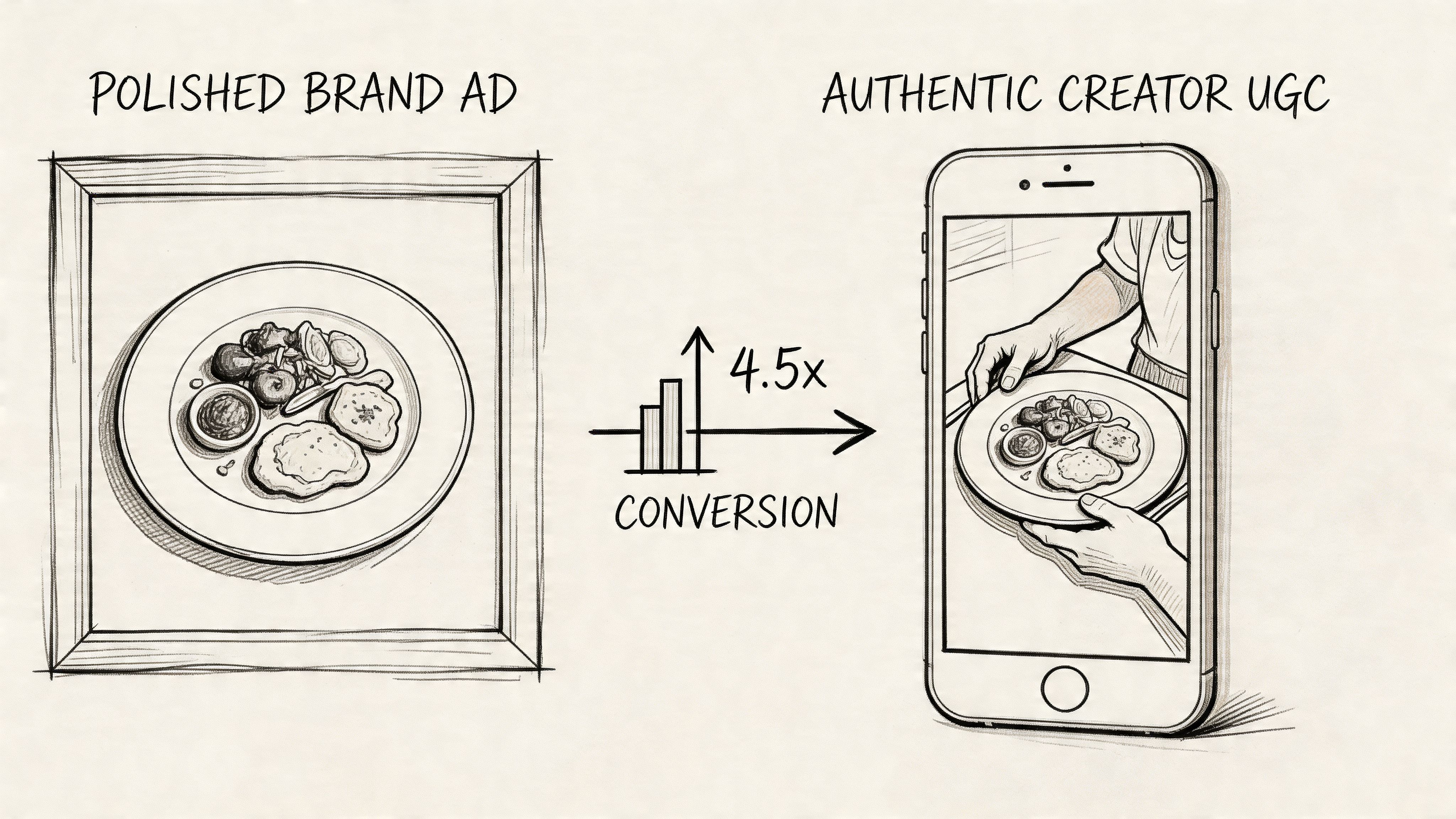
UGC Converts 4.5x Better Than Brand Content (Stackla, 2024) | Low to medium. Licensing and content standards need to be clear from the start | Lower production cost than studio-led creative. Fast if content rights are secured early | Better conversion efficiency and a larger usable asset library | Paid social, landing pages, email, organic reposting | Secure reuse rights in the initial brief and store assets in one searchable library. ShortGenius AI UGC ad platform |
Nano-Influencers 8.5x Engagement; 68% Budgets <100K (HubSpot, 2025) | Medium. Management load rises quickly without templates and automation | Lower spend per creator, but more coordination time | High aggregate engagement and stronger local relevance than larger creator buys | Multi-site rollouts, neighbourhood targeting, value-led campaigns | Put budget behind a portfolio of local creators instead of one larger name with weak catchment fit |
TikTok / Short-Form Video Dominance (TikTok/Sprout, 2024–25) | Medium. Requires consistent publishing and fast content turnaround | Low production barriers, but high frequency expectations | Strong discovery potential, particularly with younger diners | Short-form discovery campaigns, trend-led content, menu moments | Repurpose the best-performing creator clips across owned channels to extend value |
Micro-Influencer Campaigns: 37% Sales; 5.2x ROAS (IMH, 2025) | Medium. Reliable performance depends on disciplined tracking by creator and site | Moderate budget spread across several creators | Strong ROAS and more predictable revenue contribution than vanity-led creator spend | City-by-city campaigns and ROI-focused creator programmes | Review performance by location, not only by brand, so budget shifts reflect local demand |
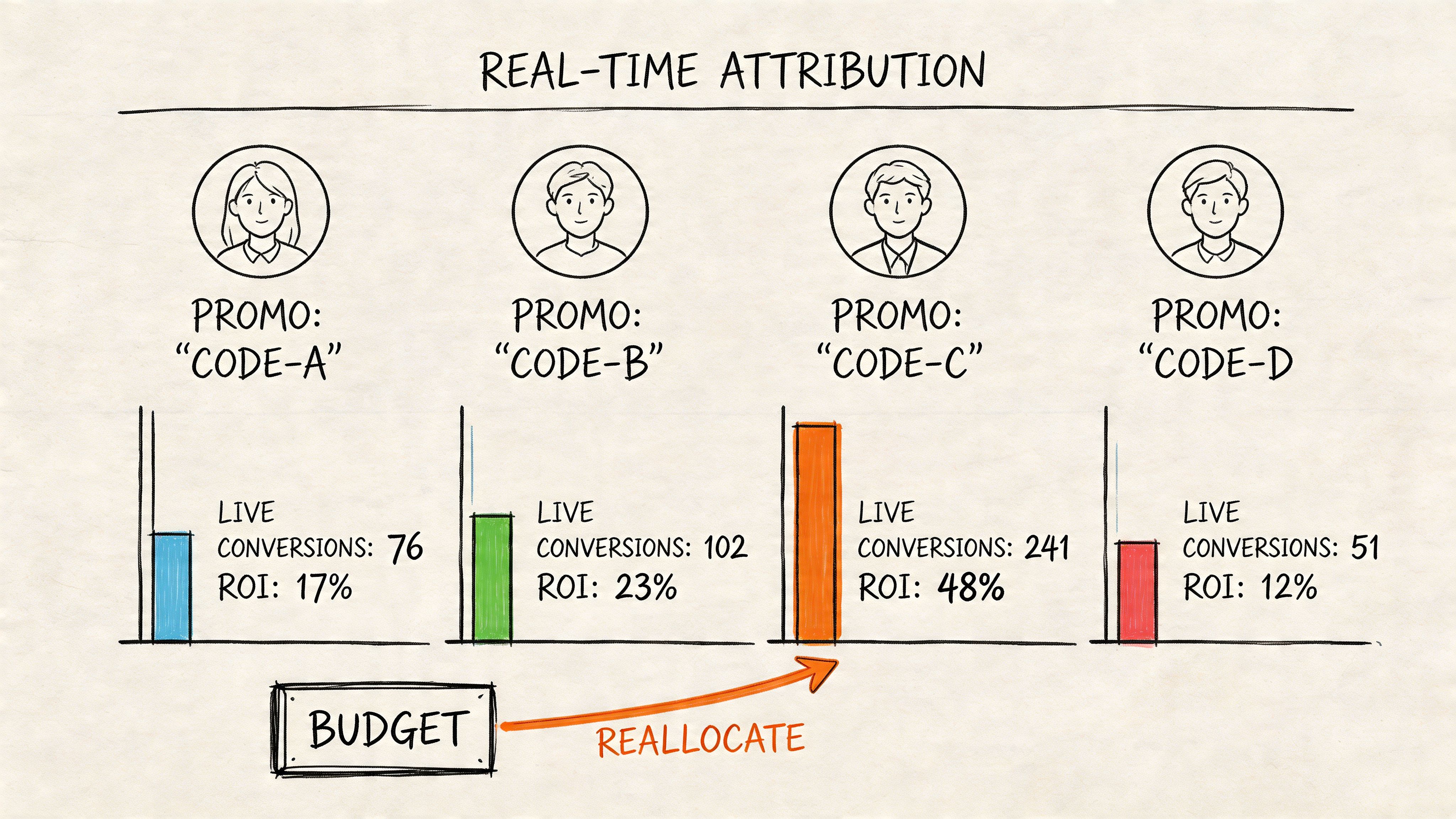
Real-Time Attribution: +67% ROI; Promo Codes 3.8x (Gartner, 2025) | High. Requires dashboards, code logic, and operational ownership | Technical setup is heavier, but reporting speed improves sharply once live | Better budget control and faster optimisation decisions | Performance campaigns, A/B testing, offer-led creator activity | Pair unique promo codes with UTMs and enforce a naming structure before any campaign goes live |
Creator Campaigns → 2.7x More Google Reviews (BrightLocal, 2024) | Low to medium. Works well if review prompts are built into the activation | Low direct spend beyond campaign coordination and response time | More reviews, stronger local search visibility, and better proof for future diners | Review generation, local SEO, new site launches | Add a review prompt to the creator brief and train managers to recognise campaign-driven feedback. A Modern Guide to Restaurant Review Management |
Creator Ambassador Programmes | High. Ongoing relationship management and clear reporting are needed | Recurring budget and steady internal ownership | Compounding trust, steadier content output, and better learning over time | Brands that want consistency across quarters, not bursts of activity | Start with a fixed test period and compare repeat creators against one-off activations on redemption and footfall |
Disclosure & Transparency Expectations (FTC; Weber Shandwick, 2024) | Low. Policy, briefing, and spot checks are usually enough | Minimal direct cost | Better audience trust and lower compliance risk | Any creator partnership, especially those aimed at younger audiences | Give creators approved disclosure examples and review posts quickly after publishing |
Siloed Manual Processes: 12+ hrs Weekly (Restaurant Marketing Association, 2024) | High. Fragmented workflows create reporting gaps and slow decisions | High staff time cost, low process efficiency | Weak scalability, more manual error, and poor ROI visibility | Teams still running campaigns through DMs, spreadsheets, and screenshots | Audit time spent per campaign. That usually exposes the hidden cost of manual creator management |
Centralised Platforms Like Sup | Medium at setup, lower day-to-day complexity once configured | Subscription and onboarding cost, but much faster campaign deployment | Faster setup, better tracking discipline, and easier scaling across sites | Multi-location groups, agencies, and restaurant teams that need repeatable creator workflows | Use one workflow for sourcing, briefing, codes, links, and reporting so every campaign can be compared on the same basis |
The pattern is clear. High-trust channels such as creators, reviews, and UGC perform best when the restaurant can attribute outcomes at site level, offer level, and creator level. Without that layer, even strong campaign output is difficult to prove.
That is why these comparisons matter. The decision is not only which channel looks promising. It is which tactic produces evidence a restaurant can use to reallocate spend, improve local performance, and show measurable ROI.
From Statistics to Strategy Activating Your Insights
The available data points to a clear model for 2026. Restaurant marketing works best when it’s local, trust-based, and measurable. Diners discover venues on social platforms, rely heavily on recommendations, and respond to creator content that feels specific, useful, and credible. The old split between “brand marketing” and “performance marketing” doesn’t hold up neatly in hospitality. A single creator post can influence discovery, validation, booking intent, and in-venue redemption.
The practical challenge isn’t understanding that shift. It’s operationalising it.
Most restaurants don’t struggle because they lack access to Instagram or TikTok. They struggle because creator activity is still handled in fragments. Someone sends a few DMs. A free meal gets offered. A post goes live. Screenshots get shared in WhatsApp. A week later, no one can say with confidence what happened. That’s the gap between activity and strategy.
The statistics in this piece repeatedly point to attribution as the dividing line. If manual tracking fails to prove ROI, then restaurants need a better mechanism. If smaller local creators outperform larger ones on engagement, then restaurants need a repeatable way to source and manage them by location. If trust drives behaviour more than traditional advertising, then campaigns need to be built around recommendation, not just reach.
That leads to a more disciplined approach.
Start by defining the commercial outcome you want. For one location, that might be off-peak footfall. For another, it might be opening-week awareness. For a group, it might be review growth, loyalty sign-ups, or tracked bookings by branch. Once that outcome is clear, every part of the campaign should support it: creator selection, content brief, offer structure, landing page, code naming, and reporting cadence.
Then simplify the workflow. Instead of more creativity, the primary need is less friction. That’s where platforms built for creator operations can help. A system like Sup gives restaurants a way to source local micro and nano creators, launch campaigns with prebuilt tracking, and see views, clicks, code redemptions, and revenue in one place. That changes creator marketing from a labour-intensive experiment into a channel you can run repeatedly and improve over time.
The most useful mindset shift is this. Don’t treat influencer marketing as a side tactic. Treat it like a measurable growth loop.
A creator introduces the restaurant. A diner clicks, books, or visits. A code gets redeemed. A review gets posted. The content gets reused. The next campaign gets smarter because the previous one generated data, not just exposure. That’s how restaurants move beyond vague “buzz” and into repeatable return.
There’s also an advantage for operators willing to do this properly now. UK-specific restaurant marketing benchmarks for 2026 are still thin. That means first-party learning matters more. The restaurants that build their own benchmark set by creator type, location, offer, and outcome will understand their market better than competitors relying on assumptions.
The headline lesson from these 50 Restaurant Marketing Statistics for 2026 is simple. Stop guessing. Start measuring. Local creator partnerships already have the ingredients to drive footfall, reviews, and revenue. What turns them into a serious channel is attribution, workflow discipline, and the willingness to treat every campaign as a source of business intelligence.
If you want to turn creator marketing into something your team can scale and measure, take a look at Sup. It helps restaurants source local micro and nano creators, launch campaigns with tracking built in, and connect content to real outcomes like bookings, code redemptions, reviews, and revenue.

Matt Greenwell
Share